Feeds:
Posts
Comments

As Families go distant and international what happens to the elderly needs a special look.

Mr Subhash an octogenarian and his wife Sita a graceful old lady of 76 years have been roughing it out all alone for past twenty years or so. Their two sons moved out of the country in their career pursuits and have since settled abroad. A once in three years trip from either of their sons hardly provide the old couple a feeling of being part of the larger family. Yet they carry on taking care of each other. Mr Subhash suffers from sleep disorders , recurrent depression and anxiety. Sita fights her own battle with her old age issues yet bravely accompanying her husband to his sessions with the psychologist.

Similarly Mr Naweja a businessman finds it tough to carry on further as his son and daughter have moved out of home to metro cities to carve out their own career paths. Mr Naweja in his mid seventies suffers from and fights with many physical and mental ailments as he keeps his dates with doctors and the psychologist. He had lost his wife five years ago .A few months in the metropolis where his son works , were spent sitting alone at home but he eventually decided to come back and join business at his old place.

Mrs Khedekar lost her husband about twenty years ago when she was in her early forties .She didn’t give up then as her two sons were quite young and needed to finish their education.Her elder son moved abroad to meet his own career dreams and the younger one to another city for his pursuit of happiness.Years of loneliness has resulted into her developing psychosis ,schizophrenia and a host of other diseases.Though under the professional care of a trained nurse life is still very lonely for her resulting into periodic reversals of her treatment.

In recent times many of the older adults are leading their life all alone without the love and support of their near and dear ones as their wards necessarily have moved out on account of their careers to metropolitans , or abroad . In such a situation it is obvious that besides the emotional stress elders also have to take the stress of taking care of their mental and physical health and also to ensure a little bit of social health so that they don’t get loners and restricted to within .

In many cases it has been observed that the new couples prefer a life away from their parents in order to understand and know each other better and develop intimacy . Such a step is always good provided the periodic and regular touch with elders is maintained .

Let’s browse a few facts :

  • Globally, the population is ageing rapidly. Between 2015 and 2050, the proportion of the world’s population over 60 years will nearly double, from 12% to 22%.In India there are currently 138 millions elderly persons comprising of 67 million elderly males and 71 million elderly females .
  • Mental and neurological disorders among older adults account for 6.6% of the total disability (DALYs) for this age group.
  • Approximately 15% of adults aged 60 and over suffer from a mental disorder.
  • Maintenance of brain health is as important as the physical health of the elders .
  • While most have good physical health, many older adults are at risk of developing psychological ,mental disorders, neurological disorders and brain health problems.
  • They in their loneliness may develop substance use problems as well as other health conditions such as diabetes, hearing loss, and osteoarthritis.
  • As people age, they are more likely to experience several co morbid physical,mental and neurological conditions at the same time causing much distress to the elderly.

Risk factors for mental health problems among older adults

There may be multiple risk factors for mental health problems at any point in life. Older people may experience life stressors common to all people, but also stressors that are more common in later life, like a significant ongoing loss in capacities and a decline in functional ability. For example, older adults may experience reduced mobility, chronic pain, frailty or other health problems, for which they require some form of long-term care. In addition, older people are more likely to experience events such as bereavement, or a drop in socioeconomic status with retirement. All of these stressors coupled with the prospects of staying alone without the company of their near and dear ones can result in isolation, loneliness or psychological distress in older people, for which they may require long-term care.

Mental health has an impact on physical health and vice versa. For example, older adults with physical health conditions such as heart disease have higher rates of depression than those who are healthy. Additionally, untreated depression in an older person with heart disease can negatively affect its outcome.

Older adults are also vulnerable to elder abuse – including physical, verbal, psychological, financial and social abuse ; abandonment; neglect; and serious losses of dignity and respect. Current evidence suggests that 1 in 6 older people experience elder abuse. Elder abuse can lead not only to physical injuries, but also to serious, sometimes long-lasting psychological consequences, including depression and anxiety.

What is the way out for us? Is a question often asked by the family members ,when they bring their parents and other elders for a counselling session or for a family therapy interaction with the author .

Tanvi (name changed ) had come to the clinic along with her mother in law . Her mother in law stays alone in the city just refuses to leave her familiar home and move with her son abroad.The septuagenarian suffers from depression,anxiety , sleep issues .Tanvi had to eventually tell this psychologist,”I am leaving her to your care .You act as a local guardian for her and keep us informed of her welfare”.

Though Tanvi could say that but several others of such elderly and their wards are left at their wits end ,not knowing whether to abandon their dream careers and come back ,force the elderly to accompany them or to leave their senior members of their family at the hands of domestic workers and professional agencies .

The struggle continues .

Family is always happy when the elders are happy and healthy.

Joseph a twelve years old adolescent didn’t quite understand what was happening to him .Every time he would want to say something to his parents or even to the teacher in the school it would be taken as an upfront defiance .His father would rebuke him and mother would end up in tears resting the blame on Joseph .Joseph had been identified as the trouble maker in school too .

Jatin a 13 years old lad had been singled out by his class teacher for creating trouble for others in class and he had been set up a bench to sit away from others in the class room ,causing so much embarrassment to him.

He would be rebuked each time others would make a noise in the class .The teacher would simply name him out first and would not even make amends when she found it was some other student who led the riot .

Swara’s family didn’t quite understand why she had started shouting back at her parents and teachers of late .They looked at it as her sulking behaviour and brought her to the clinic for counseling.

Apparently all these and many more of such Children and adolescents are singled out by the parents and their teachers as defiant kids and they are brought to us so resolve their behaviours issues and treat them for oppositional and defiant disorder . Such children are often referred to psychologists or even psychiatrists for behaviour correction because of their regular bad behaviours ,emotional adjustment problems – aggressive outbursts ,disrespect of others ,not following the norms set up by schools or families.the other issues often referred to are truancy , skipping exams ,acts or threats of self-harm, suicide attempts , running away from home .None of the parents would understand that the problem is not the outward expressive behaviour but the underlying stresses ,trauma and unhealthy family relationships ,environment or dynamics could be the cause of the unacceptable behaviour and problematic adjustment in society.

Teachers would simply complain to the parents about the non cooperative manners of child and when parents fail to correct the child by way of punishment or admonishment ,they walk into the clinic with only one expectation of “just fix my kid.”

In all such cases it has been observed that come what may the parents will simply look at the Counselor for help and magic cure without realising that the parental active participation and the school teachers pro positive approach will be more helpful along with the therapy sessions at the psychologist’

Just one way efforts by the therapist do not work with adolescents with ADHD /Dissocial behaviour / Adjustment disorder .They regress sooner to the same behaviour as soon as they return to the familiar negative environment The relapse will occur as soon as the affected adolescent returns to the same unhealthy patterns in the family /school environment.

A few changes at Joseph’s school with support from an understanding teacher helped us bring about a very positive result .The same child now has become a favourite student of all teachers . As a result of active participation by Swara’s parents Swara has become more tolerant of her parents expectations and a very healthy environment prevails at the family.

Similarly we found out that a comprehensive holistic treatment with the entire family of other children mentioned above has been very productive and effective way of treating Oppositional Defiance disorder /ADD/ADHD /Dissocial disorder without taking resort to medications.

Our experience at the Family Therapy India and Alka Mansik Pramarsh Foundation has been to go for the top down approach by involving school teachers and parents to help kids with above problems and bring about a positive changes to the defiance and anxiety of the kids .

Family is fine when kids are fine

Members of families in their ignorance or sometimes deliberately hurt each other to cause an unending mental emotional pain. Although a good family is meant to help individual members develop themselves to their full potential but chains of miscommunications, uncalled for egos, familial fights, discords and long-drawn-out misunderstandings result into a dysfunctional family hampering not only relationships but also a complete non achievement of personal career goals by individuals.

Kritika and Vijay (names changed) have been victims of two such grossly dysfunctional families themselves in their young age prior to their marriage and have till date (even after a decade of their having been married) not been able to overcome traumas of their young days in their parental homes. Resultantly now their children suffer from traumas of dis -functioning of their own families.

Little girl doesn't want to hear arguing of parents

Dr Kritika (name changed) and her two siblings have been witnessing painful fights of their parents all through their life where a triangular drama would take place every day and night with sibling shifting allegiances and taking sides sometimes with their father, another time with mother or being at war with each other. These fights still continue even though all siblings have chosen their own paths in life, they continue abhorring each other. Kritika’ s all efforts to bring her parents and siblings together again is not being accepted by others of family resultantly their deadlock remains.

Such painful family events and interactions leave intense hurts, personality issues, traumas and social adjustment issues all through life. Sejal, Sonia, Kamolika, Anand, Sumit (fictitious names ) and many others such people have been suffering PTSD, Anxieties ,Mistrusts ,phobias ,adjustment issues after they lived through such most painful family dramas and now they suffer alongside their children and spouses too because of the torments of the past .

The indelible scars of family fights destabilise the psyches of family members, have impacted their relationships, job performance and emotional stability all through the life. We have been helping many of such families deal with such dis functioning, Traumatic experiences childhood scars, depression anxiety and stresses to enable them understand what emotions prevailed when the dis functioning occurred, and how these family members could not deal with their as well as their parents’ partners, children and their siblings’ similar experiences —in which their entire family had suffered and many of them still suffer.

Understanding Triangulation of the dis functioning.

The functioning of any family gets disturbed when the normal day to day interaction with each other turns into accusations of not fulfilling expectations. Or when communication is not understood in the right perceptive or when the words used for emotions do not convey the spirit behind but the use of those words and dialogues or when patience is short lived and angers flare up.

In any such situation, the battle field turns into the members un knowingly playing the roles of perpetrators, victims or the negotiators who often act as mediators or pacifiers. But sometimes they also end up taking sides with either one. We believe every household or a family can get into such a situation one time or the other. However, if such a situation continues or comes up recurrently is the cause for alarm. Because if not resolved at the appropriate time it can turn onto a chronic dis functioning of the family.

A new understanding and perception of dealing with those situations have helped these families deal with and each individual member transformed into a stable, loving, mature, and dependable person, attaining their best personal success after they have come over to Family Therapy India.

If your family is one such family suffering from misfunctioning and traumas of the past . It is time now to help your family overcome such disputes, ego bruises, mistrusts and angers of the past. Take control of your life and feelings, and help others understand the need for curing their feelings. Know that we can help you bring about a positive change in your filial relationships. With commitment and time and our expert counseling sessions of family therapy, healing begins steadily and gradually until the family adopts the new normal relationships.

A desperate father wanting the child compete for competitive exam ,a helpless mother not able to help her child understand anything being taught in the class room or at the tutorials ,a frustrated teacher regularly complaining to the parents to displine their child or take him /her away from the class are instances that we come across every day. Instances of tantrums throwing , of anger bursts ,laziness regular fights with siblings , not listening to parents ,indulging into internet browsing ,surfing of unwanted sites,staying away from home till late hours or not listening to parents are often seen as bad behaviour ,bad habits and bad attitude by many parents.It is rather sad that parents do not understand all such things mentioned above could be on account of child’s poor mental health or mental disorders. Resultantly youngsters are not understood correctly and they suffer frustration and uncalled for irritation.A good mental health free from any kind of disease or disorder is what a child must possess . But what if and for those who are not so blessed ,do parents really understand how can they know if there is anything lacking in their child’s mental health and if so how to help their child cope up.

Differentiating Mental health and mental illnesses is very important for any parent ,teacher and all those who are involved in mentoring youngsters. A healthy mental health would mean that we are of sound mind and are capable of deciding what is good or bad for us and behaving well socially economically and emotionally. A mental illness may not necessarily mean that you can not be any of the above .It could mean that in some areas of your life you may be finding it difficult to behave and decide appropriately psychologically . A mental disorder or a psychological distress are two different concepts and parents need to understand how it may apply to their child if he /she exhibits a behaviour inappropriate to the situation.

Thus, it is essential to understand that psychological distress in a given situation does not indicate absence of mental health .A psychological disorder or distress can be short term ,or of a long lasting nature depending on how the person has been affected and hence affecting the child’s overall state of well-being. Mental illnesses, on the other hand, are health conditions involving changes in thinking, emotion or behaviour (or a combination of these). Mental illnesses are associated with distress and/or problems functioning in social, professional or family activities.

Mental health is a subjective phenomenon and an individualized experience, different for every person. A state of mental well-being for one individual may not be the same for another individual.  Factors that may induce mental well-being for individuals will also differ. The state of being sound at a mental level can vary within a day and from day to day. There can be an incident that may boost or degrade a person’s mental health on a daily basis.

Thus, mental well-being is a daily affair.

Mental health is often seen to be on a continuum, where the scale starts from mental well-being on one end to emotional problems and concerns in the middle to mental illnesses at the other extreme.

It is often seen that mental health and mental illnesses are not understood correctly. There are a lot of myths that surround mental health and thus lead to the widely seen stigmatised approach. Let’s take a while to debunk the myths and understand the actual facts about mental health:

Myth #1: Mental illnesses are not real illnesses.

Fact: Mental illnesses are not the regular ups and downs of life. Mental illnesses create distress, don’t go away on their own and are real health problems. When someone is physically injured, they see a doctor. Similarly, mental health problems also require seeing a mental health professional- psychologist/counsellor/psychiatrist.

Myth #2: “Mental illnesses will never affect my child or me”

Fact: All of us can be affected by mental illnesses. Researchers estimate that as many as one in four Indians will experience a mental illness at some point in their life. You may not experience a mental illness yourself, but it’s very likely that a family member, friend or co-worker will experience challenges.

Myth #3: Mental illnesses are just an excuse for poor behaviour.

Fact: It’s true that some people who experience mental illnesses may act in ways that are unexpected or seem strange to others. We need to remember that the illness, not the person, is behind this behaviour. People who experience a change in their behaviour due to a mental illness may feel extremely embarrassed or ashamed around others. It is important to understand that people with a mental illness are one of us.

Myth #4: Stress causes mental illnesses.

Fact: No one factor can cause mental illnesses as these are complicated conditions that arise from a combination of genetics, biology, environment, and psycho-social factors. Stress may aggravate the mental or physical state of the problem for an individual but it is never the sole problem of an illness.

Myth #5: People with mental illnesses are violent and dangerous.

Fact: People who experience a mental illness are no more violent than people without a mental illness. It’s also important to note that people who experience mental illnesses are much more likely to be victims of violence than to be violent. Excluding them from society because they are violent is because of a misunderstanding and stigmatic approach to mental health.

Myth #6 : People who experience mental illnesses are weak and they have a character flaw.

Fact:  Stress impacts well-being, but this is true for everyone. Many people who experience mental illnesses learn skills like stress management and problem-solving so that they can remain optimally functional. Taking care of yourself and asking for help when you need it are signs of strength, not weakness. Mental illnesses don’t determine the character of a person. Mental illnesses are like other ailments and can be managed.

Myth #8: People who experience mental illnesses cannot go to work or follow a regular lifestyle.

Fact: Mental illnesses do not certify that someone is no longer capable of working. Most people who experience serious mental illnesses want to work but face systemic barriers to finding and keeping meaningful employment. Medical or therapeutic help can allow them to resume work and a manageable lifestyle.

Myth #9: Children cannot have mental illnesses. Those are adult problems.

Fact: Even children can experience mental illnesses. In fact, many mental illnesses first appear when a person is young. Mental illnesses may look different in children than in adults, but they are a real concern at a younger age as well. Unfortunately, many children don’t receive the help they need. It is important to remember that illnesses can occur and be diagnosed as early as 6-8 months of age.

Being mentally healthy is not about being perfect. Nor is it about being extraordinarily intelligent or successful or rich. Mental health is irrespective of these factors. These factors may influence the mental health of an individual but they are not a cause nor do they determine the state of an individual’s mental health. We all can suffer from mental health problems and we all can attain better mental s health and healthy state of mind if we recognise the deviation in time

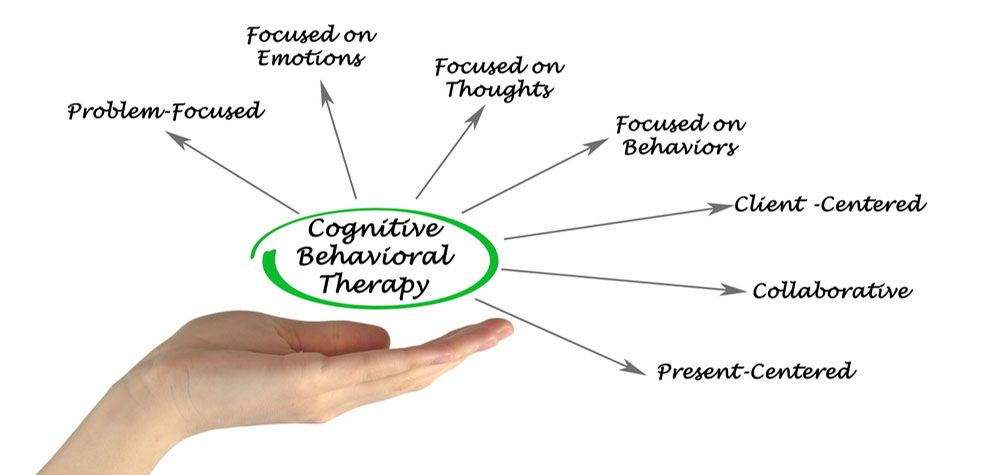
Cognitive Behavior Therapy is recommended to clients to get the necessary treatment for their negative thoughts to bring about the desired positive change .

The key principle behind CBT is that our thought patterns affect our emotional understanding of the events which, in turn, can affect behavior and subsequent interaction with the people we interact with .

CBT also is believed to make us aware of our own negative emotions influencing our thought patterns .CBT helps us analyse and understand others behaviour as elicited by our own emotional understanding of the situation.

CBT highlights how negative thoughts can bring about negative feelings and actions.Similarly how negative emotions can interpret a positive event ,in negative tones . But, if we reframe our thoughts in a more positive way, it can lead to more positive feelings and helpful behaviors.Or if we work on developing positive emotions about ourselves and situations the thoughts will become more accepting .

While conducting CBT the therapist trains the patient to recognise such negative reading by his mind and how to reinterpret the situation with a positive frame of mind. The patient can continue to use these skills so learnt, in all difficult situations and overcome depression,anxiety or other mood disorders .

Depending on the issue the patient is dealing with and the expected specific goals of the CBT , the therapist can make use of several ways to administer CBT. It will basically involve :

  • identifying specific problems or issues in the client’s day to day life.
  • Helping the client become aware of unproductive thought patterns and how they can impact his or her life
  • identifying negative thinking and reshaping it in a way that changes how he or she feels
  • learning new behaviors and putting them into practice

After speaking with the client and learning more about the issue the client wants help with, the therapist will decide on the best CBT strategies to use.

CBT involves making use of the appropriate combination of a few the following 9 strategies:

1. Cognitive restructuring or reframing

This involves taking a hard look at negative thought patterns. When we tend to over-generalize, and apprehend that the worst is about to happen , or tend to get into too much details for every thing we do we find it difficult to act. Our thoughts can prevent us from doing what we want to do and create havoc in our life.

The therapist in this situation will help us identify the negative patterns of our thoughts and inaction . He trains us as to how to reframe those thoughts so they’re more positive and productive and propel our action taking connative behaviour.

For example: “I am not valued in my office because I’m totally useless” can become “I may not be the best worker , but I’m as valuable an employee as can be and I contribute the same way as others do .”

2. Guided discovery

In guided discovery, the therapist will acquaint himself with our viewpoint. Then he will ask questions designed to challenge our beliefs and broaden our thinking.

The client might be asked to give evidence that supports clients assumptions, as well as evidence that does not.

In the process, the client will learn to see things from other perspectives, especially ones that he or she may not have considered before. This can help client choose a more helpful path.

3. Exposure therapy

Exposure therapy can be used to confront fears and phobias . The therapist will slowly expose you to the things that provoke fear or anxiety, while providing guidance on how to cope with them in the moment.This can be done in small increments. Eventually, exposure can make us feel less vulnerable and more confident in our coping abilities whenever the anxieties build up.

4. Journaling and thought records

Putting down your thoughts in writing is a very simple yet effective way of getting in touch with your emotions.One can list down repeated negative thoughts that occur frequently and disturb your homeostasis .It will certainly help to write down your positive thoughts also as would be the inclusion of new thoughts and new behavior for day to day interaction.

5. Activity scheduling and behavior activation

When you are in a negative frame of mind you tend to put off activities in fear or in anxiety.Writing schedules of such activities and visualising them before you begin practicing them can give you the confidence .With such a positive confidence it becomes easy to overcome negative emotions connected with such activities.

6. Behavioral experiments

Behavioral experiments are used for anxiety disorders that involve catastrophic imagining . The psychologist here asks you to express your apprehension as to what will happen if you perform the given task that you otherwise have been dreading to perform. Once you have (reluctantly ) completed the given task you are asked to talk about whether the apprehension came true. Over time, you may start believing that your apprehensive anxiety is not very valid as nothing that you expected to happen actually took place.

7. Meditation, Relaxation and stress reduction techniques.

Perceptive meditation, progressive muscle relaxation and positive imagery building exercises are undertaken to bring about a total positive control over mind ,body and soul to eliminate the phobias,fears anxieties and depression.

8. Role playing

Role playing can help us overcome negative thinking , apprehension and work through difficult relationship and situations. A role play out done with the help of therapist can lessen fear and can be used for:

  • improving problem solving skills
  • gaining familiarity and confidence in certain situations
  • practicing social skills
  • assertiveness training
  • improving communication skills

9. Successive approximation through small successes

This involves taking tasks that seem overwhelming and breaking them into smaller, more achievable steps. Each successive step builds upon the previous steps so you gain confidence as you go, bit by bit.

To know more about CBT and undertake the same ,please get in touch with us mansikpramarsh@gmail.com

917314263087

We regularly get queries from young parents asking for support to understand the behaviour of their wards suffering from Autism Spectrum Disorder and the behaviour difficulties faced by the affected children.

Children suffering from ASD have behaviour issues which are quite common. These issue relate to more about their communication, social interaction,working within the structured schedule and processing of the sensory information.However if parents are trained and equipped with the appropriate strategies , much of the stress and strain can be reduced bringing relief to the family and the child.They can often be managed through effective activity and behavior management.

There are many difficulties, ASD children face in their behaviour. These issues can be identified as difficulties in communication, issues of  sensory processing, social interaction, and physical balance issues that can make active play more difficult for these kids. Parents and caregivers need to understand that  such behaviours as appear inappropriate are in reality symptoms of the difficulties the child with ASD is facing in his her day to interaction and communicate with others .

Understanding the Causes of Inappropriate Behaviour

The main causes of behavioral difficulties are generally as follows:

Difficulties with communication: Children with ASD struggle with both verbal and expressive language, understanding what is being said to them, and comprehending non-verbal communication cues. This can, become quite frustrating for both the communicator and the child .The child may not be into problem behaviour but to the other person it would appear so ,which causes frustration at both ends.

Difficulties with social situations: The difficulties presented by social situations for a person with ASD are much more than mere communication; people with ASD struggle to understand others’ points of view and grasp the “unspoken rules” of social interaction that state when to, begin and when end a conversation. They are in no position to get the emotional nuances of social communication. Due to all of this, children with ASD may avoid social contact, and they are more likely to experience being harrassed and feel overwhelmed by unnecessary intervention by others in their life .

Difficulties with unstructured time: People with ASD have a hard time dealing with situations where there is no set schedule, as their brains have a hard time sequencing activities on their own out of the given timetable and schedule. Due to this some of the children with ASD are more likely to act out during the period which is not scheduled earlier eg.free period or suddenly declared break times, as they feel confused and frustrated.

Difficulties processing sensory information: Those with ASD often have over or under-sensitive senses, leading to a tendency to get overwhelmed or to seek attention to such a degree that it becomes embarrassing for the accompanying parent and the person interacting with the child.. ASD affected child may react strongly to an unwanted touch, be very selective and particular food eater, get largely disturbed and irritated by loud noises ( be it a noise coming from far off .The child feels unable to concentrate on account of background noise and reacts adversely.

Additionally, one should always remember that people with ASD do not easily adapt to change.Parents managing their ASD ward should be aware of the changes being brought about in their environment or schedule that can trigger problem behaviours.A sudden bout of Illness (especially seizures, which ASD individuals may be prone to) can also trigger adverse reactions as the child with ASD cannot give verbal expression to his or her pain. Doctors advise parents to use picture posters or diagrams to help children express where they are feeling pain.

Dealing with Problem Behaviour

It’s key to understand that the child is using these behaviours to try to communicate something to you, or to achieve some specific function. It’s vital to look under the surface of these behaviours so as to discover the unaddressed needs below. Try to asses what you child is trying to tell you, rather than reacting to the behaviour itself (resist “punishing”; few ASD children actually understand the cause and effect implied by it). It’s also advised to keep a “behaviour diary” or chart so that one can identify patterns in a child’s behaviour and from there, isolate what’s triggering the child’s episodes. One can then develop strategies to avoid or manage the triggers (be sure to introduce these slowly, as sudden changes in routine will do more harm than good). Likewise, expect the child to initially resist the change; stay patient and be consistent with it regardless, and make sure that other family members, teachers, and caregivers are also keeping consistent with it.

One should also develop supportive therapies to help the child shed his or her frustration; these typically include: exercise, brief time out periods in a quiet, darkened space, and relaxing activities. Set achievable treatment goals and don’t push too hard for rapid improvement, as people with ASD can struggle to integrate new knowledge and change behaviours.

To get the best out of a child with ASD, it’s often helpful to employ the following strategies:

  • Speak clearly and precisely (and use short sentences) in order to work around the difficulties that arise with complex verbal communication.
  • Use visual supports. Many children with ASD process visual information more easily than other forms of information. Timetables can be helpful to assist children in understanding schedules.
  • Create “social stories”. These are brief descriptions (using words and images) of situations, events, or activities that help tell a child with ASD what to expect during an upcoming social situation.
  • Help the child identify his or her emotions. This is often challenging to a child with ASD; use visual aids (such as “stress scales”) to help the child quantify what he or she is feeling and how intensely, and help the child learn via physical associations, such as showing him or her that anger connects to a reddening of the face, stomach pain, the urge to cry, etc.
  • Help them learn to relax. Children with ASD find it hard to relax, and can be very “intense” and obsessive in their interests. Try to work relaxing activities or some quiet “alone time” into his or her daily routine.
  • Make their environment more soothing. As children with ASD can become overwhelmed by sensory information, it’s important to ensure their environments are as free as possible of sensory irritants. Flickering lights, devices that give off background noise, scented candles, etc., should be removed.
  • Give praise, in the form your child likes best. Praise is as important to an ASD child’s learning as it is to most children’s learning, but depending on their unique needs, praise may have to be modified to suit the child. For example, some may not like hugs, some may not recognize verbal praise. Often visual cues like stickers on charts or time doing a favourite activity as a reward are effective forms of praise. Praise should be as immediate as possible so that the child can assess cause and effect.

Seeking Help

 If your child’s behaviour is placing him or herself at risk, or others at risk, you should seek professional help by a psychologist or psychiatrist, rather than trying to handle the situation on your own.

Continue Reading »

We often think that our children have better resilience to their anxiety and they become normal once we have either given them positive strokes, bought them a chocolate, a gift or diverted their attention by permitting them to play video games. But it needs to be understood that anxiety doesn’t happen to the kids like the way we experience it happening to us adults. Anxiety in children can trigger, in panic attacks, in their tantrums, in their sudden rush of energy or it may occur in the untimely defiant behaviour. We as parent just push it aside by ascribing it to their misbehaving or being in the company of wrong friends. However, children may react differently depending on the immediate situation, past incidents or future anticipations.

As psychologists counsellors and family therapists we have to deal with couples, parents and other family members of our clients who always appear to be suffering from anxiety, In most such cases their children too suffer from similar anxiety or otherwise children from families where there is a good coordination amongst parents struggle with anxiety too.

Some parents would pretend and hide their issues of anxiety and other concerns from their children. Even when kids are understanding the parents would try to act as if everything was fine. These parents would do everything they deem fit or within their reach to calm their wards and reset their nervous system through various practices of calming. Children can pick up anxiety from their parents through the verbal communication, through the body language of their parents, through their mood disorders or the kids themselves can react to any general event in the family and develop a full or partial panic attack.

We have seen many a parents fighting and undermining each other when they come to us. They fail to realise that when they behave so their children too suffer mental agony and a fear of being abandoned by either or both of their parents. Children feel abused when their parents fight. They feel cheated by their parents. Children want to live in a typical family life environment irrespective of the riches or poverty. Any thought of living without a parent causes them much mental pain and that triggers anxiety. To them, their family is their safety nest. Their family enables them to play, to study, to make friends. It helps them grow. It is the reason of their being here in the world. To them family is the only reality, rest all is just make believe. Any iota of doubt on family’s continuity causes deep anxiety.

Parents should remember that their children would always pick up the stress and trauma that their parents experience and exhibit. The parents may think that their children are safe and that children have not been exposed to any kind of stress, physical, sexual, or emotional or personality abuse. They may believe that they are offering their children a great childhood compared to parents’ own childhood or other experiences that parents had to suffer. But actual truth is far from this. Children can become anxious for many reasons triggered by the parents’ obvious circumstances or not so obvious happenings within the family. Some of these reasons could be the actual and some could be as perceived by the children. To us adults many of those reasons might not be major, but to a child they become quite significant in triggering insecurities and anxiety thereof. Should the parents happen to be separated or divorced the self-blaming mind of the children would always be devastated by the memories of the times when the family was together. They would not understand the sudden blow of isolation and the non-availability of the parental umbrella. They struggle to be emotionally available to the single parent they now live with and at the same time add on a make believe relationship with the parent they have been separated from which they continue to believe was on their account. A two edged anxiety of this kind breaks them. It shreds the very fibre of their mental balance.

Children are often left heartbroken if there happens to be a fight in their family. They tend to believe that all tension is on account of their being a cause of distress to their parents. Often they are left with a broken trust. They feel guilty with their self-confidence devastated by the memories of parents shouting at each other. They are afraid of the sudden isolation caused by such disputes amongst their parents.

We always assume that our children are understanding. They adjust to the life as they grow. That they have stronger plasticity. This could be applicable in some way but it is not the complete truth. They are not as strongly fortified against anxiety as we tend to believe. Children do build up their defence mechanisms but these defence mechanisms may prove more damaging to their growing personality during adolescence and later on in their grown up relationships. We often come across young persons and old people alike who suffer from the traumas of their growing up years in anxiety.

We give hereunder some of the symptoms that we have witnessed in children while counselling the families .

1) Dissociation: Children have exhibited dissociation by completely cutting themselves off mentally from what is happening in their families. They form their own make believe world to hide the pain. Though parents may believe that the child is being creative, when the child speaks to and play with imaginary characters. Riya 6 years is one such case. Her parents do not see each other eye to eye. Their constant bickering causes much anxiety to the child. The child is seen talking to her doll most of the times and refuses to part with the doll when she goes to school or goes to bed. Her parents eventually brought her to the counsellor when her teacher noticed the child talking to the doll she had brought into her school bag to the classroom.

Monty’s (9 years) parents had been advised by the psychologist that their child suffers from ADHD because that’s the only way he can get their attention and evoke sympathy from them. His parents both working, hardly find time to spend with their child. Their occasional outbursts cause him such a deep distress. He exhibits his anxiety by getting irritated, by indulging into hyperactivity, impulsiveness and inattentive behaviour.

Depression was diagnosed in Deepa (10 years) as a mood disorder because the chronic emotional outbursts indulged in by her grandmother and mother in their interactions caused much disturbance to the child.

2)Gastrointestinal: Meenu’s (5 years) anxiety has been cropping up in her difficult behaviour to ease up herself. She holds up her anxiety in her abdominal area. In spite of her feeling pressure on the stomach she would refuse to sit on the pot to clear her stomach. She suffers from constipation. Her bowel training has been conducted a few times. But whenever she needs to clean her bowels, she holds on to her stool and often soils her clothes. A better approach would be to ensure the child is offered a better protective environment at home free from tension and stress. We noticed she catches on to her parents’ anxiety and expresses her own in the manner described.

3) Obsessive seeking of Validation: Divya (11 years) exhibits lack of self-confidence. She most of the times struggles to express herself confidently. She would often speak in almost inaudible tone She needs to be reassured that others are paying attention to her and she must speak louder with confidence. She always needs validation from her mother.

Children themselves may not be aware of their anxiety but parents and the teachers need to read the symptoms and signs that speak of anxiety in the children.

If you can be aware that a life experience has created anxiety in their lives, you can bring attention to it and help them cope with that anxiety. You must take your child to a psychologist for evaluation and necessary counselling wherever needed. The psychologist may have to counsel the parents too.

Just being aware that your child can suffer from your chronic circumstances and catch on to anxiety should be taken as an initial step to prevention. Take them to a psychologist whenever or if they exhibit symptoms of anxiety. Whenever possible speak to them about their fears, concerns and phobias whether implied or implicit. Children should be trained and encouraged by both parents to discuss, open up and ask questions from parents should there be any stressful occasion in the family. This will help them to understand that there can be differences of opinions, arguments and even conflicts within the family but that you will always protect them and be with them to take care of them.

Family is Everything
Continue Reading »

We reproduce below the interview of our Ramneek Kapoor Psychologist and Family Therapist once again for the benefit of our readers and clients.

1 .What is ‘stress’

“I would refer to stress as “the mental, psychological, intellectual, emotional and physical unease to the personal situation and the expectation rose either by the self or by others to face/handle the situation “.

  1. Are all kinds of stress bad? How do we identify between good and bad stress?

“All kinds of stress is not bad, only the distress caused is bad. Eustress is a good stress that gives a high and stimulates the adrenaline. When you feel good about certain situation and event and feel you are able to handle it, you look forward to such a situational stress which results into a moral boost and good emotional physical feeling”.

  1. Do you think people are aware what stress does to their mind, body and soul? Do you think that once they realise how negative stress has adverse effects on them, they will be in a better position to manage it?

“Only a limited few numbers of people could be aware of the negative effects of the stress on their physical, mental, social, spiritual and emotional well being. Mere realisation that the stress is bad will not be enough. We need to also educate and inculcate in them the stress relieving self empowering meditation exercise routine on day to day basis. Preksha Meditation (perceptive meditation on the psychic centres) under the guidance of trained teacher will go a long way in relieving stress.

  1. In the world we are living in today, how important is it to spread awareness about stress? Are there any statistics that reveal how serious the problem of stress is one’s life?

“The very fact that more than 50 percent people suffer from the depression, anxiety and stress sometimes or the other in their life with no trained professional help to cope with this reflects the pitiable position of the awareness amongst common people. In fact no official statistics from any governmental source are available on the subject nor has any NGO worked on the subject authentically”.

  1. How do you think our previous generations managed stress better than today? Even with the state of the art technology and advance in medical sciences, why have we as humans not been able to cope/ deal with stress?

“It is a fashion to always refer to the better life of the previous generation. The fact is that the technological advancement has also brought with it the person related emotional, psychological and physical maladies in addition to making life easier. The state of art tech development has brought about personal isolation, in the midst of many. The person today is cut off and alienated from the self. He or she is always lost into an uncalled for competition with the others on the social media and into the realms of the imaginary virtual world.

  1. Do you think people today are ignorant about stress? Ignorance is bliss, but is this kind of bliss worth it?

“No they are not ignorant. They prefer living in the comfort of uncomfortable stress. The rat race takes its toll and the victims enjoy the bites of killing stress and anxiety and many other mental ailments. Eventually the person ends up with either cardiac problems or the chronic depression and anxiety will take toll on such persons “.

  1. Are there some observable and prominent symptoms a stressed individual will experience? Such as physical, mental, emotional, physiological etc.?

“Yes ;the breathing discomfort , sleeplessness , insomnia, loss of memory, eating disorder either binge eating or not getting hungry, social anxiety, irritation , unmanaged anger, repeated headache, psychosomatic pains , and weight gain/ weight loss are some of the prominent observable symptoms”.

  1. Who are the most stressed people according to you? What could be the causes for them being the most stressed?

“Adolescents, working women, housewives, company executives and even professionals with deadlines of times to meet are always under stress. But the large share of the stress cake goes to adolescents in the modern times. With the race to always look outwards and keep pace with the demands of peer aping the adolescents find it difficult to cope with the stress. This generation is neither amongst the younger generation nor are they amongst the adults. The social media, the rigid demands on their performances in academics and career aspirations’ of the parents for them, are some of the major reasons for this generation being most stressed

  1. What according to you triggers ‘stress? Do you think by being aware of the triggers we can be in a better position to manage stress?

Triggers of stress can be any event or situation that threatens the mental and physical equilibrium (homeostasis) of the body . The events can be either external or internal

. External can be the political, social, economic, competitive, family, academic, or work atmosphere. While internal triggers will relates to irresponsible behaviour, uncalled for self expectations, negative attitude towards life in general, and looking for perfectionism in self or others.

  1. What can be some of the long-term effects of stress? How does stress affect a person physically, mentally and emotionally?

The long term effects of chronic stress can be

  • Chronic sadness and depression. (2.) Chronic mental and physical fatigue. (3.) Chronic stress related illness (consistent headache, stomach ache, bowel problems, social anxiety) and other psycho somatic physical illness. (4) Isolating self, withdrawal, self destructive nihilistic thoughts .

Physical problems of the stress can be , sleep disorders, back, shoulder or neck pain, migraines , headaches, acidity, upset bowels, constipation, weight gain or loss, hair loss, loss of libido.

Emotionally the person can become nervous, edgy, depressed, moody, phobic, and not be able to focus and eventually suffering from Nervous breakdown.

  1. Please mention 5 useful tips for fighting/ managing stress? How can one follow these in his/her daily schedule and busy day?
    1. Accept life as it comes.
    2. Accept your self.
    3. Identify “ME” and try to become “ME” rather than becoming him, her ,they or she.
    4. Accept that perfectionism is a myth and utopia.
    5. Follow a healthy diet plan, an exercise and meditation routine to keep your heart health and positive.
  1. According to you, how can one prevent stress in everyday life? How do we know that the levels of stress have crossed the healthy limits? Until when can a person manage it on his/ her own?

“Stress is a natural occurrence but taking on too much can be avoided . Relax whenever you feel mentally, physically or emotionally exhausted before your stresses break you down”.

  1. Stress does not tend to only affect one person; its effects tend to spill over to the people around them. How do you think that we as a friend/ family member help a person dealing with stress?

“Stress is a personal problem but its manifestation can be felt and definitely seen in the family, friends and other areas of one’s life. The friends and family too should know that the life has to be lived in positive moments and as such the negativity should be eliminated from the life completely.

  1. What message would you like to give to our readers this Stress Awareness Month?

“Live life in positive emotions, the negatives are not meant for the living “.

Meena had left her husband’s house a week ago and she didn’t want to go back.The little fight that they had , had been a routine .She felt she had been a little too hard on her husband. She wanted to atone for these bickerings by punishing herself.She wanted to stay away from her home and husband, always believing this would be her punishment .

Ravi always wanted to have some freedom and space in his busy life. He would travel to the hills once every three months. But he felt guilty of cheating on his wife,every time he did that .He did not know how to compensate his wife for this and the guilt always knawed upon his mind. He brought her number of gifts, believing that way he was paying for his neglect of her . Both the situations above indicate that,

We often take it too hard on ourselves and become compassion less for our own mind ,soul and body.We indulge into self denial ,self effacement and /or believe in self punishment .But how would such a step ever become a compensation to the other partner .Every harmful act that you think of doing to yourself either and or think that self punishment could be an act of compensation to the other partner would in fact be a compassionless act for both.

“You need to be more compassionate to yourself first before you think of developing the same for others. When you have learned compassion for yourself, compassion for others is automatic.”

What is Mindful Perceptive Compassion Focused Therapy (CFT)?

Compassion-focused therapy (CFT) aims to bring about a better mental health and emotional well-being by training and enabling people to develop a compassionate attitude toward themselves and other people in their lives .This helps the person get a better understanding of self and that of others’ intention, motivation and activities.

What does Mindful Perceptive CFT Involve ?

The therapeutic technique of CFT include five A exercises spelt out as Acceptance, Appreciation, Adjustment, Accomodation, Adoption or Adaptation.These extensive exercises, or activities emphasising the mental perception buildup of solid relationship, an individual can enjoy are undertaken during the Therapy on regular basis.

These exercises may include making a list of accepting person or things first at the face values irrespective of the likes or dislikes,Appreciation comes by taking time to savour the moment when something enjoyable is noticed, and other positive rewarding behaviours.Similarly mind then is trained to understand utilise and appreciate the concepts of other four A’s.

Mindful Perceptive Meditation is made use of in CFT is to develop a better sensory perceptive attention to the current moment in a manner that is free from any bias or prejudice. CFT makes use of Compassion-focused imagery exercises, or the use of guided memories to stimulate an appreciation of the environment .The objective of the guided imagery is the production and perception of a relational image that stimulates the calming system of the mind.

This can be achieved by perceptually imaging someone showing kindness and compassion to you and then mentally experience how that feels, with the intention that you learn how to show yourself kindness and compassion.

Disorders treated with Mindful Perceptive CFT

Mindful Perceptive CFT can be helpful to people who find it challenging to understand, feel, or express compassion in their social interaction and relationships .

Mindful Perceptive CFT can help to explore reasons ,events and past experiences that have brought about such a difficulty in developing compassion. Mindful Perceptive CFT explores methods of positive change.

This therapy can also be effective at helping people come out of their distressing thoughts, behaviours, and negative feelings of all kinds . Such MPCFT particularly is helpful when dealing with feelings associated with self condemnation,self effacement and self harm.

CFT can also help with, depression, Anxiety, shame based trauma, eating disorders, anger and self-harm.

The foundations of a good harmonious relationship in families have never ever been shaken so much as is being witnessed over last few months during the reign of Covid19 pandemic .I am obviously not referring to the spread of the virus .The spread of discontent,of apprehension and of unknown has been hitting the families much more in addition to of course the threat to the physical health on account of no activity,no source to let out the energy.

There have been widespread incidents of frayed tempers ,stomping of feet,exchange of good words or bad words , accusations and shouting combats amongst the members of families stuck up on account of the lockdowns and now on account of the fear that the devil Covid-19 can strike any one any time as the lockdown is opening up.We are currently into the third stage of opening up of the lockdown.

The curtailment of freedom has come with a bigger loss of business,employment and of course the apprehensions about losing assets bought on EMIs .You gain a respectability in the society you come from when you are gainfully employed and the same society looks down upon you when you end up losing your business ,job or the means of earning .That’s a very ironical situation though it’s true.

It’s not that there have not been instances of spread of disease in or the instances of smaller fights within the family,but the mental scars as given by Covid-19 will take a long long time to heal as the experts in mental health feel.