We often think that our children have better resilience to their anxiety and they become normal once we have either given them positive strokes, bought them a chocolate, a gift or diverted their attention by permitting them to play video games. But it needs to be understood that anxiety doesn’t happen to the kids like the way we experience it happening to us adults. Anxiety in children can trigger, in panic attacks, in their tantrums, in their sudden rush of energy or it may occur in the untimely defiant behaviour. We as parent just push it aside by ascribing it to their misbehaving or being in the company of wrong friends. However, children may react differently depending on the immediate situation, past incidents or future anticipations.

As psychologists counsellors and family therapists we have to deal with couples, parents and other family members of our clients who always appear to be suffering from anxiety, In most such cases their children too suffer from similar anxiety or otherwise children from families where there is a good coordination amongst parents struggle with anxiety too.
Some parents would pretend and hide their issues of anxiety and other concerns from their children. Even when kids are understanding the parents would try to act as if everything was fine. These parents would do everything they deem fit or within their reach to calm their wards and reset their nervous system through various practices of calming. Children can pick up anxiety from their parents through the verbal communication, through the body language of their parents, through their mood disorders or the kids themselves can react to any general event in the family and develop a full or partial panic attack.

We have seen many a parents fighting and undermining each other when they come to us. They fail to realise that when they behave so their children too suffer mental agony and a fear of being abandoned by either or both of their parents. Children feel abused when their parents fight. They feel cheated by their parents. Children want to live in a typical family life environment irrespective of the riches or poverty. Any thought of living without a parent causes them much mental pain and that triggers anxiety. To them, their family is their safety nest. Their family enables them to play, to study, to make friends. It helps them grow. It is the reason of their being here in the world. To them family is the only reality, rest all is just make believe. Any iota of doubt on family’s continuity causes deep anxiety.

Parents should remember that their children would always pick up the stress and trauma that their parents experience and exhibit. The parents may think that their children are safe and that children have not been exposed to any kind of stress, physical, sexual, or emotional or personality abuse. They may believe that they are offering their children a great childhood compared to parents’ own childhood or other experiences that parents had to suffer. But actual truth is far from this. Children can become anxious for many reasons triggered by the parents’ obvious circumstances or not so obvious happenings within the family. Some of these reasons could be the actual and some could be as perceived by the children. To us adults many of those reasons might not be major, but to a child they become quite significant in triggering insecurities and anxiety thereof. Should the parents happen to be separated or divorced the self-blaming mind of the children would always be devastated by the memories of the times when the family was together. They would not understand the sudden blow of isolation and the non-availability of the parental umbrella. They struggle to be emotionally available to the single parent they now live with and at the same time add on a make believe relationship with the parent they have been separated from which they continue to believe was on their account. A two edged anxiety of this kind breaks them. It shreds the very fibre of their mental balance.

Children are often left heartbroken if there happens to be a fight in their family. They tend to believe that all tension is on account of their being a cause of distress to their parents. Often they are left with a broken trust. They feel guilty with their self-confidence devastated by the memories of parents shouting at each other. They are afraid of the sudden isolation caused by such disputes amongst their parents.
We always assume that our children are understanding. They adjust to the life as they grow. That they have stronger plasticity. This could be applicable in some way but it is not the complete truth. They are not as strongly fortified against anxiety as we tend to believe. Children do build up their defence mechanisms but these defence mechanisms may prove more damaging to their growing personality during adolescence and later on in their grown up relationships. We often come across young persons and old people alike who suffer from the traumas of their growing up years in anxiety.
We give hereunder some of the symptoms that we have witnessed in children while counselling the families .
1) Dissociation: Children have exhibited dissociation by completely cutting themselves off mentally from what is happening in their families. They form their own make believe world to hide the pain. Though parents may believe that the child is being creative, when the child speaks to and play with imaginary characters. Riya 6 years is one such case. Her parents do not see each other eye to eye. Their constant bickering causes much anxiety to the child. The child is seen talking to her doll most of the times and refuses to part with the doll when she goes to school or goes to bed. Her parents eventually brought her to the counsellor when her teacher noticed the child talking to the doll she had brought into her school bag to the classroom.

Monty’s (9 years) parents had been advised by the psychologist that their child suffers from ADHD because that’s the only way he can get their attention and evoke sympathy from them. His parents both working, hardly find time to spend with their child. Their occasional outbursts cause him such a deep distress. He exhibits his anxiety by getting irritated, by indulging into hyperactivity, impulsiveness and inattentive behaviour.
Depression was diagnosed in Deepa (10 years) as a mood disorder because the chronic emotional outbursts indulged in by her grandmother and mother in their interactions caused much disturbance to the child.
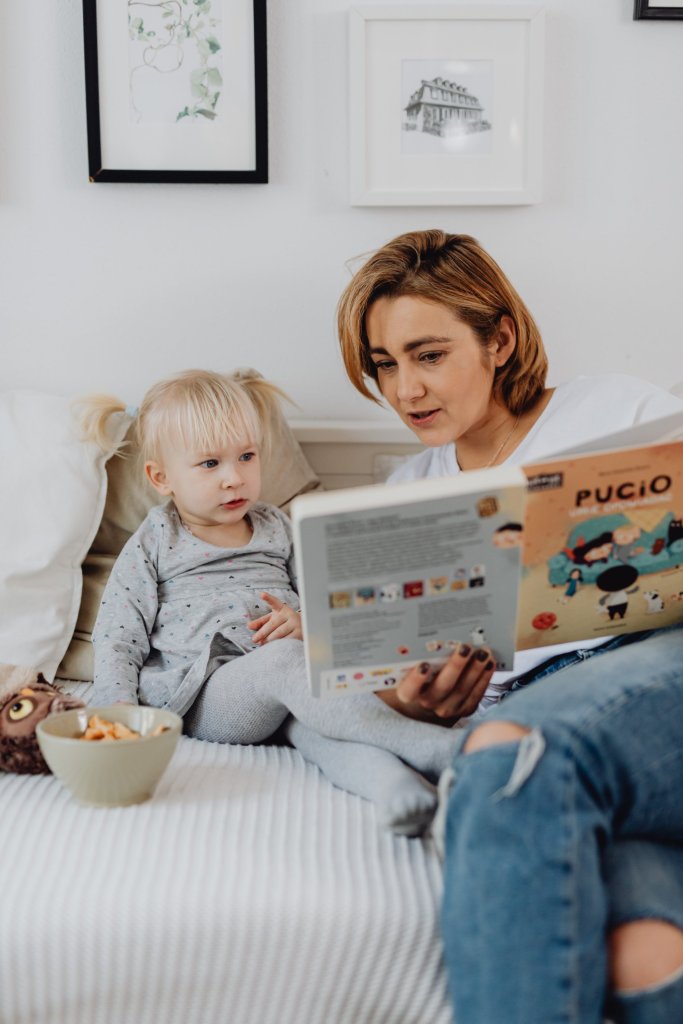
2)Gastrointestinal: Meenu’s (5 years) anxiety has been cropping up in her difficult behaviour to ease up herself. She holds up her anxiety in her abdominal area. In spite of her feeling pressure on the stomach she would refuse to sit on the pot to clear her stomach. She suffers from constipation. Her bowel training has been conducted a few times. But whenever she needs to clean her bowels, she holds on to her stool and often soils her clothes. A better approach would be to ensure the child is offered a better protective environment at home free from tension and stress. We noticed she catches on to her parents’ anxiety and expresses her own in the manner described.
3) Obsessive seeking of Validation: Divya (11 years) exhibits lack of self-confidence. She most of the times struggles to express herself confidently. She would often speak in almost inaudible tone She needs to be reassured that others are paying attention to her and she must speak louder with confidence. She always needs validation from her mother.
Children themselves may not be aware of their anxiety but parents and the teachers need to read the symptoms and signs that speak of anxiety in the children.
If you can be aware that a life experience has created anxiety in their lives, you can bring attention to it and help them cope with that anxiety. You must take your child to a psychologist for evaluation and necessary counselling wherever needed. The psychologist may have to counsel the parents too.

Just being aware that your child can suffer from your chronic circumstances and catch on to anxiety should be taken as an initial step to prevention. Take them to a psychologist whenever or if they exhibit symptoms of anxiety. Whenever possible speak to them about their fears, concerns and phobias whether implied or implicit. Children should be trained and encouraged by both parents to discuss, open up and ask questions from parents should there be any stressful occasion in the family. This will help them to understand that there can be differences of opinions, arguments and even conflicts within the family but that you will always protect them and be with them to take care of them.





 Family will survive all storms with a little patience and perseverance.
 Poonam and her husband Sangit had a wonderful marriage going for the first year of their marriage.Everything seemed to have been set specially to bring the joy and comfortable living for them in their life, but things took an adverse turn when Poonam had conceived her first baby. Her pregnancy ( an unplanned one ) had happened and Sangit didn’t know how to handle this. Poonam’s early morning sickness was too much for him to take .He felt that he had been dealt a wrong hand in the
  Dolly had echoed similar words of dissatisfaction in her marriage to this therapist as she expressed her annoyance on her husband for spending most of his days for office travel unnecessary . She told the therapist, ” even on the days he is in town he would hardly give time to me and children. Every evening my husband spends his time with his friends partying in the club or a bar”.
 Harish a businessman speaks same thoughts when he says, ” my wife throws one kitty party every week compulsorily and the days she does not throw a party herself, it would be any of her friends inviting her over. We hardly see each other at home. We have become strangers staying under the same roof”.
 Family is Everything .
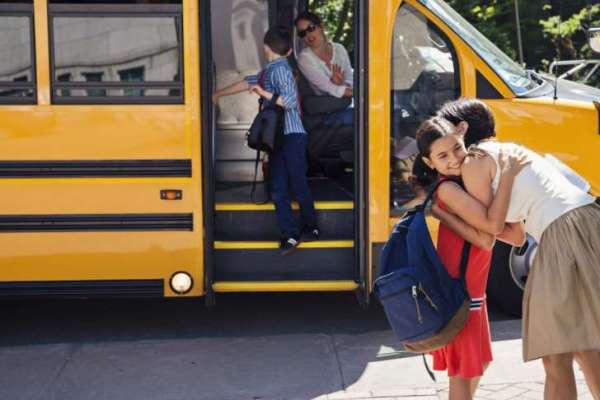 Mrs Sharma sounded worried when she handed over the school bag of her daughter to bus attendant, “Please tell the driver not to drive too fast. He fetches small children, They can fall off their seats “. The bus attendant just nodded her head in affirmation. Not satisfied with just a nod, Mrs Sharma moved to the front of the bus .”Please drive slow and take care of our children” she had told the driver. The driver too nodded his head. Mrs Sharma waited for the bus to move. She kick started her scooter . She paused for a moment and then turned her scooter towards the direction in which the bus had been going. She followed the bus at a safe distance and eventually having seen the bus safely getting into the school gate, she turned back . Such melodrama has been going on with Mrs Sharma for over a month now.
 Julie is only six years old .She studies in the neighborhood kindergarten school. She had been fine all this while and used to be very eager to go to school every morning .Last week suddenly out of the blue she complained of stomach ache and refused to go to school. Her mother had taken her to the pediatrician who found nothing wrong with the child . The child had been referred to the school counselor. A few sessions with the parents, the child and the class teacher revealed, the child has been always worried about her mother being alone at home and this worry always prevailed upon her mind.
 Mrs Narwhal was so much worried of getting affected by the germs or carrying the germs back home that she would hang an extra set of clothes in her toilet in advance , which she wanted to wear the moment she would get back home from her trip outside. Every time she had come back to her house, she would first get into the bath to wash her clothes, bathe herself in order to cleanse herself of all the germs that she thought she might have brought with her from outside. She would feel completely relieved once having done this ritual .But it is obvious, such a ritual can be a great pain to other members of her family as the rule of changing into the fresh clothes after returning from outside and of washing the clothes that had been worn for going outside immediately on return from outside played havoc with the peace of the family . Any kind of advise to Mrs Narwhal to stop worrying created further problems as she would avoid such person who would advise her to not to worry .
 Alka Mansik Pramarsh Foundation Clinical Psychologists-Family therapists Indore 0731-4263087,9179383554