Kalpana*, a company general manager, had a close call on the highway while driving home from work. Another driver abruptly overtook her, almost causing her to collide with the road divider. Startled and frustrated, Kalpana instinctively rolled down her window to express her anger. But as she noticed the other driver—a woman seemingly in a rush—Kalpana paused. In that brief moment, she considered the potential consequences of the encounter. She realized that her own rush to get home before her husband’s return had amplified her emotions, leading her to empathize with the other driver’s possible reasons for haste.
Such incidents are increasingly common as the frantic pace of daily life pushes individuals towards road rage. However, Kalpana’s ability to empathize allowed her to diffuse her anger—a crucial skill in managing intense emotions.
Anger is often misunderstood as a singular, isolated reaction, but it is actually a complex interplay of emotions and experiences. Recognizing this complexity is essential in addressing its underlying causes and preventing it from escalating.
Controlling anger is notoriously challenging, as it can lead to irrational behavior and negative consequences. Kalpana’s restraint on the road prevented a situation from spiraling out of control, a stark contrast to the unfortunate incident involving the Maharishi family.
Deepak Maharishi, a young man of 24, was driving his car with his mother beside him. As they neared their destination, an autorickshaw driver suddenly applied the brakes. Despite Deepak’s efforts to stop, his car bumped into the rear of the autorickshaw. Instead of assessing the situation calmly, Mrs. Maharishi immediately yelled at the autorickshaw driver, escalating tensions on the road. The confrontation soon spiraled into a chaotic scene, requiring police intervention to restore order.
Mrs. Maharishi’s reaction to the minor accident illustrates how unchecked anger can quickly escalate into larger conflicts. In moments like these, taking a moment to pause and assess the situation can prevent anger from overwhelming rational thought.
In contrast, finding ways to redirect attention—like Kalpana’s empathy, or even Manoj’s retreat to a serene location—can effectively diffuse anger. These strategies, though seemingly unconventional, offer powerful tools for emotional regulation.
In conclusion, managing anger requires a deep understanding of its origins and the implementation of effective coping mechanisms. By cultivating empathy, practicing self-awareness, and embracing moments of tranquility, individuals can navigate conflicts with composure and resilience, turning potential crises into opportunities for growth.
Rita, 32, has been negative and irritated for over a month. Her husband’s job is uncertain, and her bosses discuss similar issues at work.
David, 49, hasn’t dealt well with being denied a promotion. He feels his education, skills, and years of performance have been wasted. He fears premature retirement despite having more to offer.
Ashvani, 45, works globally but hasn’t had a project in a while, causing anxiety about his job. His family notices his stress, boredom, and anxiety.
Names are changed, but their situations are real. Careers seem to be falling apart suddenly. Why is their life in parentheses now?
The dreaded pink slip is making a comeback in IT and other industries after a decade of growth. Layoffs at companies like Microsoft, Google, and Amazon are causing anxiety and stress among employees. A job isn’t just a source of income; it’s a career, personal identity, and self-fulfillment. When threatened, it leads to negativity, self-criticism, and alienation.
From adolescence, we’re pushed to pursue careers that may not exist yet. We spend the first quarter of our lives getting educated and skilled for a job, and then our entire lives working. This affects our overall well-being. Realizing your job and career, the essence of your life, is being taken away can cause sleeplessness, stress, and unhappiness.
The threatening environment in the current job can negatively impact all aspects of life. It’s a wake-up call to reflect, evaluate, and plan—whether updating skills, upgrading, or finding a new career path.
How does this impact me and my family?
In today’s competitive era, any stage of life can bring the realization of a job’s psychological impact. Clients from early starters to top executives, exhausted and burnt out, question their career path. Well-intentioned parents push children into careers for financial security, often overlooking personal and professional needs.
Unfulfilling jobs negatively impact mental health. This needs addressing.
Signs of being in an unfulfilling career:
Feeling Wasted Time: Not living up to potential.
Low Self-Esteem: Unworthy, insecure, and fearful.
Job Threats: Worry about job security and financial well-being.
Relationship Stress: Long hours, dissatisfaction, and unappreciation.
What can I do to help myself?
Identify Emotions: Recognize how your career impacts your mental health.
Seek Professional Support: A psychologist can provide objective help.
Communicate: Discuss job stress with your spouse to avoid misunderstandings.
Journal: Reflect on your situations calmly.
Self-Care: Physical health is essential. Implement a self-care routine.
Change Perspective: Notice positive aspects of your job.
Make Changes: Evaluate options within your current position or environment.
Career Shift: If necessary, explore new career paths for fulfillment.
If your current career is negatively impacting your mental health, and you want to make changes, talking with a mentor, close friend, or family member can help. If you’re experiencing anxiety, anger, feelings of depression, or other negative emotions, and they are impacting your life, working with a therapist can help. You can get in touch with us at:
Have you of late been feeling deep in the woods? Do you feel the world is out to get you? Do you really feel the next Johnny is better than you? Do you want to just lie down and not look at the world in the daylight, with the curtains drawn and the lights off all the time? The day just seems to drag on, the night becomes all the more difficult, and sleep seems to have eluded you for many days. Do you look at the world as a real queer place with all the folks giving you advice to go and do something about it?
Do you:
Beat yourself up over silly mistakes,
Feel always sick and tired on account of not sleeping well,
Constantly grapple with unwanted thoughts running through your mind all the time,
Feel tormented with traumas and pains of life’s doings and undoings.
The doctor might say you have depression and a mood disorder. Others would simply call it an inability to face the stresses of the world and may associate it with anxiety attacks. Some could have compassion for you, or some could just call you a lazy buff. But do you really feel all that advice is necessary when all you are doing is being comfortable in the discomfort of inertia and the negation of the self?
But is it not a fact that you do want to feel truly good, only if someone could help you overcome this inertia of depression? The visits to the psychiatrists do not seem to have helped much, as they do nothing but prescribe a different medicine every time you go to them.
Here is a simple remedy that can help you overcome the negativity that seems to have entered your mind and life.
Make an attempt to accept yourself and feel a profound sense of warmth and self-importance. No, I am not advising you to become a megalomaniac, but asking you to feel the powers that be within you to resurrect your life. You have some magnetic power that makes you unique, that makes you “ME.” Identify this “ME” and make all efforts to become “ME.”
We often look at others and not only compare ourselves with others but also be always busy in the process of becoming others. But would becoming others make us happy or satisfied? No, not at all. The more we look outward towards others, the more we get dissociated with the self, the real “ME,” that always wants to excel and be recognized. But the rat race of becoming others, the eagerness of doing like the others do, pushes this “ME” to the unknown depths of ignominy.
We regularly conduct Preksha Meditation classes at Alka Mansik Pramarsh Foundation, and our experiences reveal that the meditation of self-acceptance makes people gain positivity and a happy state of mind which cannot be compared to others because, in this, there is no “other.” The learning of the self can definitely be compared to the learning of new things and being part of something bigger, some sacred and celestial happiness and satisfaction.
If you want to feel this, self-acceptance is the habit you need to inculcate gradually in your mind.
Start by writing all the positive things about you on a paper, even if you feel there is nothing positive that you can write about yourself, just write the following statement:
“I am a powerful person. I have the power of mind.”
Continue writing a full page, then meditate on this, and you will gradually start feeling good.
You must accept yourself in a positive fashion, and that will help you overcome barriers to self-acceptance. Come and learn with us the daily self-acceptance practices that result in psychological and emotional healing.
Ramneek Kapoor, Clinical Psychologist and Family Therapist, Science of Living, Preksha Meditation Expert
Rhea (name changed )had been wondering as to where had she gone wrong in her decision to make her marriage a dream marriage that she had always dreamt about. She had wanted her marriage to be a mean to her happiness and love. She wanted to share a home full of marital bliss with her life partner Sam . Those two had always been looked upon as if they were a kind of made for each other couple during the six month long courtship. It wasn’t long since everyone at their reception ceremony had praised their complementing and completing each other .
Yet something went wrong immediately after they had returned from their honeymoon.She to utter dismay felt that she was not able to cope up with the demands being made on her by the family members of Sam. .She was feeling bad that she had not come upto the expectations of her mother in law. Her husband would often find her guilty of having upset his mother.Her mother in law would insult her ,in the kitchen and would not allow her to cook anything. if she had really been trained to be a housewife only things would have been different.She has been a professional programmer in an I.T. company and her husband who worked alongside her in the same organisation knew it very well.Then why this sudden demand of attending to household work .She would get into the bed room to discuss the post wedding trauma with her husband who often refused to discuss anything about his mother’s stand.
Jatin’s (name changed ) wife had left home to be with her mother for a week, has not returned now for many months as she decided to get out of the marriage because Jatin has not been taking her out to their regular pub joint after marriage as had been promised by him before they got married.
Ruby and Rohit (names changed ) had a long history of having been in love with each other from their childhood days and their courtship continued for more than twenty years before they decided to tie their knot. But after marriage everything turned tipsy turvy when Ruby found out that Rohit had been two timings even when he was into relationship with her .
Some of these young people may appear to be living next to us or people could be within us . But young marriages are not the only ones having jolts and jitters . Couples in their fifties and sixties years of age too have been having tough time in current situations as they either moot separation or move forward to a divorce.
Said Sudhir (name changed) “Our journey towards a blessed relationship of matrimony happened 19 years ago. We have two sons (17 and 12 ) . Recently I saw my wife talking to someone on social media Thereafter it has been a journey full of hardships and everyday fights .My marriage and its subsequent outcome had far-reaching effects on both my emotional and physical heath, as well as my self esteem and personal identity .I have decided to end this tortuous relationship.
Marriage is changing and evolving .it’s meaning in all strata of society ,be it young ,old , middle aged couples ,any income group is not the same any more .
We have had and we continue getting couples from any age group ,financial and milieu as you have read in some of the cases mentioned above .
A life long commitment to matrimonial relationship is a turning into a burden for some of the young couples .And some of the elderly couples feel it has been a difficult journey . They want to bring it to an end .But the decision to separate , from your partner with whom you have been planning to turn your dreams into a reality and walk hand in hand with each other ;to separate marital life to finally making the decision to proceed with a divorce and to coping with the stress and heartache is not so easy either ..
This is where we at Family Therapy India can help couples like above and many others who are facing turmoils into their relationships .
Our Family Therapy ,Relationship and marriage counselling sessions can help you change your life for the better.
You can learn how your personal choices are affecting your life, and that your happiness is up to you. You can’t always change your circumstances, or the situations you face in your life, but you can change how you act or react to those circumstances. It is up to you to decide what your future will look like, and to create your own happily ever after. Our family therapy ,Relationship and marriage counselling can help you find yourself, and let go of the feelings of anger, frustration, betrayal, and despair that are holding you back. It can teach you how to set goals and move toward a positive and successful future within your marriage, You can learn how to make permanent, lasting changes that benefit both of you and of course other members of your family.
Our Emotions Focussed Therapy and Counselling can help you regulate your emotions and learn the process of the best decision making on personal, financial, and practical aspects of your life that will develop better understanding for you and your partner to reaffirm your relationship.
We offer Family therapy , relationship and marriage Counselling sessions for families ,men, women and couples who are living with children, recently married, thinking of separation, getting a divorce, or experiencing relationship difficulties .We strongly believe in helping all those couples who are facing difficulties within their relationship at any age to understand each other’s mental and emotional state . We help them to set their communication better and overcome obstacles that are preventing them from achieving the happiness they deserve.
Get in touch with us today or write to us mansikpramarsh@gmail.com
In a world where love often seems to flow outwardly towards others, we often forget the essential foundation of love: loving oneself. The adage “love yourself, because if you don’t, no one else will” rings true, yet many struggle to prioritize self-love amidst the demands of daily life and societal expectations.
The question of who the most important person in one’s life is elicits varied responses, revealing a common tendency to prioritize others over oneself. From romantic partners to children, parents, and friends, individuals often place their own needs and desires on the backburner in favor of nurturing relationships with others. This selflessness, while admirable, can lead to feelings of loneliness, emptiness, and even depression when one’s own needs go unmet.
Society has long praised the spirit of sacrifice as the ultimate virtue, but perhaps we’ve misunderstood the true essence of selflessness. While acts of giving and sacrifice are noble, they should not come at the expense of neglecting one’s own well-being.
Lord Krishna’s teachings to Arjuna emphasize the importance of acting without attachment to the outcome, but they also underscore the significance of honoring the self. Neglecting oneself in the pursuit of pleasing others ultimately diminishes one’s own capacity to give and love fully.
Self-love is not selfish; it is a prerequisite for genuine connection and fulfillment in relationships. Just as a mother must nourish herself to properly care for her child, individuals must prioritize their own physical, mental, and spiritual well-being to be of service to others. This concept may seem counterintuitive in a culture that glorifies self-sacrifice, but it is essential for creating sustainable and healthy relationships.
Cultivating self-love requires a conscious effort to prioritize one’s own needs and desires. It involves setting boundaries, practicing self-care, and acknowledging one’s worth independent of external validation. Learning to love oneself is a journey that requires patience, compassion, and vulnerability. It means embracing both our strengths and weaknesses, recognizing that imperfection is inherent to the human experience.
The path to self-love begins with self-awareness. Taking the time to reflect on our values, passions, and aspirations allows us to connect with our authentic selves. From there, we can identify the areas of our lives that need nurturing and attention. This may involve letting go of limiting beliefs, forgiving ourselves for past mistakes, and embracing our unique gifts and talents.
Self-love also involves practicing self-compassion. We are often our own harshest critics, but learning to treat ourselves with kindness and understanding is essential for fostering a positive self-image. Rather than dwelling on our flaws and shortcomings, we can choose to focus on our strengths and accomplishments. Self-compassion enables us to weather life’s challenges with resilience and grace.
Pampering oneself is not indulgent; it is an act of self-love. Whether it’s treating oneself to a relaxing spa day, indulging in a favorite hobby, or simply taking a moment to savor the present, self-care is essential for nourishing the mind, body, and soul. In a world that glorifies busyness and productivity, carving out time for self-care may feel like a luxury, but it is a necessary investment in our overall well-being.
Believing in our own worthiness is perhaps the most powerful aspect of self-love. When we recognize our inherent value as individuals, we no longer seek validation or approval from others. Instead, we derive our sense of self-worth from within, knowing that we are worthy of love and acceptance simply by virtue of being human.
In conclusion, embracing self-love is not a selfish act; it is a necessary foundation for building healthy, fulfilling relationships with others. By prioritizing our own well-being, we become better equipped to give and receive love authentically. Self-love is not a destination but a journey—one that requires patience, courage, and self-compassion. As we learn to love ourselves unconditionally, we pave the way for a life filled with joy, connection, and abundance.
Being in love is wonderful, isn’t it? Dating, feeling those butterflies, and longing to see each other again—it’s a special time. But as relationships grow, they change. Long-term relationships are about more than just love; they’re about managing life together.
When you’re in a long-term relationship, you’re not just looking out for yourself anymore. You’re building a life with someone else. That means dealing with all sorts of things: money, jobs, family, and more. It’s not always easy.
Communication is key. It’s how you talk about your problems and work through them together. Every argument is a chance to make your relationship stronger. Instead of fighting, try to understand each other’s point of view. That’s how you grow as a couple.
One of the hardest parts is merging your lives. You’re bringing together two different worlds, with different families, careers, and goals. It takes compromise and patience.
But even with all these challenges, it’s important not to forget about romance. As time goes on, the initial excitement might fade. You might find yourself focusing more on everyday worries than on each other. That’s normal, but it’s important to make time for romance too.
Romance doesn’t have to be grand gestures. It’s the little things that matter, like holding hands or cuddling on the couch. These small moments keep the spark alive.
Understanding each other’s needs is crucial too. Life is full of ups and downs, and you need to be there for each other through it all. When you have disagreements, listen to each other and find a solution together.
It’s also important to make each other happy. In the midst of busy lives, it’s easy to forget what really matters. But love is what makes life meaningful, so cherish it.
In the end, being in a long-term relationship is about facing life together. It’s about growing and learning as a couple. Yes, there will be tough times, but love will see you through.
In conclusion, long-term relationships are a journey. They’re about more than just love; they’re about building a life together. With communication, understanding, and a little romance, you can make your relationship stronger than ever. So cherish each other and the love you share—it’s worth it.
WHAT IS EYE MOVEMENT DESENSITIZATION AND REPROCESSING (EDMR)?
EMDR (Eye Movement Desensitization and Reprocessing) is a psychotherapy that enables people to heal from the symptoms and emotional distress that are the result of disturbing life experiences.
Francine Shapiro developed EMDR in 1987, she based EMDR on the notion that emotional distress can be processed when asleep during the rapid eye movement (REM). Phase.
She utilised this natural process in order to successfully treat Post-traumatic Stress Disorder (PTSD). Since then, EMDR has been used to effectively treat a wide range of mental health problems.
Repeated studies show that by using EMDR therapy people can experience the benefits of psychotherapy that once took years to make a difference.
It is widely assumed that severe emotional pain requires a long time to heal. EMDR therapy shows that the mind can in fact heal from psychological trauma much as the body recovers from physical trauma.
WHAT IS AN EMDR SESSION LIKE?
After a thorough assessment, you will be asked specific questions about a particular disturbing memory.
Eye movements, similar to those during REM sleep, will be recreated simply by asking you to watch the therapist’s finger moving backwards and forwards across your visual field.
Sometimes, a bar of moving lights or headphones is used instead.
The eye movements will last for a short while and then stop.
You will then be asked to report back on the experiences you have had during each of these sets of eye movements.
Experiences during a session may include changes in thoughts, images and feelings.
With repeated sets of eye movements, the memory tends to change in such a way that it loses its painful intensity and simply becomes a neutral memory of an event in the past.
Other associated memories may also heal at the same time.
This linking of related memories can lead to a dramatic and rapid improvement in many aspects of your life.
WHAT CAN EMDR BE USED FOR?
In addition to its use for the treatment of Post-traumatic Stress Disorder, EMDR has been successfully used to treat:
As Families go distant and international what happens to the elderly needs a special look.
Mr Subhash an octogenarian and his wife Sita a graceful old lady of 76 years have been roughing it out all alone for past twenty years or so. Their two sons moved out of the country in their career pursuits and have since settled abroad. A once in three years trip from either of their sons hardly provide the old couple a feeling of being part of the larger family. Yet they carry on taking care of each other. Mr Subhash suffers from sleep disorders , recurrent depression and anxiety. Sita fights her own battle with her old age issues yet bravely accompanying her husband to his sessions with the psychologist.
Similarly Mr Naweja a businessman finds it tough to carry on further as his son and daughter have moved out of home to metro cities to carve out their own career paths. Mr Naweja in his mid seventies suffers from and fights with many physical and mental ailments as he keeps his dates with doctors and the psychologist. He had lost his wife five years ago .A few months in the metropolis where his son works , were spent sitting alone at home but he eventually decided to come back and join business at his old place.
Mrs Khedekar lost her husband about twenty years ago when she was in her early forties .She didn’t give up then as her two sons were quite young and needed to finish their education.Her elder son moved abroad to meet his own career dreams and the younger one to another city for his pursuit of happiness.Years of loneliness has resulted into her developing psychosis ,schizophrenia and a host of other diseases.Though under the professional care of a trained nurse life is still very lonely for her resulting into periodic reversals of her treatment.
In recent times many of the older adults are leading their life all alone without the love and support of their near and dear ones as their wards necessarily have moved out on account of their careers to metropolitans , or abroad . In such a situation it is obvious that besides the emotional stress elders also have to take the stress of taking care of their mental and physical health and also to ensure a little bit of social health so that they don’t get loners and restricted to within .
In many cases it has been observed that the new couples prefer a life away from their parents in order to understand and know each other better and develop intimacy . Such a step is always good provided the periodic and regular touch with elders is maintained .
Let’s browse a few facts :
Globally, the population is ageing rapidly. Between 2015 and 2050, the proportion of the world’s population over 60 years will nearly double, from 12% to 22%.In India there are currently 138 millions elderly persons comprising of 67 million elderly males and 71 million elderly females .
Mental and neurological disorders among older adults account for 6.6% of the total disability (DALYs) for this age group.
Approximately 15% of adults aged 60 and over suffer from a mental disorder.
Maintenance of brain health is as important as the physical health of the elders .
While most have good physical health, many older adults are at risk of developing psychological ,mental disorders, neurological disorders and brain health problems.
They in their loneliness may develop substance use problems as well as other health conditions such as diabetes, hearing loss, and osteoarthritis.
As people age, they are more likely to experience several co morbid physical,mental and neurological conditions at the same time causing much distress to the elderly.
Risk factors for mental health problems among older adults
There may be multiple risk factors for mental health problems at any point in life. Older people may experience life stressors common to all people, but also stressors that are more common in later life, like a significant ongoing loss in capacities and a decline in functional ability. For example, older adults may experience reduced mobility, chronic pain, frailty or other health problems, for which they require some form of long-term care. In addition, older people are more likely to experience events such as bereavement, or a drop in socioeconomic status with retirement. All of these stressors coupled with the prospects of staying alone without the company of their near and dear ones can result in isolation, loneliness or psychological distress in older people, for which they may require long-term care.
Mental health has an impact on physical health and vice versa. For example, older adults with physical health conditions such as heart disease have higher rates of depression than those who are healthy. Additionally, untreated depression in an older person with heart disease can negatively affect its outcome.
Older adults are also vulnerable to elder abuse – including physical, verbal, psychological, financial and social abuse ; abandonment; neglect; and serious losses of dignity and respect. Current evidence suggests that 1 in 6 older people experience elder abuse. Elder abuse can lead not only to physical injuries, but also to serious, sometimes long-lasting psychological consequences, including depression and anxiety.
What is the way out for us? Is a question often asked by the family members ,when they bring their parents and other elders for a counselling session or for a family therapy interaction with the author .
Tanvi (name changed ) had come to the clinic along with her mother in law . Her mother in law stays alone in the city just refuses to leave her familiar home and move with her son abroad.The septuagenarian suffers from depression,anxiety , sleep issues .Tanvi had to eventually tell this psychologist,”I am leaving her to your care .You act as a local guardian for her and keep us informed of her welfare”.
Though Tanvi could say that but several others of such elderly and their wards are left at their wits end ,not knowing whether to abandon their dream careers and come back ,force the elderly to accompany them or to leave their senior members of their family at the hands of domestic workers and professional agencies .
The struggle continues .
Family is always happy when the elders are happy and healthy.
A desperate father wanting the child compete for competitive exam ,a helpless mother not able to help her child understand anything being taught in the class room or at the tutorials ,a frustrated teacher regularly complaining to the parents to displine their child or take him /her away from the class are instances that we come across every day. Instances of tantrums throwing , of anger bursts ,laziness regular fights with siblings , not listening to parents ,indulging into internet browsing ,surfing of unwanted sites,staying away from home till late hours or not listening to parents are often seen as bad behaviour ,bad habits and bad attitude by many parents.It is rather sad that parents do not understand all such things mentioned above could be on account of child’s poor mental health or mental disorders. Resultantly youngsters are not understood correctly and they suffer frustration and uncalled for irritation.A good mental health free from any kind of disease or disorder is what a child must possess . But what if and for those who are not so blessed ,do parents really understand how can they know if there is anything lacking in their child’s mental health and if so how to help their child cope up.
Differentiating Mental health and mental illnesses is very important for any parent ,teacher and all those who are involved in mentoring youngsters. A healthy mental health would mean that we are of sound mind and are capable of deciding what is good or bad for us and behaving well socially economically and emotionally. A mental illness may not necessarily mean that you can not be any of the above .It could mean that in some areas of your life you may be finding it difficult to behave and decide appropriately psychologically . A mental disorder or a psychological distress are two different concepts and parents need to understand how it may apply to their child if he /she exhibits a behaviour inappropriate to the situation.
Thus, it is essential to understand that psychological distress in a given situation does not indicate absence of mental health .A psychological disorder or distress can be short term ,or of a long lasting nature depending on how the person has been affected and hence affecting the child’s overall state of well-being. Mental illnesses, on the other hand, are health conditions involving changes in thinking, emotion or behaviour (or a combination of these). Mental illnesses are associated with distress and/or problems functioning in social, professional or family activities.
Mental health is a subjective phenomenon and an individualized experience, different for every person. A state of mental well-being for one individual may not be the same for another individual. Factors that may induce mental well-being for individuals will also differ. The state of being sound at a mental level can vary within a day and from day to day. There can be an incident that may boost or degrade a person’s mental health on a daily basis.
Thus, mental well-being is a daily affair.
Mental health is often seen to be on a continuum, where the scale starts from mental well-being on one end to emotional problems and concerns in the middle to mental illnesses at the other extreme.
It is often seen that mental health and mental illnesses are not understood correctly. There are a lot of myths that surround mental health and thus lead to the widely seen stigmatised approach. Let’s take a while to debunk the myths and understand the actual facts about mental health:
Myth #1: Mental illnesses are not real illnesses.
Fact: Mental illnesses are not the regular ups and downs of life. Mental illnesses create distress, don’t go away on their own and are real health problems. When someone is physically injured, they see a doctor. Similarly, mental health problems also require seeing a mental health professional- psychologist/counsellor/psychiatrist.
Myth #2: “Mental illnesses will never affect my child or me”
Fact: All of us can be affected by mental illnesses. Researchers estimate that as many as one in four Indians will experience a mental illness at some point in their life. You may not experience a mental illness yourself, but it’s very likely that a family member, friend or co-worker will experience challenges.
Myth #3: Mental illnesses are just an excuse for poor behaviour.
Fact: It’s true that some people who experience mental illnesses may act in ways that are unexpected or seem strange to others. We need to remember that the illness, not the person, is behind this behaviour. People who experience a change in their behaviour due to a mental illness may feel extremely embarrassed or ashamed around others. It is important to understand that people with a mental illness are one of us.
Myth #4: Stress causes mental illnesses.
Fact: No one factor can cause mental illnesses as these are complicated conditions that arise from a combination of genetics, biology, environment, and psycho-social factors. Stress may aggravate the mental or physical state of the problem for an individual but it is never the sole problem of an illness.
Myth #5: People with mental illnesses are violent and dangerous.
Fact: People who experience a mental illness are no more violent than people without a mental illness. It’s also important to note that people who experience mental illnesses are much more likely to be victims of violence than to be violent. Excluding them from society because they are violent is because of a misunderstanding and stigmatic approach to mental health.
Myth #6 : People who experience mental illnesses are weak and they have a character flaw.
Fact: Stress impacts well-being, but this is true for everyone. Many people who experience mental illnesses learn skills like stress management and problem-solving so that they can remain optimally functional. Taking care of yourself and asking for help when you need it are signs of strength, not weakness. Mental illnesses don’t determine the character of a person. Mental illnesses are like other ailments and can be managed.
Myth #8: People who experience mental illnesses cannot go to work or follow a regular lifestyle.
Fact: Mental illnesses do not certify that someone is no longer capable of working. Most people who experience serious mental illnesses want to work but face systemic barriers to finding and keeping meaningful employment. Medical or therapeutic help can allow them to resume work and a manageable lifestyle.
Myth #9: Children cannot have mental illnesses. Those are adult problems.
Fact: Even children can experience mental illnesses. In fact, many mental illnesses first appear when a person is young. Mental illnesses may look different in children than in adults, but they are a real concern at a younger age as well. Unfortunately, many children don’t receive the help they need. It is important to remember that illnesses can occur and be diagnosed as early as 6-8 months of age.
Being mentally healthy is not about being perfect. Nor is it about being extraordinarily intelligent or successful or rich. Mental health is irrespective of these factors. These factors may influence the mental health of an individual but they are not a cause nor do they determine the state of an individual’s mental health. We all can suffer from mental health problems and we all can attain better mental s health and healthy state of mind if we recognise the deviation in time
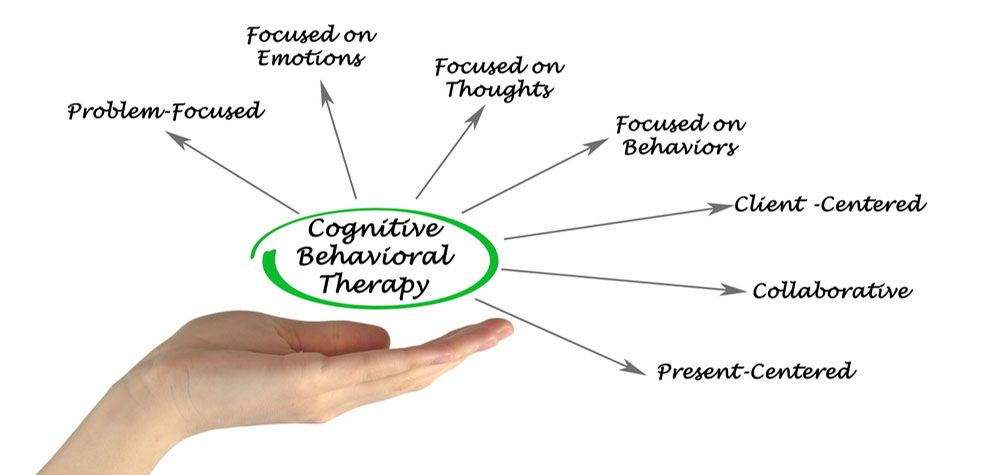
Cognitive Behavior Therapy is recommended to clients to get the necessary treatment for their negative thoughts to bring about the desired positive change .
The key principle behind CBT is that our thought patterns affect our emotional understanding of the events which, in turn, can affect behavior and subsequent interaction with the people we interact with .
CBT also is believed to make us aware of our own negative emotions influencing our thought patterns .CBT helps us analyse and understand others behaviour as elicited by our own emotional understanding of the situation.
CBT highlights how negative thoughts can bring about negative feelings and actions.Similarly how negative emotions can interpret a positive event ,in negative tones . But, if we reframe our thoughts in a more positive way, it can lead to more positive feelings and helpful behaviors.Or if we work on developing positive emotions about ourselves and situations the thoughts will become more accepting .
While conducting CBT the therapist trains the patient to recognise such negative reading by his mind and how to reinterpret the situation with a positive frame of mind. The patient can continue to use these skills so learnt, in all difficult situations and overcome depression,anxiety or other mood disorders .
Depending on the issue the patient is dealing with and the expected specific goals of the CBT , the therapist can make use of several ways to administer CBT. It will basically involve :
identifying specific problems or issues in the client’s day to day life.
Helping the client become aware of unproductive thought patterns and how they can impact his or her life
identifying negative thinking and reshaping it in a way that changes how he or she feels
learning new behaviors and putting them into practice
After speaking with the client and learning more about the issue the client wants help with, the therapist will decide on the best CBT strategies to use.
CBT involves making use of the appropriate combination of a few the following 9 strategies:
1. Cognitive restructuring or reframing
This involves taking a hard look at negative thought patterns. When we tend to over-generalize, and apprehend that the worst is about to happen , or tend to get into too much details for every thing we do we find it difficult to act. Our thoughts can prevent us from doing what we want to do and create havoc in our life.
The therapist in this situation will help us identify the negative patterns of our thoughts and inaction . He trains us as to how to reframe those thoughts so they’re more positive and productive and propel our action taking connative behaviour.
For example: “I am not valued in my office because I’m totally useless” can become “I may not be the best worker , but I’m as valuable an employee as can be and I contribute the same way as others do .”
2. Guided discovery
In guided discovery, the therapist will acquaint himself with our viewpoint. Then he will ask questions designed to challenge our beliefs and broaden our thinking.
The client might be asked to give evidence that supports clients assumptions, as well as evidence that does not.
In the process, the client will learn to see things from other perspectives, especially ones that he or she may not have considered before. This can help client choose a more helpful path.
3. Exposure therapy
Exposure therapy can be used to confront fears and phobias . The therapist will slowly expose you to the things that provoke fear or anxiety, while providing guidance on how to cope with them in the moment.This can be done in small increments. Eventually, exposure can make us feel less vulnerable and more confident in our coping abilities whenever the anxieties build up.
4. Journaling and thought records
Putting down your thoughts in writing is a very simple yet effective way of getting in touch with your emotions.One can list down repeated negative thoughts that occur frequently and disturb your homeostasis .It will certainly help to write down your positive thoughts also as would be the inclusion of new thoughts and new behavior for day to day interaction.
5. Activity scheduling and behavior activation
When you are in a negative frame of mind you tend to put off activities in fear or in anxiety.Writing schedules of such activities and visualising them before you begin practicing them can give you the confidence .With such a positive confidence it becomes easy to overcome negative emotions connected with such activities.
6. Behavioral experiments
Behavioral experiments are used for anxiety disorders that involve catastrophic imagining . The psychologist here asks you to express your apprehension as to what will happen if you perform the given task that you otherwise have been dreading to perform. Once you have (reluctantly ) completed the given task you are asked to talk about whether the apprehension came true. Over time, you may start believing that your apprehensive anxiety is not very valid as nothing that you expected to happen actually took place.
7. Meditation, Relaxation and stress reduction techniques.
Perceptive meditation, progressive muscle relaxation and positive imagery building exercises are undertaken to bring about a total positive control over mind ,body and soul to eliminate the phobias,fears anxieties and depression.
8. Role playing
Role playing can help us overcome negative thinking , apprehension and work through difficult relationship and situations. A role play out done with the help of therapist can lessen fear and can be used for:
improving problem solving skills
gaining familiarity and confidence in certain situations
practicing social skills
assertiveness training
improving communication skills
9. Successive approximation through small successes
This involves taking tasks that seem overwhelming and breaking them into smaller, more achievable steps. Each successive step builds upon the previous steps so you gain confidence as you go, bit by bit.
To know more about CBT and undertake the same ,please get in touch with us mansikpramarsh@gmail.com