
Feeds:
Posts
Comments

Posts Tagged ‘inspiration’

Our Intensive Intervention Protocol for Depression Anxiety and Stress and for Many other Mental Behavioural and Psychological Disorders

The recent breakthrough in the cerebral areas research (brain )has revealed that chronic stress, PTSD ,and Depression can damage brain circuits particularly in the Prefrontal cortex . This part of human brain talks to the other region that regulate mood ,motivation, fear and reward .Psychiatrists and neuropsychiatrists generally prescribe medicines to repair such damaged parts of prefrontal cortex and establish new pathways called synapses and also regrow the damaged neurons .(source Monitor on Psychology (June 2024) .Such medicines take a long time in bringing about the necessary changes in brain circuits.

We have however observed that the practice of swas preksha (perceptive breathing meditation ) done for prefrontal cortex’s helps in establishing connects to the inner parts of amygdala ,hypothalamus and cortex . Such activity done on regular basis every day for a few minutes under guided therapy can establish the synaptic connects again and in a faster manner .

In addition the process of Mahapran Dhwani (inner resurgic focussed sound therapy for stimulation of cerebrospinal areas and prefrontals )alongside the gut and mind areas helps in regrowing of neurons in the related areas.Such a guided therapy conducted on the gut and mind (vagus nerves ) also helps in the clearing of the vagal functioning and better recovery .

(This however is not a replacement for medicine treatment but additional supportive therapy for our clients in order to help them recover faster .)

The 10-Days Concurrent Neuro-Somatic Protocol has been developed by us after a combined experience of over 50000 -75000 counselling and perceptive meditations sessions , conducted over a quarter of a century expertise .For the past twenty five years or more we have been able to help thousands of depressed ,anxious and stressed people overcome their distresses and disorders .

We now offer the same to millions of others to help then come out of their mental , emotional ,behavioural and psychological problems in a more disciplined sustained and comprehensive manner .
Daily Schedule Commitment:
60 Minutes Total (3 x 20-Minute Modules)
Days 1 to 10: The Daily Tri-Phasic Session of an hour both offline in person or online through video calling sessions.

Every Day , the client completes three distinct 20-minute interventions to address the nervous system as a whole system:
Module 1: Cerebrospinal Stimulation Therapy (20 Minutes)Mechanism:Fluid dynamics and central nervous system structural regulation.
Daily Target: Calming autonomic arousal, establishing absolute physical safety, and preparing the spinal axis to receive neural signals.
Module 2: Gut and Mind Therapy (20 Minutes)Mechanism: Central nervous system regulation and vagal nerve processing.
Daily Target: Releasing visceral emotional blockages, balancing microbiome-to-brain signals, and stabilizing the chemical foundations of mood.
Module 3: Perceptive Meditation & Prefrontal Cortex Connects (20 Minutes Mechanisms )
: Synaptic activation and cortical network integration.
Daily Target: Actively re-establishing suppressed neurons and synapses. Removing barriers between the prefrontal cortex and the wider cortex to instantly correct how current real-world situations are perceived and processed.
Day 10 :
The Post-Protocol Clinical Review and further action plan.

All those who are really keen on helping themselves in a more positive and planned way to treat themselves out of their disorders and lead a better peaceful daily life can connect with us at

http://www.mansikpramarsh.com

http://www.familytherapyindia.com

Or write to us at 

Mansikpramarsh@gmail.com 

We look forward to really help you

Read Full Post »

Neena felt desolate and lonely, and she suffered a sense of disorientation as she had been denied the job she was so confident of getting.

Rueben had completely given up after he had been passed over for a promotion, with his employer company preferring another candidate much junior to him in experience.

Tamanna felt numb and low after her boyfriend Nahar dropped her and opted for another relationship.

All these people have been denied and rejected from doing whatever they had expected or wanted to do. Some of them had worked for and invested years in reaching where they wanted to be in their careers or relationships.

Photo by http://www.kaboompics.com on Pexels.com

Many such rejections have been witnessed in recent times, where people had to leave their homes and friends abroad after being denied extensions of visas, or students had to shelve their study plans for similar reasons.

Getting rejected breaks morale. It hurts to the core too. Whether it’s being rejected by a suitor, denial of a much-awaited promotion, or a rejected job interview, rejection is not always taken in an acceptable manner. Even though people are sometimes apprehensive of hearing a “no,” they do not want to hear it for fear of not being approved.

For some people, the fear of hearing “no” becomes so strong that it stops them from taking risks or asking for what they want. Rejection sensitivity can deeply affect daily life, leading to anger, irritation, financial stress, social stress, and often much more than what is stated above.

With so many layoffs, upheavals, and shelving of long-term plans, the hopes and confidence of many are getting derailed.

Let’s understand how we can deal with rejections and the shattering of dreams and expectations, and make rejections less hurtful and more introspective in an accepting way to help rebuild mental and emotional strength and move forward. It sounds easy, but it is not. That’s where the process of “rejection therapy” plays a very positive role in rebuilding and re-emerging as a better person.

What is rejection therapy, and how does it help?

We would rather call it a reconfirming self-technique, where we undertake self-acceptance, self-expression, and a self-improvement process that we can practice on our own when needed.

In this therapy, instead of avoiding situations where we might be told “no,” we actively anticipate them without causing apprehension and anxiety.

The dynamic social environment carries a lot of grapevine, and if we pay attention to these rumours, we can expect to be either accepted, ignored, or rejected. The anticipated discomfort begins much in advance, and we can build resilience to it in smaller steps.

You start with tiny social challenges where you expect to be rejected, and then gradually build your tolerance to discomfort.

The goal isn’t to reject rejection. The exercise helps build confidence, reduce social anxiety, and not permit fear to control your life. When we realise that rejection does not mean as much as we thought—and that many people are kinder than we imagine—it becomes easier to take risks that matter.

But that doesn’t mean you should expect only negative results. Being hopeful and positive has its rewards, and that realisation brings happiness and acceptance.

Wherever you fear and anticipate rejection, acceptance can bring wonderful surprises and self-acceptance.

Gradually, the human brain learns that rejection can be worked through by looking for substitute rewards, and that rejection is not as damaging as expected.

Small steps in dealing with anticipated refusals make you more accepting and comforted. You move on in life and develop maturity and patience to bear the brunt of major challenges.

Each rejection handled with calmness and maturity builds mental and emotional strength and equips the brain with a better understanding of the subject, developing resilience and adjustment.

Rejection then becomes less painful and traumatic as you learn to manage such situations deliberately.

Rejection becomes less self-effacing and more about learning and adjustment. Your brain rewires itself to see social situations as opportunities for growth rather than threats to avoid.

If the thought of anticipated rejection or refusal causes severe anxiety, panic, or intense negative emotions, you should seek professional support from a therapist rather than trying to handle it alone. We at Alka Mansik Pramarsh Foundation can help you manage such anxiety, fear, or panic and help you move forward.

Rejection does not define your life in totality. It can be an opportunity to build a stronger future and prepare yourself to overcome the fear of rejection.

When you stop letting the possibility of hearing “no” determine your worth and start adding value to your decisions for the future, you open yourself to opportunities, connections, and experiences you might have overlooked.

You can contact us at Alka Mansik Pramarsh Foundation if you feel you need professional counselling in the following situations:

  • When your anxiety, fear, or stress worsens and causes distress
  • When you are unable to move past feelings of rejection and constantly feel sad or hopeless
  • When you experience panic
  • When you develop physical symptoms or traumatic stress linked to negative thoughts
  • When you find yourself becoming avoidant, overly self-critical, or nihilistic
  • When you feel overwhelmed or have thoughts of self-harm
  • When you are unable to carry out your day-to-day functioning

Please call or reach out to us at @mansikpramarsh. We would be glad to help you.

Read Full Post »

pm2Ashu (name changed) could not do anything in life ever since he had been diagnosed of schizophrenia by the psychiatrist. He had been prescribed psychotic medicines by different psychiatrist doctors wherever his family had taken him to them .Yet nothing helped. His fears and phobias had worsened with time. The voices in his head continued disturbing him. His logical cognitive ability had been completely distorted and for him all the delusions had become the real images and characters.

meditation singleSimilarly Sheena (name changed) continued with the fear and phobia of persecution at the hands of a person who had long moved out of her life five years ago. Sheena had been diagnosed of delusional disorder (a psychotic disorder).Her life had become completely miserable as she would often get lost into her phobia and would not be able to conduct her normal day to day routine life.

Schizophrenia is a psychiatric disorder that disables and distorts the logical thinking and cognition of the individual affected by this chronic brain disorder involving “positive” and “negative” symptoms.

Positive symptoms relate to hallucinations (hearing voices or seeing visions that aren’t real), delusions (fixed false beliefs), and disorganized thinking or speech. People suffering from active positive symptoms often respond to those symptoms in ways that are obvious to others around them (e.g., agitation, disorganization).Ashu, mentioned above had suffered from imaginative voices in his head hearing that someone is out to prosecute him and that he would be sent to prison. While these thoughts were not visible to others but he often complained of hearing voices and attributed the voices to one of the persons he had been dealing with in his family business.

Negative symptoms relate to substantial decline in the affected person’s social interactions, communication, and motivation to conduct day to day affairs. Sheena had displayed negative systems when she had been referred to us for, a “split personality.” behavior, but Schizophrenia has nothing to do with split personality. She had been suffering from delusional disorder, a kind of schizophrenic psychotic disorder.

Ashu and Sheena both exhibited resistance to antipsychotic medications and their family members were definitely at a stage when nothing could help them. Ashu did sometimes show partial improvements only to go back to from where it had all started. We noticed that Sheena’s problem continued to be more chronic and affected all aspects of her life. She did not respond to any psychotic medications being administered by the psychiatrist.

But both Sheena and Ashu found it difficult to establish and maintain relationships within the family and externally. They were unable to carry on their day to day work on account of mood swings and delusions that would take a toll of their logical thinking. Both had virtually cut themselves off socially. Their disordered thought process prevented them to understand that they were not normal in their thinking faculty like other people in their lives. Their family too found it quite an uphill and expensive task   to follow the treatment handed out to them by the doctor every fortnight on account of heavy cost and also due to the patient’s refusal to take the medication.

We decided to make good use of Mindful Perceptive Meditation Therapy and Cognitive Behavior Therapy together to treat both Ashu and Sheena regularly on every alternate day basis in order to maintain regularity and without giving them a chance to revert to their pre conditioned schizophrenic way of thinking and cognition. Initially we found it difficult to communicate with the subjects as they would either not come for counseling or if they had come, they would not pay attention to what was being discussed. Gradually they started to respond to our instructions. We had begun the treatment with “Shwas Preksha ‘(Mindful Perceptive breathing exercise on the psychic centers) conducted under the watchful eye of the expert instructor. Soon we started noticing a significant improvement in both of our clients.

Thereafter we had begun with them the activities of “Mindful Perceptive Meditation” which involves both body and mind into deep meditation on the psychic centers, being fully aware of the moment and the breathe present in every living moment in its total intensity”. This continued along with the regular exercises of Kayotsarga to provide the much needed peaceful perception of the body through mind. Kayotsarga is a process of meditation that dissociates the physical body from the mind and it puts the muscles of the body to   complete rest progressively, somewhat similar to progressive muscle relaxation technique.

Peaceful-Mind-Remedies-South-Croydon-426x426Soon a very significant improvement could be noticed in certain negative symptoms, (e.g., negativity about self and family, sense of doom, lack of interest in surroundings and /lack of drive) started yielding to positive thoughts on all these issues .The clients did respond well as we noticed Ashu and Sheena both had begun looking at the positive aspects of their life. Their sense of appreciation for some aspects of their lives could be felt in their daily interaction with us. We could see their interest reviving in their day to day life too exhibiting positive symptoms.

These results had further been strengthened by the process of Mahaprana  Dhwani {greater inner sound effects  produced by the help of mouth and nose while exhaling  the breath by the patients }reformed  on all psychic centers during the process of deep perceptive breathing exercises and exhalation  undertaken by the patients.

Mindful Perceptive Meditation and CBT has been very effectively used by us in a variety of psychiatric/psychological disorders .We had used Mindful Perceptive Meditation and positive affirmative techniques to enable the affected person correct the functioning of endocrine glands producing negative steroids and emotions and subsequent faulty thought process .The practice of CBT generates critical cognition of actual position of the situation and helps analyze all kinds of thoughts with objectivity and factual back up. The Mindful Perceptive Meditation therapy supports written affirmative statements about the self and situations which would be given as homework exercises and are reviewed later with the clients. The whole process was focused on changing the negative perceptions about self and situations to positive emotions and thoughts.

Generally a patient requires 50 to 60 sessions over a period of three to four months. But in severe cases the sessions (each running for 45 minutes to one hour) can go up to 90 to 120 sessions over a period of 6 to 9 months’ time like it had been extended in these two cases for up to 6 months.

It gives us greater satisfaction and happiness that eventually after a hard work of six months , the patients had been cured of their problems to a large extent and with the help of their family and friends,  the process of rehabilitation  of both of  them into the family and society had been achieved.

We have   been making use of Mindful Perceptive Meditation and Cognitive Behavior Therapy successfully in many other cases of depression, anxiety, stress and many other psychotic disorders and many have been restored to their normal life.

Perceptive Meditation enables you live in and with your breath taking your mind away from your anxiety stress and worries of life .It empowers you to live in the moment with complete mindfulness of your soul ,body and mind “. Ramneek Kapoor.
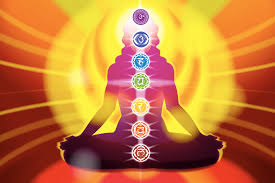
If you have someone in the family suffering from any such disorder,Come and discuss with us how to proceed.

You take the first step today and  we help you  find the much needed happiness.

Call  on us @9179383554 or write to us @ mansikpramarsh@gmail.com

-Ramneek Kapoor – Family Therapist, Psychologist Counselor and Science of Living Expert.


Read Full Post »

download“Perceptive Meditation enables you live in and with your breath taking your mind away from your anxiety stress and worries of life .It empowers you to live in the moment with complete mindfulness of your soul ,body and mind “. Ramneek Kapoor.

What is Perceptive Meditation and What is Mindfulness ?

images (11)

“Perceptive Meditation is the intense involvement of body and mind into deep meditation on the psychic centres being fully aware of the moment and the breathe present in every living moment in its total intensity”

Mindfulness refers to the process of focussing complete attention to the present moment of life and living life in its every moment with complete awareness .This enables acceptance of life’s every moment in its totality and being aware of life in a non judgemental manner .In a way Perceptive Meditation and Mindfulness both work in the same direction for the same purpose.

How do Perceptive Meditation and Mindfulness help when Practiced together
  • Both are practiced with the mind fully present in the here and now
  • Perceptive meditation through the process of Srir Preksha {Perceptive Meditation on various parts of human body each focussed separately } helps the protagonist meditate on the various parts of the body to experience both the negative and the positive without reacting or expressing any likes or the dislikes, love or hatred for any part , making the journey of the mind through the pleasant or the unpleasant thoughts sans reactions and thus developing a feeling of equanimity in all kinds of circumstances. Mindfulness is similar way of experiences of the pleasant and unpleasant being fully aware and feeling unthreatened .
  • Perceptive meditation develops better connect to the self and in the process bringing better acceptance of the internals with the externals, and of the other humans in the world around with complete mindfulness
  • The process of practising deep meditation in total mindfulness of the psychic centres brings about a complete peace of mind, a better physical , mental and emotional health in the individual and empowers with the cosmic energy.
  • The process of kayotsarga ie, the progressive mindful journey on all the body parts and psychic centres to dissociate the psychic centres and body parts consciously from the mind brings about a total; celestial self-awareness
  • The process of Lesya Preksha (mindful perception of the celestial colourful lights )on the psychic centers brings about a total peace of mind, better mental and emotional health and develops acceptance of all kinds of ups and downs in life without extreme reactions , thus empowering the mind for better tolerance and understanding .
  • Mindful perceptive meditation of the psychic centres helps separate the thoughts from the emotions distinguishing imagined from the reality.
  • Mindful perceptions of the psychic centres teaches to the practitioner that everything is temporal and that everything changes; that same way emotions, thoughts and feelings are also short-lived and temporary like the weather.Nothing remains permanent .
  • Perceptive meditation with total mindfulness brings about better balance of mind and emotional stability.
  • Mindful Perceptive Meditation brings about serenity ,calmness and peacefulness.
  • The mindful perceptive meditation makes the practitioner aware of the negative and the positive both and trains to focus the mind on positives .

Perceptive Meditation, Mindfulness and Psychotherapy

preksha dhyanMindful Perceptive Meditation on Psychic Centres is a very powerful, evidence-based meditation tool for enhancing emotional ,psychological and mental health.

It has very successfully been used as an effective intervention in a wide range of clinical disorders, including bodily distress disorder,psychosomatic pains, chronic stress disorder, anxiety disorders, depression, PTSD, OCD, substance abuse, and other neurotic and psychotic disorders bringing relief to the affected .

Read Full Post »

POWERFUL SCIENTIFIC SPIRITUAL STRESS FREE MEDITATION PROGRAM FOR COMPLETE CURE FROM MENTAL AND PHYSICAL DISEASE,DEVELOPS HEALTHY MINDSET,REMOVES NEGATIVE WORRIES, LEADS TO RICH JOYFUL AND STRESS-FREE PEACEFUL LIBERATED LIFE.

DURATION: 3 WEEKS’ INDIVIDUAL/GROUP CLASS WITH PERSONAL ATTENTION

group med.jpg

Perceptive Meditation relieves you from all kinds of melancholy, loneliness, depression tensions, worries and disorders. Perceptive Meditation means meditating upon the breathing system, the psychic centers and the inner consciousness, resulting into elimination of loneliness , depression, anxiety , stress and finding a peaceful mind, a perfect emotional balance and a complete control over your body and mind.
Scientifically proven Preksha Meditation and Kayotsarga is the most powerful way of gaining spiritual control over one’s body and mind. It is the ideal perceptive meditation for cure from all the illness of the mind, gaining positivity in life and obtaining freedom from never-ending, troublesome thoughts and worries. It helps calm the disturbed mind.It is the scientifically proven way to attaining inner peace of mind and world happiness.
Ramneek’s Science of Living and Preksha Meditation Centre,Indore welcomes you to attend scientific spiritual stress free meditation program – an intensive self perception schedule to learn the secrets of mental peace, good physical health and perfect emotional balance .
1. Learn the scientific spiritual preksha meditation techniques that you can practice lifelong
2. Identify and realize the Shakti (chaitanya Kendras) within yourself
3. Adopt an ethical lifestyle for a healthy mindset, positive thinking, worldly successful and peaceful living
4.Enjoy life more intensely and passionately
5. Get free from all kinds of fears, phobias and stress, anxieties and depression
7. Control manage and get free from all kinds of mental and physical pain
8. Live life full of meaning, enjoyment, gaiety fun and playfulness.
Take a decision today and get rid of :
• Depression/anxiety/stress
• Feeling of insecurity/loneliness
• Forgetfulness/ memory getting weak
• Irritability/anger
• Focus/Problem concentrating
• Restlessness/sleeplessness
• Sadness/melancholy
• Fatigue/feeling tired always
Managing life free from psychological issues/ anxiety/ depression/ and other psychiatric /behavioral problems is all about taking charge: of your thoughts, emotions, mindset, through the perceptive meditation /kayotsarga and get empowered to deal with your problems with more internal confidence .

Contact today to book your schedule:

meditation-percRAMNEEK’S SCIENCE OF LIVING AND PREKSHA MEDITATION CENTRE

MOBILE 9179383554,7024441183,7224896739.LAND:07314263087
FLAT 102, DEVKI MANSION,16 BAIKUNTH DHAM, INDORE ,M.P. 452018,INDIA
EMAIL: MANSIK PARAMARSH@GMAIL.COM, RAMNIK123KAPOOR@GMAIL.COM

preksha-meditation

Family that prays together stays together

Alka Mansik Pramarsh Foundation

Read Full Post »

emotional intelligenceWhen we achieve balance of emotions in our day to day life , we get a sense of self  mastery and well being. But instead of managing balance of emotions we tend to get swayed by  the event. We brood over the event and the person that has stirred the emotional upheaval and bring about the imbalanced attitude of negative emotions.


Emotional balance on the other hand would mean giving ourselves the necessary   preference, importance, care , nurturing and intelligence to conduct our life in such a way that it should offset the negative tilt and bring about the positive uplift within our mind and heart .We are designed to live in a healthy combination of emotional balance and wisdom. But we get carried away as we mentioned above.

Emotional balance would not mean controlling emotions . We can not mute our emotion by the use of any remote device , nor can we make them very loud. Life in both cases will become very bland and uninteresting . What if we keep on saying all the time that, ” I am very sad today”, or we just brood over the event and present a sad face. Similarly living in one emotion always is not desirable. Can we always be happy, buoyant and celebratory all the times ? if not then why should we remain sad, anxious , melancholic and stressed all the times. Such downs and ups of the moods and emotions add spice and entertainment to our life.The Downs present us with the challenges and Up would always make us happy. But the Ups too present to us the challenge  for not going overboard.

We do not need to avoid the unpleasant feelings, relations, events or places . On the contrary feel empowered to balance the negative with the positive of life, by looking at and perceiving all aspects of life.  Most of the times we get overpowered by the negative emotion and get stuck with that. Such negatives take over our life in the morning itself and we continue with it through most of the day.

download (2)

Balancing emotions must remain a consistent , constant, factor of our life. We must keep balancing with different moods in the day. All free time available should be utilized for balancing. Think  of the good times that you have had, the good things of life , the good events that you had participated in , to offbeat the bad happenings. Learn to soothe your mood by treating your self nicely, differently and importantly .Give importance to yourself .Have a say in how long you will stay in bad mood. Thereafter shift your focus , hit upon the new entertainment, the new treatment of self. The intensity of the bad emotion and the bad mood will come down.

download

Chronic pain, chronic bad mood , chronic losing yourself into  bad emotions should be broken by intermittent good mood. Bad mood can be balanced by small wins of good mood . Before we get into clinical or manic depression , balancing emotions with small good treats, small wins will prevent the coming of the anxiety, stress, fear, and subsequent depression.

Ramneek kapoor,Clinical Psychologist and family Therapist,Science of living ,Preksha Meditation expert.\

family therapywsi-imageoptim-family


Read Full Post »

We  all  have a very naughty monkey living within our physical and mental system . This  little monkey known as the mind keeps on playing the  games within our  cerebral and emotional subsystem . And we as little kids and sometimes as grown ups keep on taking part in the games   that this little NON -HOMINOID devices for us while the cerebral games  can be managed analytically it is very important to understand the emotional games.   Emotions are the deepest  part of our personality . it is not possible for a normal person to understand and go deep into the foundation and forming of these emotion. These emotions can be good , bad , positive , negative or even neutral. Our mind is run by these emotions . we have good emotions prevailing our mind will be good , or in case of negative emotions our mind also  becomes negative .our very existence is connected to the running of our emotions . In the current video and the  subsequent presentation we shall be discussing about the  emotions and the ways to manage the emotions.

Read Full Post »

on the occasion of Doctors Day  we are releasing the second video by Dr. Ramneek Kapoor on youtube.

In this segment, Dr. Ramneek Kapoor, Psychologist, Family Therapist, Science of Living and Preksha meditation expert, talks about the need for self acceptance to deal effectively with depression, anxiety and stresses of life.

Read Full Post »

Dr. Ramneek Kapoor, Psychologist, Family Therapist, Science of Living and Preksha meditation expert, talks about the need to enhance self acceptance to deal effectively with depression, anxiety and stresses of life.

All my friends now get the benefit of my counseling and guided meditation for their mental health and well-being. Presenting my new YouTube channel. Do like, share and subscribe! #MentalHealthMatters

Read Full Post »

Powerful scientific spiritual stress free meditation package for healthy ethical mindset, free from negative worries, mental and physical disease, completely richly joyful and stress-free liberated life.

Duration: 3 Months Individual   class with personal attention

Meditation relieves you from all kinds of tensions, worries and disorders. Meditating upon the breathing system, the psychic centers and the inner consciousness, results into a peaceful mind, a healthy emotional balance, a worldly wisdom and an ordered, discipline. Know well what leads you forward and holds you back, and choose the path that leads to wisdom.” -Gautama Buddha
Scientific preksha Meditation and kayotsarg is the most powerful way of gaining spiritual control over one’s body and mind. It is the ideal meditation for gaining positivity in life and obtaining freedom from never-ending, troublesome thoughts and worries, calming the disturbed mind.it is the divine way to attaining inner peace of mind and world happiness.
Mansik Pramarsh, Indore welcome you to attend scientific spiritual stress free meditation program – an intensive three-months  schedule to learn the secrets of preksha meditation.
1. Learn the scientific spiritual preksha meditation techniques that you can practice life-long
2. Identify and realize the Shakti (chaitanya Kendras) within yourself
3. Adopt an ethical life-style for a healthy mindset, positive thinking, worldly successful and peaceful living
4.Enjoy life more intensely and passionately
5. Get free from all kinds of fears, phobias and stress, anxieties and depression
7. Control manage and get free from all kinds of mental and physical pain
8. Live life full of eagerness, meaning, enjoyment, gaiety fun and playfulness.
take a decision today and get rid of :
• Depression
• Feeling of insecurity
• Forgetfulness
• Irritability
• Problem concentrating
• Restlessness
• Sadness
• Fatigue
Managing stress is all about taking charge: of your thoughts, emotions, schedule, and the way you deal with problems.

Read Full Post »

Older Posts »