Feeds:
Posts
Comments

Posts Tagged ‘psychological counseling’

Have you of late been feeling deep in the woods? Do you feel the world is out to get you? Do you really feel the next Johnny is better than you? Do you want to just lie down and not look at the world in the daylight, with the curtains drawn and the lights off all the time? The day just seems to drag on, the night becomes all the more difficult, and sleep seems to have eluded you for many days. Do you look at the world as a real queer place with all the folks giving you advice to go and do something about it?

Do you:

  • Beat yourself up over silly mistakes,
  • Feel always sick and tired on account of not sleeping well,
  • Constantly grapple with unwanted thoughts running through your mind all the time,
  • Feel tormented with traumas and pains of life’s doings and undoings.
Depressed man sketch clipart“/ CC0 1.0

The doctor might say you have depression and a mood disorder. Others would simply call it an inability to face the stresses of the world and may associate it with anxiety attacks. Some could have compassion for you, or some could just call you a lazy buff. But do you really feel all that advice is necessary when all you are doing is being comfortable in the discomfort of inertia and the negation of the self?

But is it not a fact that you do want to feel truly good, only if someone could help you overcome this inertia of depression? The visits to the psychiatrists do not seem to have helped much, as they do nothing but prescribe a different medicine every time you go to them.

Here is a simple remedy that can help you overcome the negativity that seems to have entered your mind and life.

Make an attempt to accept yourself and feel a profound sense of warmth and self-importance. No, I am not advising you to become a megalomaniac, but asking you to feel the powers that be within you to resurrect your life. You have some magnetic power that makes you unique, that makes you “ME.” Identify this “ME” and make all efforts to become “ME.”

We often look at others and not only compare ourselves with others but also be always busy in the process of becoming others. But would becoming others make us happy or satisfied? No, not at all. The more we look outward towards others, the more we get dissociated with the self, the real “ME,” that always wants to excel and be recognized. But the rat race of becoming others, the eagerness of doing like the others do, pushes this “ME” to the unknown depths of ignominy.

We regularly conduct Preksha Meditation classes at Alka Mansik Pramarsh Foundation, and our experiences reveal that the meditation of self-acceptance makes people gain positivity and a happy state of mind which cannot be compared to others because, in this, there is no “other.” The learning of the self can definitely be compared to the learning of new things and being part of something bigger, some sacred and celestial happiness and satisfaction.

If you want to feel this, self-acceptance is the habit you need to inculcate gradually in your mind.

Start by writing all the positive things about you on a paper, even if you feel there is nothing positive that you can write about yourself, just write the following statement:

“I am a powerful person. I have the power of mind.”

Continue writing a full page, then meditate on this, and you will gradually start feeling good.

You must accept yourself in a positive fashion, and that will help you overcome barriers to self-acceptance. Come and learn with us the daily self-acceptance practices that result in psychological and emotional healing.

Ramneek Kapoor, Clinical Psychologist and Family Therapist, Science of Living, Preksha Meditation Expert

Read Full Post »

Entering into marriage is a significant milestone in any couple’s life. As two individuals commit to sharing their lives together, it’s not uncommon for questions, doubts, and concerns to arise. Recognizing the importance of solidifying their foundation, many couples turn to pre-marital counseling to address these issues. However, before embarking on this journey, it’s essential for couples to understand what questions to ask their psychologist counselor.

1. What should we ask the counselor separately and as a couple?

Individual concerns and dynamics within the relationship are crucial aspects to address. Asking about the structure of counseling sessions and how they balance individual and joint discussions can help clarify expectations.

2. Does every couple need pre-marital counseling?

While it’s not a requirement for every couple, pre-marital counseling can offer invaluable insights and tools for navigating the challenges that may arise in marriage. Discussing whether it’s right for their specific situation is essential for couples to consider.

3. We’ve known each other for so long, why do we need counseling now?

Even couples with a long history may benefit from counseling. It provides an opportunity to explore aspects of the relationship that may not have been previously addressed and to ensure both partners are on the same page regarding their expectations for marriage.

4. Will counseling sessions be private, or will other couples be involved?

Understanding the format of counseling sessions is vital for couples’ comfort levels. Discussing preferences with the counselor can help tailor the experience to suit the couple’s needs.

5. Will our parents be involved in the counseling process?

While parental involvement is not typically a standard part of pre-marital counseling, some couples may choose to involve their parents in discussions about family dynamics or cultural expectations. Clarifying this with the counselor can help set boundaries and expectations.

6. How will counseling help us build a strong marital relationship?

Exploring the specific goals of counseling and the strategies the counselor employs can provide insight into how the process will benefit the couple. From communication skills to conflict resolution techniques, counseling offers practical tools for building a resilient partnership.

7. How many sessions will be necessary?

Understanding the time commitment required for counseling is essential for planning purposes. While the number of sessions can vary depending on the couple’s needs and goals, discussing a rough timeline with the counselor can help manage expectations.

Navigating the complexities of pre-marital counseling requires open communication and a willingness to address difficult questions. By engaging in this process, couples can lay the groundwork for a healthy and fulfilling marriage, equipped with the tools to overcome challenges and grow together.

Read Full Post »

Entering into a new relationship is akin to embarking on a journey filled with excitement, anticipation, and perhaps a touch of apprehension.

As individuals, we navigate through life’s roles and responsibilities, often enveloped within our self-imposed privacy within families and societal constructs. Preparing for a new relationship involves acknowledging and addressing the stress and strains inherent in our individual lives while nurturing the foundation for a fulfilling partnership.

Marital counseling emerges as a pivotal tool in this journey, offering couples a roadmap to create a relationship that harmonizes the need for personal space with the desire for intimacy. It serves as a guiding light, illuminating the path towards a bond characterized by mutual respect, understanding, and unwavering support. Through counseling, couples are encouraged to envision their relationship as two fully bloomed flowers, each exuding its unique fragrance of love and affection while coexisting in harmonious unity.

The journey of preparing for a new relationship is underpinned by a dedication to marriage—an unwavering commitment that serves as the bedrock upon which enduring love is built. This dedication transcends mere words, encompassing a myriad of qualities essential for a thriving partnership.

Love forms the cornerstone of this dedication, infusing every interaction with warmth and compassion. Humor acts as a balm, easing tensions and fostering a sense of joy in shared moments. Mutual growth becomes the guiding principle, as couples embark on a journey of self-discovery and evolution, hand in hand.

Resilience emerges as a defining trait, as partners navigate life’s inevitable challenges with unwavering strength and fortitude. Shared goals provide a common purpose, binding couples together in pursuit of a shared vision for their future. Respect for each other’s beliefs—be they religious, cultural, or personal—becomes non-negotiable, fostering an environment of acceptance and inclusion.

Communication serves as the lifeblood of the relationship, nurturing understanding and empathy between partners. Friendship blossoms alongside love, anchoring the relationship in a foundation of trust and camaraderie. And woven through it all is a profound yearning for companionship—a deep-seated desire to walk hand in hand through life’s journey, sharing its joys and sorrows as one.

In the intricate tapestry of marriage, each of these qualities acts as a thread, weaving together to form a beautiful garden of love and companionship. Yet, just as a single missing petal can cause a flower to wilt, the absence of any of these qualities can imperil the sanctity of the marital bond. It is here that the importance of pre-marital counseling becomes abundantly clear.

Pre-marital counseling serves as a nurturing force, providing couples with the tools and insights necessary to weather life’s storms and emerge stronger together. It offers a safe space for couples to explore their hopes, fears, and aspirations, laying the groundwork for open and honest communication. Through guided exercises and discussions, couples are empowered to confront potential areas of conflict, fostering a deeper understanding of each other’s needs and desires.

Moreover, pre-marital counseling equips couples with invaluable coping strategies, enabling them to navigate the inevitable challenges that arise in any relationship. Whether it be financial stresses, family dynamics, or personal differences, couples emerge from counseling with a newfound sense of resilience and unity.

Crucially, pre-marital counseling addresses the root causes of marital discord, thereby serving as a potent deterrent against the rising tide of divorce. By fostering a culture of introspection and communication, counseling empowers couples to confront issues head-on, rather than allowing them to fester and grow unchecked. In doing so, it not only strengthens individual relationships but also contributes to the collective fabric of society, reducing the prevalence of fractured families and broken homes.

In conclusion, the journey of preparing for a new relationship is one fraught with both excitement and uncertainty. Yet, through the guidance of pre-marital counseling, couples can navigate this journey with confidence and grace. By cultivating a relationship grounded in love, respect, and understanding, couples lay the foundation for a partnership that will endure the test of time.

Read Full Post »

Being in love is wonderful, isn’t it? Dating, feeling those butterflies, and longing to see each other again—it’s a special time. But as relationships grow, they change. Long-term relationships are about more than just love; they’re about managing life together.

When you’re in a long-term relationship, you’re not just looking out for yourself anymore. You’re building a life with someone else. That means dealing with all sorts of things: money, jobs, family, and more. It’s not always easy.

Communication is key. It’s how you talk about your problems and work through them together. Every argument is a chance to make your relationship stronger. Instead of fighting, try to understand each other’s point of view. That’s how you grow as a couple.

One of the hardest parts is merging your lives. You’re bringing together two different worlds, with different families, careers, and goals. It takes compromise and patience.

But even with all these challenges, it’s important not to forget about romance. As time goes on, the initial excitement might fade. You might find yourself focusing more on everyday worries than on each other. That’s normal, but it’s important to make time for romance too.

Romance doesn’t have to be grand gestures. It’s the little things that matter, like holding hands or cuddling on the couch. These small moments keep the spark alive.

Understanding each other’s needs is crucial too. Life is full of ups and downs, and you need to be there for each other through it all. When you have disagreements, listen to each other and find a solution together.

It’s also important to make each other happy. In the midst of busy lives, it’s easy to forget what really matters. But love is what makes life meaningful, so cherish it.

In the end, being in a long-term relationship is about facing life together. It’s about growing and learning as a couple. Yes, there will be tough times, but love will see you through.

In conclusion, long-term relationships are a journey. They’re about more than just love; they’re about building a life together. With communication, understanding, and a little romance, you can make your relationship stronger than ever. So cherish each other and the love you share—it’s worth it.

Read Full Post »

Feeling sad, stressed, or down occasionally is normal, but prolonged periods of low mood may indicate depression. Depression symptoms include persistent sadness, loss of interest in activities, feelings of guilt or worthlessness, changes in appetite or weight, fatigue, sleep disturbances, and physical pain. If these symptoms persist for more than a week or two, it’s essential to seek mental health support.

Depression isn’t a sign of weakness or negativity; it’s a serious mental health issue that requires medical attention. It can affect various aspects of life, including careers, relationships, and daily functioning. If you or someone you know is experiencing suicidal thoughts or behaviors, immediate intervention is crucial.

While the exact cause of depression isn’t fully understood, factors such as altered brain chemistry, trauma, chronic illness, and hormonal changes may contribute to its development. Diagnosing depression typically involves a psychological evaluation to assess symptoms and their severity.

Treatment options for depression include therapy, medication, and social support networks. Preksha meditation, specifically the Perceptive Breathing Technique has shown promise in alleviating severe depression. This non-drug approach can complement traditional treatments and help individuals manage their symptoms effectively.

At our clinic, we offer comprehensive mental health support programs tailored to individuals struggling with depression. Our services include regular cognitive behaviour sessions, perceptive meditation sessions, counseling, and mental exercises aimed at promoting emotional well-being and recovery. If you’re ready to take the first step towards healing, contact us to learn more about our programs and how we can support you on your journey to better mental health.

Read Full Post »

WHAT IS EYE MOVEMENT DESENSITIZATION AND REPROCESSING (EDMR)?

EMDR (Eye Movement Desensitization and Reprocessing) is a psychotherapy that enables people to heal from the symptoms and emotional distress that are the result of disturbing life experiences.

Francine Shapiro developed EMDR in 1987, she based EMDR on the notion that emotional distress can be processed when asleep during the rapid eye movement (REM). Phase.

She utilised this natural process in order to successfully treat Post-traumatic Stress Disorder (PTSD). Since then, EMDR has been used to effectively treat a wide range of mental health problems.

Repeated studies show that by using EMDR therapy people can experience the benefits of psychotherapy that once took years to make a difference.

It is widely assumed that severe emotional pain requires a long time to heal. EMDR therapy shows that the mind can in fact heal from psychological trauma much as the body recovers from physical trauma.

WHAT IS AN EMDR SESSION LIKE?

After a thorough assessment, you will be asked specific questions about a particular disturbing memory.

Eye movements, similar to those during REM sleep, will be recreated simply by asking you to watch the therapist’s finger moving backwards and forwards across your visual field.

Sometimes, a bar of moving lights or headphones is used instead.

The eye movements will last for a short while and then stop.

You will then be asked to report back on the experiences you have had during each of these sets of eye movements.

Experiences during a session may include changes in thoughts, images and feelings.

With repeated sets of eye movements, the memory tends to change in such a way that it loses its painful intensity and simply becomes a neutral memory of an event in the past.

Other associated memories may also heal at the same time.

This linking of related memories can lead to a dramatic and rapid improvement in many aspects of your life.

WHAT CAN EMDR BE USED FOR?

In addition to its use for the treatment of Post-traumatic Stress Disorder, EMDR has been successfully used to treat:

  • anxiety and panic attacks
  • depression
  • stress
  • phobias
  • sleep problems
  • complicated grief
  • addictions

Read Full Post »

A desperate father wanting the child compete for competitive exam ,a helpless mother not able to help her child understand anything being taught in the class room or at the tutorials ,a frustrated teacher regularly complaining to the parents to displine their child or take him /her away from the class are instances that we come across every day. Instances of tantrums throwing , of anger bursts ,laziness regular fights with siblings , not listening to parents ,indulging into internet browsing ,surfing of unwanted sites,staying away from home till late hours or not listening to parents are often seen as bad behaviour ,bad habits and bad attitude by many parents.It is rather sad that parents do not understand all such things mentioned above could be on account of child’s poor mental health or mental disorders. Resultantly youngsters are not understood correctly and they suffer frustration and uncalled for irritation.A good mental health free from any kind of disease or disorder is what a child must possess . But what if and for those who are not so blessed ,do parents really understand how can they know if there is anything lacking in their child’s mental health and if so how to help their child cope up.

Differentiating Mental health and mental illnesses is very important for any parent ,teacher and all those who are involved in mentoring youngsters. A healthy mental health would mean that we are of sound mind and are capable of deciding what is good or bad for us and behaving well socially economically and emotionally. A mental illness may not necessarily mean that you can not be any of the above .It could mean that in some areas of your life you may be finding it difficult to behave and decide appropriately psychologically . A mental disorder or a psychological distress are two different concepts and parents need to understand how it may apply to their child if he /she exhibits a behaviour inappropriate to the situation.

Thus, it is essential to understand that psychological distress in a given situation does not indicate absence of mental health .A psychological disorder or distress can be short term ,or of a long lasting nature depending on how the person has been affected and hence affecting the child’s overall state of well-being. Mental illnesses, on the other hand, are health conditions involving changes in thinking, emotion or behaviour (or a combination of these). Mental illnesses are associated with distress and/or problems functioning in social, professional or family activities.

Mental health is a subjective phenomenon and an individualized experience, different for every person. A state of mental well-being for one individual may not be the same for another individual.  Factors that may induce mental well-being for individuals will also differ. The state of being sound at a mental level can vary within a day and from day to day. There can be an incident that may boost or degrade a person’s mental health on a daily basis.

Thus, mental well-being is a daily affair.

Mental health is often seen to be on a continuum, where the scale starts from mental well-being on one end to emotional problems and concerns in the middle to mental illnesses at the other extreme.

It is often seen that mental health and mental illnesses are not understood correctly. There are a lot of myths that surround mental health and thus lead to the widely seen stigmatised approach. Let’s take a while to debunk the myths and understand the actual facts about mental health:

Myth #1: Mental illnesses are not real illnesses.

Fact: Mental illnesses are not the regular ups and downs of life. Mental illnesses create distress, don’t go away on their own and are real health problems. When someone is physically injured, they see a doctor. Similarly, mental health problems also require seeing a mental health professional- psychologist/counsellor/psychiatrist.

Myth #2: “Mental illnesses will never affect my child or me”

Fact: All of us can be affected by mental illnesses. Researchers estimate that as many as one in four Indians will experience a mental illness at some point in their life. You may not experience a mental illness yourself, but it’s very likely that a family member, friend or co-worker will experience challenges.

Myth #3: Mental illnesses are just an excuse for poor behaviour.

Fact: It’s true that some people who experience mental illnesses may act in ways that are unexpected or seem strange to others. We need to remember that the illness, not the person, is behind this behaviour. People who experience a change in their behaviour due to a mental illness may feel extremely embarrassed or ashamed around others. It is important to understand that people with a mental illness are one of us.

Myth #4: Stress causes mental illnesses.

Fact: No one factor can cause mental illnesses as these are complicated conditions that arise from a combination of genetics, biology, environment, and psycho-social factors. Stress may aggravate the mental or physical state of the problem for an individual but it is never the sole problem of an illness.

Myth #5: People with mental illnesses are violent and dangerous.

Fact: People who experience a mental illness are no more violent than people without a mental illness. It’s also important to note that people who experience mental illnesses are much more likely to be victims of violence than to be violent. Excluding them from society because they are violent is because of a misunderstanding and stigmatic approach to mental health.

Myth #6 : People who experience mental illnesses are weak and they have a character flaw.

Fact:  Stress impacts well-being, but this is true for everyone. Many people who experience mental illnesses learn skills like stress management and problem-solving so that they can remain optimally functional. Taking care of yourself and asking for help when you need it are signs of strength, not weakness. Mental illnesses don’t determine the character of a person. Mental illnesses are like other ailments and can be managed.

Myth #8: People who experience mental illnesses cannot go to work or follow a regular lifestyle.

Fact: Mental illnesses do not certify that someone is no longer capable of working. Most people who experience serious mental illnesses want to work but face systemic barriers to finding and keeping meaningful employment. Medical or therapeutic help can allow them to resume work and a manageable lifestyle.

Myth #9: Children cannot have mental illnesses. Those are adult problems.

Fact: Even children can experience mental illnesses. In fact, many mental illnesses first appear when a person is young. Mental illnesses may look different in children than in adults, but they are a real concern at a younger age as well. Unfortunately, many children don’t receive the help they need. It is important to remember that illnesses can occur and be diagnosed as early as 6-8 months of age.

Being mentally healthy is not about being perfect. Nor is it about being extraordinarily intelligent or successful or rich. Mental health is irrespective of these factors. These factors may influence the mental health of an individual but they are not a cause nor do they determine the state of an individual’s mental health. We all can suffer from mental health problems and we all can attain better mental s health and healthy state of mind if we recognise the deviation in time

Read Full Post »

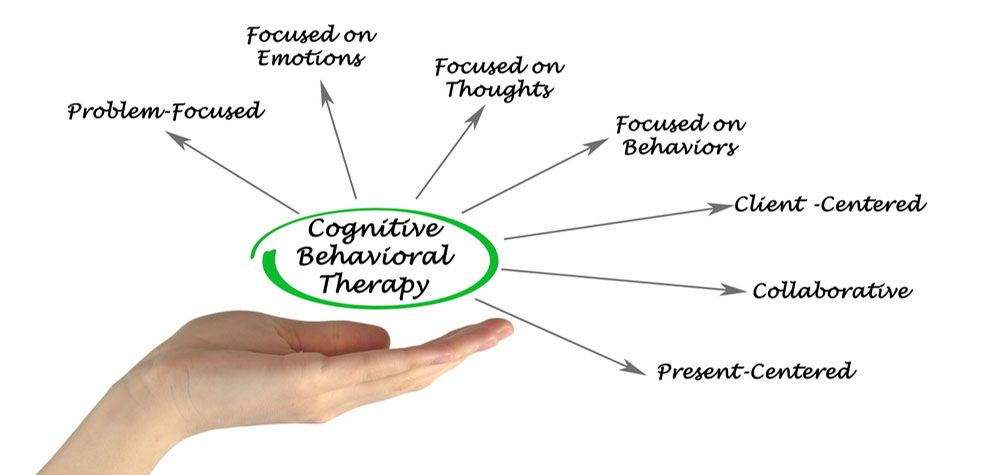
Cognitive Behavior Therapy is recommended to clients to get the necessary treatment for their negative thoughts to bring about the desired positive change .

The key principle behind CBT is that our thought patterns affect our emotional understanding of the events which, in turn, can affect behavior and subsequent interaction with the people we interact with .

CBT also is believed to make us aware of our own negative emotions influencing our thought patterns .CBT helps us analyse and understand others behaviour as elicited by our own emotional understanding of the situation.

CBT highlights how negative thoughts can bring about negative feelings and actions.Similarly how negative emotions can interpret a positive event ,in negative tones . But, if we reframe our thoughts in a more positive way, it can lead to more positive feelings and helpful behaviors.Or if we work on developing positive emotions about ourselves and situations the thoughts will become more accepting .

While conducting CBT the therapist trains the patient to recognise such negative reading by his mind and how to reinterpret the situation with a positive frame of mind. The patient can continue to use these skills so learnt, in all difficult situations and overcome depression,anxiety or other mood disorders .

Depending on the issue the patient is dealing with and the expected specific goals of the CBT , the therapist can make use of several ways to administer CBT. It will basically involve :

  • identifying specific problems or issues in the client’s day to day life.
  • Helping the client become aware of unproductive thought patterns and how they can impact his or her life
  • identifying negative thinking and reshaping it in a way that changes how he or she feels
  • learning new behaviors and putting them into practice

After speaking with the client and learning more about the issue the client wants help with, the therapist will decide on the best CBT strategies to use.

CBT involves making use of the appropriate combination of a few the following 9 strategies:

1. Cognitive restructuring or reframing

This involves taking a hard look at negative thought patterns. When we tend to over-generalize, and apprehend that the worst is about to happen , or tend to get into too much details for every thing we do we find it difficult to act. Our thoughts can prevent us from doing what we want to do and create havoc in our life.

The therapist in this situation will help us identify the negative patterns of our thoughts and inaction . He trains us as to how to reframe those thoughts so they’re more positive and productive and propel our action taking connative behaviour.

For example: “I am not valued in my office because I’m totally useless” can become “I may not be the best worker , but I’m as valuable an employee as can be and I contribute the same way as others do .”

2. Guided discovery

In guided discovery, the therapist will acquaint himself with our viewpoint. Then he will ask questions designed to challenge our beliefs and broaden our thinking.

The client might be asked to give evidence that supports clients assumptions, as well as evidence that does not.

In the process, the client will learn to see things from other perspectives, especially ones that he or she may not have considered before. This can help client choose a more helpful path.

3. Exposure therapy

Exposure therapy can be used to confront fears and phobias . The therapist will slowly expose you to the things that provoke fear or anxiety, while providing guidance on how to cope with them in the moment.This can be done in small increments. Eventually, exposure can make us feel less vulnerable and more confident in our coping abilities whenever the anxieties build up.

4. Journaling and thought records

Putting down your thoughts in writing is a very simple yet effective way of getting in touch with your emotions.One can list down repeated negative thoughts that occur frequently and disturb your homeostasis .It will certainly help to write down your positive thoughts also as would be the inclusion of new thoughts and new behavior for day to day interaction.

5. Activity scheduling and behavior activation

When you are in a negative frame of mind you tend to put off activities in fear or in anxiety.Writing schedules of such activities and visualising them before you begin practicing them can give you the confidence .With such a positive confidence it becomes easy to overcome negative emotions connected with such activities.

6. Behavioral experiments

Behavioral experiments are used for anxiety disorders that involve catastrophic imagining . The psychologist here asks you to express your apprehension as to what will happen if you perform the given task that you otherwise have been dreading to perform. Once you have (reluctantly ) completed the given task you are asked to talk about whether the apprehension came true. Over time, you may start believing that your apprehensive anxiety is not very valid as nothing that you expected to happen actually took place.

7. Meditation, Relaxation and stress reduction techniques.

Perceptive meditation, progressive muscle relaxation and positive imagery building exercises are undertaken to bring about a total positive control over mind ,body and soul to eliminate the phobias,fears anxieties and depression.

8. Role playing

Role playing can help us overcome negative thinking , apprehension and work through difficult relationship and situations. A role play out done with the help of therapist can lessen fear and can be used for:

  • improving problem solving skills
  • gaining familiarity and confidence in certain situations
  • practicing social skills
  • assertiveness training
  • improving communication skills

9. Successive approximation through small successes

This involves taking tasks that seem overwhelming and breaking them into smaller, more achievable steps. Each successive step builds upon the previous steps so you gain confidence as you go, bit by bit.

To know more about CBT and undertake the same ,please get in touch with us mansikpramarsh@gmail.com

917314263087

Read Full Post »

Nothing else can be as fatal for the marital relationship as your anger. An uncontrolled anger is like a slow poison to the strong threads of relations between husband and wife .The uncontrolled anger virtually eats into the very roots of love,trust and respectability of both the partners .

I have observed while counseling estranged or opposing spouses that couples would often express their anger and resentment towards each other and after a while they tend to cool down when educated about their misplacement of their emotions or expectations from each other.

However heavens may help in situations where one of the spouses happen to have an uncontrolable anger . Such expression of constant complaints and anger often leads to physical abuse ,emotional accusations against each other and ultimate separation.

Anger is not so bad if used momentarily and allowed to subside and defused once it has been expressed. The message that the angry person has been upset over certain issues or acts of either spouse can be conveyed and thereafter both would do better to come to the levels of finding ways to negotiate peace and make amends .

There comes a stage when the partners need to involve a professional family therapist who can help them look at their differences or different perceptions in new light to sort out the disputes .Such intervention is arranged with a view to evolve newer and better emotional understanding amongst the couple ,even though the previous hurt still remains at the background. But the seething anger has been overcome as the partners give each other opportunities to grow their new closeness and understanding.

But many a times the harmed partner particularly wife finds it difficult to let go of the past and forgive her husband. Her anger seethes like a wild fire that knows no direction ,hovering over the relationship and destroying everything that comes in its path .Such situation finds no retrieval and the couple sooner or later ends up parting ways through legal separation,or finding it difficult to stay together peacefully.

A partner with such an uncontrolled anger often brings to the fore the mistakes of the other partner,by shaming him or her at every available opportunities,refuses to listen to any explanation by the partner and believes no compromise can be big enough to solve the problems which have arisen in their relationship.

An understanding partner can help coverup many shortcomings ,mistakes and at times blunders of the other partner unless it happens to be a complete erosion of trust and faith.But in the event of such a situation too,the partners need to sit together by letting the anger go and understand how to proceed with their relationship further or even give it a break by inflicting the minimum damage to the family and partners themselves.

It is important that both husband and wife should pay attention to their anger control and if they find that their relationship is getting affected by such frequent bursts of anger. They should consult a counseling psychologist and family therapist .A trained professional counselor and family therapist would help them with relevant anger management therapies including perceptive breathing exercises .

Family therapist during meeting with unhappy, married couple

While there are enough advisors in every social circle to guide and help the estranged or fighting couples but such unprofessional approach unknowingly out of their ignorance can ignite more anger or mistrust towards each other often leading to frequent accusations. As far as possible couples should avoid such agony aunts for their own betterment .Repeated complaints, frequent bickerings and trying to put down the partner or staging a show down for your partner just because you are angry with him or her can on the contrary take the love out of relations,resulting into the damaged partner finding solace elsewhere .No partner in the right mind who values relationship would like to be in such an embarrassing situation .Anytime you feel angry with or at your partner ,give yourself sometime to think over if the confrontation can be through anger or matters can also be discussed without losing control and being firm in your tone and body language.

,If you have such  uncontrolled anger /domestic violence  situation You should come to us at Family Therapy India and we will help you resolve all issues of your marriage in more amicable manner .Find us @ http://www.mansikpramarsh.com

Email us @ mansikpramarsh@gmail.com

Call: 09179383554,917314263087

Ramneek Kapoor – Family Therapist, Psychologist Counselor and Science of Living Expert .

Read Full Post »

adhdSachin (name changed)a young boy of 12 and a student of grade 7th had been termed a big nuisance by his class teachers.They could hardly control his activities.He would just not sit at one place in the classroom. His indiscipline created problems for his teachers in school . Of late he had started arguing back with his tutors at home .There have been complaints of his misbehaving with other children of his class . His mother, a single parent was at her wits end,not knowing how to proceed about. She was advised by the school to consult a psychologist.

ADHD-Awareness-Week-OPI-LivingAkshat {name changed} another child was standing outside the school Principal’s office.This was the third time in the current session when his parents have been called to the school by the authorities.Akshat had been sliding down the side railing of the second floor stairs all alone, when he had been intercepted by his class incharge.A joint evaluation by the school teachers,psychologist and psychiatrist diagnosed severe ADHD in the child. Our experience with treating ADHD children in many such cases have proved that mindful perceptive meditation can train and condition the young brain to concentrate better and hold focus even in the event of child suffering from ADHD.Such a holistic intervention and alternative treatment have benefited many and can help your child maintain self regulation, self discipline, and developing a better attention span.

38372779-confused-teenage-girls-preparing-for-exam-while-studying-with-laptop-and-textbooksWe have observed that many adults and children affected by ADHD find it very challenging to sustain their attention, and they exhibit a very hyper state of mind in situations where they are expected to remain calm and attentive.

Mindful Perceptive Meditation helps calm the hyper mind and delivers the attention training that brings about the much needed self-control.

Mindful Perceptive Meditation is neither religious nor does it promote any kind of cult. It basically involves perceiving your own breathings and vibrations, sensitivity of the endocrine glands of body thereby relaxing all your anxiety, stress and emotional upheavals .It transports you to a stage of oneness with your true inner self. Mindful perceptive Meditation connects you to your emotions , to your thoughts, feelings, and bodily sensitivity and brings about a greater awareness of what’s going on within you. It brings about a complete sense of physical,mental, psychological emotional well-being.

Mindful Perceptive Meditation have been very effectively used by us to treat anxiety stress and depression. It helps control hypertension and brings down blood pressure .We have successfully verified its positive impact in the treatment of thyroid disorder . Mindful Perceptive Meditation has been effectively used in managing chronic neurological disorders and mood disorders.

HOW CAN MINDFUL PERCEPTIVE MEDITATION HELP PEOPLE WITH ADHD?

psychic cenMindful perceptive meditation exercise develops the inner peace of mind,establishes positive relationship with the self and brings about sense of confidence and stability of mind.It helps regulate functioning of the endocrine glands of body and creates good hormones in the body. Since mindful perceptive meditation involves perception of breathing, perception of centres of our psychic hence brings about a sea change in the mindset of the protagonists.It enhances attention span. It trains the mind in the process of self-observation , trains to take care of all kinds of negativity and develop an internal power of positivity, attention, and to develop different faculties of mind and intellect . It makes the subject better aware of his or her emotional state of mind and impulsivity.

meditation classHOW DOES YOUR CENTER TEACH THE PRACTICE OF MINDFUL PERCEPTIVE MEDITATION ?

Our focus is the client and the issue of ADHD that the client suffers from in addition to providing holistic solution to total life of the client. We provide Mindful Perceptive Meditation on individual basis exclusively as it involves complete focus and involvement of the person’s mind and body which can be done only in an atmosphere where the prime focus is on the individual himself/herself . Our 12 -weeks program consists of daily or on alternate day a one hours training session , and regular -home practise.We also make use of colour therapy and Cognitive Behaviour Therapy simultaneously .

IS THE MINDFUL PERCEPTIVE MEDITATION AN ALTERNATIVE CURE OR A COMPLIMENTARY CURING PROCESS FOR ADHD .

Yes, Mindful Perceptive definitely provides a cure for ADHD,like we have mentioned above but in addition we also make use of Cognitive Behavior Therapy ,Colour Therapy and Holistic Therapy to bring about a total change in Perceptive faculties of the individual.Mindful Perceptive Meditation enables the person to shift focus from disturbing thoughts to constructive and positive thoughts

Although we do not recommend any medication but if someone is on medication already ,after a few weeks, the need for medication will be significantly reduced . Eventually the person will not be needing any such medicine,once the practise of mindful perceptive meditation is done by the person regularly at home too.Unlike meditation ,there are no side effects of perceptive meditation.

The person can in fact practise Mindful Perceptive Meditation anywhere and at any time, and gain complete control on his body and mind rather than reaching for medicine.It is the best stress buster and anxiety control technique for bringing down negative thinking,restlessness and sleeplessness too.

meditation singleHOW AND WHERE CAN MY CHILD JOIN MINDFUL PERCEPTIVE MEDITATION PROGRAM?

Mindful Perceptive Meditation Program is an ongoing individual focussed program.As such any one can join the program whenever the need is felt by the individual,the teacher of the child or even the parents themselves.Psychiatrists too can recommend your child/ward for this program as a complementary treatment for an early cure to the problem.

You can get in touch with us the following way:

Call 07314263087,09179383554,07224896739

Or visit our websites

http://www.perceptivemeditation.com

http://www.familytherapyindia.com

http://www.mansikpramarsh.com

Call on us @9179383554 or write to us @ mansikpramarsh@gmail.com

-Ramneek Kapoor – Family Therapist, Psychologist Counselor and Science of Living Expert.

Read Full Post »

« Newer Posts - Older Posts »