Neena felt desolate and lonely, and she suffered a sense of disorientation as she had been denied the job she was so confident of getting.
Rueben had completely given up after he had been passed over for a promotion, with his employer company preferring another candidate much junior to him in experience.
Tamanna felt numb and low after her boyfriend Nahar dropped her and opted for another relationship.
All these people have been denied and rejected from doing whatever they had expected or wanted to do. Some of them had worked for and invested years in reaching where they wanted to be in their careers or relationships.

Many such rejections have been witnessed in recent times, where people had to leave their homes and friends abroad after being denied extensions of visas, or students had to shelve their study plans for similar reasons.
Getting rejected breaks morale. It hurts to the core too. Whether it’s being rejected by a suitor, denial of a much-awaited promotion, or a rejected job interview, rejection is not always taken in an acceptable manner. Even though people are sometimes apprehensive of hearing a “no,” they do not want to hear it for fear of not being approved.
For some people, the fear of hearing “no” becomes so strong that it stops them from taking risks or asking for what they want. Rejection sensitivity can deeply affect daily life, leading to anger, irritation, financial stress, social stress, and often much more than what is stated above.
With so many layoffs, upheavals, and shelving of long-term plans, the hopes and confidence of many are getting derailed.
Let’s understand how we can deal with rejections and the shattering of dreams and expectations, and make rejections less hurtful and more introspective in an accepting way to help rebuild mental and emotional strength and move forward. It sounds easy, but it is not. That’s where the process of “rejection therapy” plays a very positive role in rebuilding and re-emerging as a better person.
What is rejection therapy, and how does it help?
We would rather call it a reconfirming self-technique, where we undertake self-acceptance, self-expression, and a self-improvement process that we can practice on our own when needed.
In this therapy, instead of avoiding situations where we might be told “no,” we actively anticipate them without causing apprehension and anxiety.
The dynamic social environment carries a lot of grapevine, and if we pay attention to these rumours, we can expect to be either accepted, ignored, or rejected. The anticipated discomfort begins much in advance, and we can build resilience to it in smaller steps.
You start with tiny social challenges where you expect to be rejected, and then gradually build your tolerance to discomfort.
The goal isn’t to reject rejection. The exercise helps build confidence, reduce social anxiety, and not permit fear to control your life. When we realise that rejection does not mean as much as we thought—and that many people are kinder than we imagine—it becomes easier to take risks that matter.
But that doesn’t mean you should expect only negative results. Being hopeful and positive has its rewards, and that realisation brings happiness and acceptance.
Wherever you fear and anticipate rejection, acceptance can bring wonderful surprises and self-acceptance.
Gradually, the human brain learns that rejection can be worked through by looking for substitute rewards, and that rejection is not as damaging as expected.
Small steps in dealing with anticipated refusals make you more accepting and comforted. You move on in life and develop maturity and patience to bear the brunt of major challenges.
Each rejection handled with calmness and maturity builds mental and emotional strength and equips the brain with a better understanding of the subject, developing resilience and adjustment.
Rejection then becomes less painful and traumatic as you learn to manage such situations deliberately.
Rejection becomes less self-effacing and more about learning and adjustment. Your brain rewires itself to see social situations as opportunities for growth rather than threats to avoid.
If the thought of anticipated rejection or refusal causes severe anxiety, panic, or intense negative emotions, you should seek professional support from a therapist rather than trying to handle it alone. We at Alka Mansik Pramarsh Foundation can help you manage such anxiety, fear, or panic and help you move forward.
Rejection does not define your life in totality. It can be an opportunity to build a stronger future and prepare yourself to overcome the fear of rejection.
When you stop letting the possibility of hearing “no” determine your worth and start adding value to your decisions for the future, you open yourself to opportunities, connections, and experiences you might have overlooked.
You can contact us at Alka Mansik Pramarsh Foundation if you feel you need professional counselling in the following situations:
- When your anxiety, fear, or stress worsens and causes distress
- When you are unable to move past feelings of rejection and constantly feel sad or hopeless
- When you experience panic
- When you develop physical symptoms or traumatic stress linked to negative thoughts
- When you find yourself becoming avoidant, overly self-critical, or nihilistic
- When you feel overwhelmed or have thoughts of self-harm
- When you are unable to carry out your day-to-day functioning
Please call or reach out to us at @mansikpramarsh. We would be glad to help you.





















 Ashu (name changed) could not do anything in life ever since he had been diagnosed of schizophrenia by the psychiatrist. He had been prescribed psychotic medicines by different psychiatrist doctors wherever his family had taken him to them .Yet nothing helped. His fears and phobias had worsened with time. The voices in his head continued disturbing him. His logical cognitive ability had been completely distorted and for him all the delusions had become the real images and characters.
 Similarly Sheena (name changed) continued with the fear and phobia of persecution at the hands of a person who had long moved out of her life five years ago. Sheena had been diagnosed of delusional disorder (a psychotic disorder).Her life had become completely miserable as she would often get lost into her phobia and would not be able to conduct her normal day to day routine life.
 Soon a very significant improvement could be noticed in certain negative symptoms, (e.g., negativity about self and family, sense of doom, lack of interest in surroundings and /lack of drive) started yielding to positive thoughts on all these issues .The clients did respond well as we noticed Ashu and Sheena both had begun looking at the positive aspects of their life. Their sense of appreciation for some aspects of their lives could be felt in their daily interaction with us. We could see their interest reviving in their day to day life too exhibiting positive symptoms.
 Perceptive meditation is a technique of meditation on the psychic centers of human body by which changes can be brought to the emotions,feelings,perception,attitudes, behaviors, and the total thinking process of the man. Perception on the psychic centres refer to the process of focussing and meditating on these centres of consciousness with complete absorption of mind and body and getting them connected to the endocrine glands situated on the psychic centres . The chemicals secretions this way are rectified by turning the secretion from negative to positives. Such Perceptive Meditation energises the conscious, the subconscious and the unconscious thereby benefiting the body and the mind on three different levels :
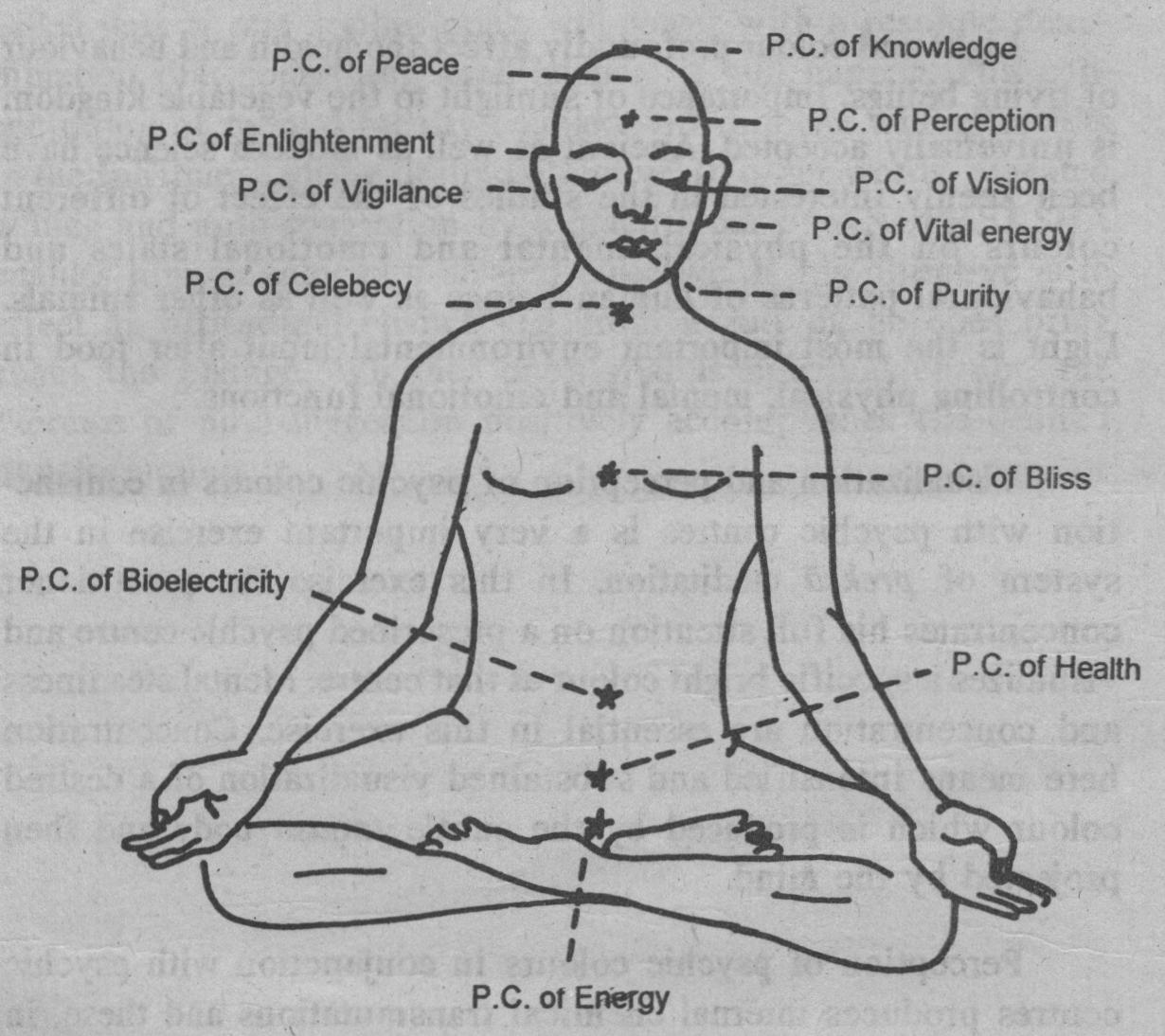 PSYCHIC CENTRES
 RAMNEEK’S SCIENCE OF LIVING AND PREKSHA MEDITATION CENTRE
 PSYCHIC CENTRES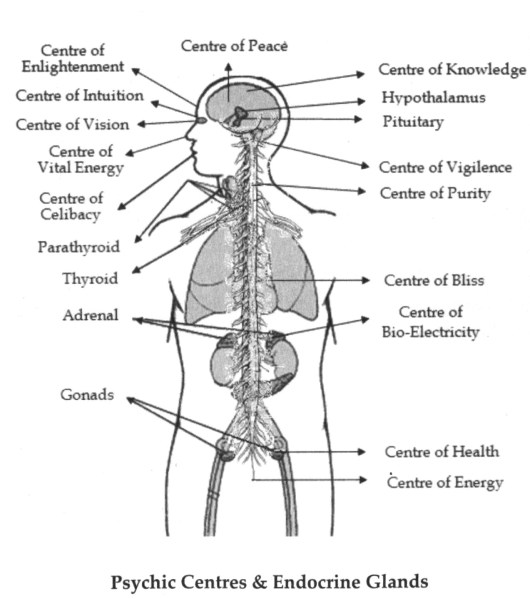

 Mrs Sharma sounded worried when she handed over the school bag of her daughter to bus attendant, “Please tell the driver not to drive too fast. He fetches small children, They can fall off their seats “. The bus attendant just nodded her head in affirmation. Not satisfied with just a nod, Mrs Sharma moved to the front of the bus .”Please drive slow and take care of our children” she had told the driver. The driver too nodded his head. Mrs Sharma waited for the bus to move. She kick started her scooter . She paused for a moment and then turned her scooter towards the direction in which the bus had been going. She followed the bus at a safe distance and eventually having seen the bus safely getting into the school gate, she turned back . Such melodrama has been going on with Mrs Sharma for over a month now.
 Julie is only six years old .She studies in the neighborhood kindergarten school. She had been fine all this while and used to be very eager to go to school every morning .Last week suddenly out of the blue she complained of stomach ache and refused to go to school. Her mother had taken her to the pediatrician who found nothing wrong with the child . The child had been referred to the school counselor. A few sessions with the parents, the child and the class teacher revealed, the child has been always worried about her mother being alone at home and this worry always prevailed upon her mind.
 Mrs Narwhal was so much worried of getting affected by the germs or carrying the germs back home that she would hang an extra set of clothes in her toilet in advance , which she wanted to wear the moment she would get back home from her trip outside. Every time she had come back to her house, she would first get into the bath to wash her clothes, bathe herself in order to cleanse herself of all the germs that she thought she might have brought with her from outside. She would feel completely relieved once having done this ritual .But it is obvious, such a ritual can be a great pain to other members of her family as the rule of changing into the fresh clothes after returning from outside and of washing the clothes that had been worn for going outside immediately on return from outside played havoc with the peace of the family . Any kind of advise to Mrs Narwhal to stop worrying created further problems as she would avoid such person who would advise her to not to worry .

 Alka Mansik Pramarsh Foundation Clinical Psychologists-Family therapists Indore 0731-4263087,9179383554