Feeds:
Posts
Comments

Posts Tagged ‘meditation’

When Rashi had her first panic attack she was appearing for school board exams .She didn’t know she was having one till her throat felt dry ,her hands started trembling and all of a sudden she felt she was going to faint .That made her cry out loud for help .She wanted to immediately get out of the examination hall.

However a timely intervention by the people around helped her recover faster as she was given the first aid support in time.

Panic attacks do not come with a warning and they become too scary to those who suffer one all of sudden and if a timely help is not available the same can turn a little damaging too .

Rashi did have some stress of her ensuing examination but she had also been suffering from fever for a few days and had not yet fully recovered . She had been feeling weak, a bit tired and sleepy . In this kind of stressful situation she had suddenly developed an anxiety   and lost control of mind .Her breathing seemed to have become very shallow,rapid and she had hyperventilated .

The feeling passed after little first aid support and within a few minutes she felt better although still dazed .No one knew that she had experienced her first panic attack that day, until it happened again when she was in a crowded shopping mall .

How to know if it is a panic attack

It can happen to anyone and can take place in any situation.We discuss hereunder the early signs and symptoms indicating about panic attack :

Usually it begins with a dizziness of the head and the person feels a little disoriented to the environment around .The other symptoms not necessary all of them together can be :

  • Mild pounding of heart in the middle of chest and feeling of fast heart beats
  • Shortness of breathing and feeling of suffocation
  • Breathless and major discomfort breathing even though the environment is not claustrophobic
  • Feeling a sense of numbness in the arms or legs or both
  • Chest pain
  • Hot flashes or cold sweat
  • Nausea
  • Trembling and shaking of body parts

Anxiety attack vs. panic attack

An anxiety doesn’t come all of a sudden but it builds up over time ruminating or apprehending some of the anticipated events and it remains there even when the event may not take place .Thus anxiety is triggering of the apprehension but it stays as a constant feeling disrupting the normal functioning .

A panic attack on the other hand has more debilitating effect , comes out all of a sudden and much more intense episode of fear ,anxiety and a feeling of oncoming loss of consciousness and breathing difficulty takes over .

Anxiety and panic attacks even though have similar symptoms, but panic can make one feel like one is losing control of one’s awareness,orientation .The person feels that brain and body are not coordinating . This can happen repeatedly leaving one helpless and worrying of being vulnerable all the time .Resultantly one may stop stepping out of home alone .

Some of the ways to calm down during a panic attack

Rashi was lucky when her first panic attack lasted only a few minutes and went away after help from the people around but the second time she wasn’t because it occurred in a shopping mall and help took a little longer .

Panic attacks tend to peak within a few minutes and go away also sooner but for some occasions these attacks can last longer and the person becomes restless with fear of something happening to him or her and gets panicky .

How do we control when a panic attack seems to be occurring or seems imminent:

Perceptive and Meditative Breathing;

Deep breathing has often been recommended as the compulsory activity to do when stressed .

In anxiety and panic perceptive breathing can really do magic on your mood.Lets understand how :

  1. Close your eyes softly
  2. Keep your body and spine supple and stress free
  3. Now focus on the lower end (tail end ) of your spine and breathe from the nose very slowly .The mind must be completely involved in the breathing .
  4. Inhale slowly from the nose feeling it’s impact on the lower end of the spine .
  5. Exhale slowly from the nose taking as much time as you took inhaling
  6. Continue for five to seven minutes
  7. Soon you would realise your mind and body relaxing and the anxiety level coming to almost nil .
  8. Repeat this exercise as often as you want to .

Relax your muscles and body by kayotsarga (progressive muscle relaxation exercise )

Anxiety and panic can cause your whole body to tense up making you feel uncomfortable. You can help reduce the stiffness of muscles of the body relaxing them one muscle at a time .Focus on each muscle beginning from the toes of the feet one by one and going upwards covering all parts of body one by one .An auto suggestion like ( my toes are relaxing ,my calf muscles are relaxing cover till the top of your forehead .

Move your body:yes that’s true:

Rather than sitting or lying down in panic going out for a walk or doing brisk walk in the room itself can help you bring your stress anxiety and the impending fear to a much reduced level .

Preferably you can, go for a walk outside or do some light stretching. Take yourself out of the environment that’s causing your anxiety .It will help ease your symptoms.

If you feel a panic attack coming on in a closed environment like bus ,train or an aircraft while travelling and you can’t get up and move , try these basic breathing exercises to help ground yourself and reduce the intensity of the attack.

  • Do some deep breathes and focus on the tip of your nostrils to feel the air getting in and exhaled air coming out . Soon you will feel better with diverted focus .
  • Breathe in deeply and exhale every breathe from the fingers of your feet one by one and later through each finger and toes of your hands .You will feel an ease coming to your mind and body soon.
  • Rub the palms of your hands slowly and putting the palms on your eyes later will help .

Doing this activity with your hands can help take your mind off anxiety a calmness sets in .

Repeat positive affirmations to yourself

A positive affirmation is a phrase or a sentence you repeat to yourself over and over but if you can write it and read it aloud ,the impact is many times more and empowering .

The statement can be

“ I am a calm person I am a powerful person “

or “I am a powerful person I can handle this situation “

Or “ I am a powerful person I have the power of mind “ .

Reading and saying these affirmations out loud can help, but if you’re in a public place and don’t feel comfortable with that, just say it silently to yourself. Make sure to read or speak the words slowly in your mind.

Get help of psychologist /Counselor

In order to prevent repeated occurrences ,you must seek the help of a psychologist .You can reach out to us at

Alka Mansik Pramarsh Foundation

http://www.mansikpramarsh.com

Family Therapy India

http://www.familytherapyindia.com

Or email

mansikpramarsh@gmail.com

Read Full Post »

Have you of late been feeling deep in the woods? Do you feel the world is out to get you? Do you really feel the next Johnny is better than you? Do you want to just lie down and not look at the world in the daylight, with the curtains drawn and the lights off all the time? The day just seems to drag on, the night becomes all the more difficult, and sleep seems to have eluded you for many days. Do you look at the world as a real queer place with all the folks giving you advice to go and do something about it?

Do you:

  • Beat yourself up over silly mistakes,
  • Feel always sick and tired on account of not sleeping well,
  • Constantly grapple with unwanted thoughts running through your mind all the time,
  • Feel tormented with traumas and pains of life’s doings and undoings.
Depressed man sketch clipart“/ CC0 1.0

The doctor might say you have depression and a mood disorder. Others would simply call it an inability to face the stresses of the world and may associate it with anxiety attacks. Some could have compassion for you, or some could just call you a lazy buff. But do you really feel all that advice is necessary when all you are doing is being comfortable in the discomfort of inertia and the negation of the self?

But is it not a fact that you do want to feel truly good, only if someone could help you overcome this inertia of depression? The visits to the psychiatrists do not seem to have helped much, as they do nothing but prescribe a different medicine every time you go to them.

Here is a simple remedy that can help you overcome the negativity that seems to have entered your mind and life.

Make an attempt to accept yourself and feel a profound sense of warmth and self-importance. No, I am not advising you to become a megalomaniac, but asking you to feel the powers that be within you to resurrect your life. You have some magnetic power that makes you unique, that makes you “ME.” Identify this “ME” and make all efforts to become “ME.”

We often look at others and not only compare ourselves with others but also be always busy in the process of becoming others. But would becoming others make us happy or satisfied? No, not at all. The more we look outward towards others, the more we get dissociated with the self, the real “ME,” that always wants to excel and be recognized. But the rat race of becoming others, the eagerness of doing like the others do, pushes this “ME” to the unknown depths of ignominy.

We regularly conduct Preksha Meditation classes at Alka Mansik Pramarsh Foundation, and our experiences reveal that the meditation of self-acceptance makes people gain positivity and a happy state of mind which cannot be compared to others because, in this, there is no “other.” The learning of the self can definitely be compared to the learning of new things and being part of something bigger, some sacred and celestial happiness and satisfaction.

If you want to feel this, self-acceptance is the habit you need to inculcate gradually in your mind.

Start by writing all the positive things about you on a paper, even if you feel there is nothing positive that you can write about yourself, just write the following statement:

“I am a powerful person. I have the power of mind.”

Continue writing a full page, then meditate on this, and you will gradually start feeling good.

You must accept yourself in a positive fashion, and that will help you overcome barriers to self-acceptance. Come and learn with us the daily self-acceptance practices that result in psychological and emotional healing.

Ramneek Kapoor, Clinical Psychologist and Family Therapist, Science of Living, Preksha Meditation Expert

Read Full Post »

A desperate father wanting the child compete for competitive exam ,a helpless mother not able to help her child understand anything being taught in the class room or at the tutorials ,a frustrated teacher regularly complaining to the parents to displine their child or take him /her away from the class are instances that we come across every day. Instances of tantrums throwing , of anger bursts ,laziness regular fights with siblings , not listening to parents ,indulging into internet browsing ,surfing of unwanted sites,staying away from home till late hours or not listening to parents are often seen as bad behaviour ,bad habits and bad attitude by many parents.It is rather sad that parents do not understand all such things mentioned above could be on account of child’s poor mental health or mental disorders. Resultantly youngsters are not understood correctly and they suffer frustration and uncalled for irritation.A good mental health free from any kind of disease or disorder is what a child must possess . But what if and for those who are not so blessed ,do parents really understand how can they know if there is anything lacking in their child’s mental health and if so how to help their child cope up.

Differentiating Mental health and mental illnesses is very important for any parent ,teacher and all those who are involved in mentoring youngsters. A healthy mental health would mean that we are of sound mind and are capable of deciding what is good or bad for us and behaving well socially economically and emotionally. A mental illness may not necessarily mean that you can not be any of the above .It could mean that in some areas of your life you may be finding it difficult to behave and decide appropriately psychologically . A mental disorder or a psychological distress are two different concepts and parents need to understand how it may apply to their child if he /she exhibits a behaviour inappropriate to the situation.

Thus, it is essential to understand that psychological distress in a given situation does not indicate absence of mental health .A psychological disorder or distress can be short term ,or of a long lasting nature depending on how the person has been affected and hence affecting the child’s overall state of well-being. Mental illnesses, on the other hand, are health conditions involving changes in thinking, emotion or behaviour (or a combination of these). Mental illnesses are associated with distress and/or problems functioning in social, professional or family activities.

Mental health is a subjective phenomenon and an individualized experience, different for every person. A state of mental well-being for one individual may not be the same for another individual.  Factors that may induce mental well-being for individuals will also differ. The state of being sound at a mental level can vary within a day and from day to day. There can be an incident that may boost or degrade a person’s mental health on a daily basis.

Thus, mental well-being is a daily affair.

Mental health is often seen to be on a continuum, where the scale starts from mental well-being on one end to emotional problems and concerns in the middle to mental illnesses at the other extreme.

It is often seen that mental health and mental illnesses are not understood correctly. There are a lot of myths that surround mental health and thus lead to the widely seen stigmatised approach. Let’s take a while to debunk the myths and understand the actual facts about mental health:

Myth #1: Mental illnesses are not real illnesses.

Fact: Mental illnesses are not the regular ups and downs of life. Mental illnesses create distress, don’t go away on their own and are real health problems. When someone is physically injured, they see a doctor. Similarly, mental health problems also require seeing a mental health professional- psychologist/counsellor/psychiatrist.

Myth #2: “Mental illnesses will never affect my child or me”

Fact: All of us can be affected by mental illnesses. Researchers estimate that as many as one in four Indians will experience a mental illness at some point in their life. You may not experience a mental illness yourself, but it’s very likely that a family member, friend or co-worker will experience challenges.

Myth #3: Mental illnesses are just an excuse for poor behaviour.

Fact: It’s true that some people who experience mental illnesses may act in ways that are unexpected or seem strange to others. We need to remember that the illness, not the person, is behind this behaviour. People who experience a change in their behaviour due to a mental illness may feel extremely embarrassed or ashamed around others. It is important to understand that people with a mental illness are one of us.

Myth #4: Stress causes mental illnesses.

Fact: No one factor can cause mental illnesses as these are complicated conditions that arise from a combination of genetics, biology, environment, and psycho-social factors. Stress may aggravate the mental or physical state of the problem for an individual but it is never the sole problem of an illness.

Myth #5: People with mental illnesses are violent and dangerous.

Fact: People who experience a mental illness are no more violent than people without a mental illness. It’s also important to note that people who experience mental illnesses are much more likely to be victims of violence than to be violent. Excluding them from society because they are violent is because of a misunderstanding and stigmatic approach to mental health.

Myth #6 : People who experience mental illnesses are weak and they have a character flaw.

Fact:  Stress impacts well-being, but this is true for everyone. Many people who experience mental illnesses learn skills like stress management and problem-solving so that they can remain optimally functional. Taking care of yourself and asking for help when you need it are signs of strength, not weakness. Mental illnesses don’t determine the character of a person. Mental illnesses are like other ailments and can be managed.

Myth #8: People who experience mental illnesses cannot go to work or follow a regular lifestyle.

Fact: Mental illnesses do not certify that someone is no longer capable of working. Most people who experience serious mental illnesses want to work but face systemic barriers to finding and keeping meaningful employment. Medical or therapeutic help can allow them to resume work and a manageable lifestyle.

Myth #9: Children cannot have mental illnesses. Those are adult problems.

Fact: Even children can experience mental illnesses. In fact, many mental illnesses first appear when a person is young. Mental illnesses may look different in children than in adults, but they are a real concern at a younger age as well. Unfortunately, many children don’t receive the help they need. It is important to remember that illnesses can occur and be diagnosed as early as 6-8 months of age.

Being mentally healthy is not about being perfect. Nor is it about being extraordinarily intelligent or successful or rich. Mental health is irrespective of these factors. These factors may influence the mental health of an individual but they are not a cause nor do they determine the state of an individual’s mental health. We all can suffer from mental health problems and we all can attain better mental s health and healthy state of mind if we recognise the deviation in time

Read Full Post »

pm2Ashu (name changed) could not do anything in life ever since he had been diagnosed of schizophrenia by the psychiatrist. He had been prescribed psychotic medicines by different psychiatrist doctors wherever his family had taken him to them .Yet nothing helped. His fears and phobias had worsened with time. The voices in his head continued disturbing him. His logical cognitive ability had been completely distorted and for him all the delusions had become the real images and characters.

meditation singleSimilarly Sheena (name changed) continued with the fear and phobia of persecution at the hands of a person who had long moved out of her life five years ago. Sheena had been diagnosed of delusional disorder (a psychotic disorder).Her life had become completely miserable as she would often get lost into her phobia and would not be able to conduct her normal day to day routine life.

Schizophrenia is a psychiatric disorder that disables and distorts the logical thinking and cognition of the individual affected by this chronic brain disorder involving “positive” and “negative” symptoms.

Positive symptoms relate to hallucinations (hearing voices or seeing visions that aren’t real), delusions (fixed false beliefs), and disorganized thinking or speech. People suffering from active positive symptoms often respond to those symptoms in ways that are obvious to others around them (e.g., agitation, disorganization).Ashu, mentioned above had suffered from imaginative voices in his head hearing that someone is out to prosecute him and that he would be sent to prison. While these thoughts were not visible to others but he often complained of hearing voices and attributed the voices to one of the persons he had been dealing with in his family business.

Negative symptoms relate to substantial decline in the affected person’s social interactions, communication, and motivation to conduct day to day affairs. Sheena had displayed negative systems when she had been referred to us for, a “split personality.” behavior, but Schizophrenia has nothing to do with split personality. She had been suffering from delusional disorder, a kind of schizophrenic psychotic disorder.

Ashu and Sheena both exhibited resistance to antipsychotic medications and their family members were definitely at a stage when nothing could help them. Ashu did sometimes show partial improvements only to go back to from where it had all started. We noticed that Sheena’s problem continued to be more chronic and affected all aspects of her life. She did not respond to any psychotic medications being administered by the psychiatrist.

But both Sheena and Ashu found it difficult to establish and maintain relationships within the family and externally. They were unable to carry on their day to day work on account of mood swings and delusions that would take a toll of their logical thinking. Both had virtually cut themselves off socially. Their disordered thought process prevented them to understand that they were not normal in their thinking faculty like other people in their lives. Their family too found it quite an uphill and expensive task   to follow the treatment handed out to them by the doctor every fortnight on account of heavy cost and also due to the patient’s refusal to take the medication.

We decided to make good use of Mindful Perceptive Meditation Therapy and Cognitive Behavior Therapy together to treat both Ashu and Sheena regularly on every alternate day basis in order to maintain regularity and without giving them a chance to revert to their pre conditioned schizophrenic way of thinking and cognition. Initially we found it difficult to communicate with the subjects as they would either not come for counseling or if they had come, they would not pay attention to what was being discussed. Gradually they started to respond to our instructions. We had begun the treatment with “Shwas Preksha ‘(Mindful Perceptive breathing exercise on the psychic centers) conducted under the watchful eye of the expert instructor. Soon we started noticing a significant improvement in both of our clients.

Thereafter we had begun with them the activities of “Mindful Perceptive Meditation” which involves both body and mind into deep meditation on the psychic centers, being fully aware of the moment and the breathe present in every living moment in its total intensity”. This continued along with the regular exercises of Kayotsarga to provide the much needed peaceful perception of the body through mind. Kayotsarga is a process of meditation that dissociates the physical body from the mind and it puts the muscles of the body to   complete rest progressively, somewhat similar to progressive muscle relaxation technique.

Peaceful-Mind-Remedies-South-Croydon-426x426Soon a very significant improvement could be noticed in certain negative symptoms, (e.g., negativity about self and family, sense of doom, lack of interest in surroundings and /lack of drive) started yielding to positive thoughts on all these issues .The clients did respond well as we noticed Ashu and Sheena both had begun looking at the positive aspects of their life. Their sense of appreciation for some aspects of their lives could be felt in their daily interaction with us. We could see their interest reviving in their day to day life too exhibiting positive symptoms.

These results had further been strengthened by the process of Mahaprana  Dhwani {greater inner sound effects  produced by the help of mouth and nose while exhaling  the breath by the patients }reformed  on all psychic centers during the process of deep perceptive breathing exercises and exhalation  undertaken by the patients.

Mindful Perceptive Meditation and CBT has been very effectively used by us in a variety of psychiatric/psychological disorders .We had used Mindful Perceptive Meditation and positive affirmative techniques to enable the affected person correct the functioning of endocrine glands producing negative steroids and emotions and subsequent faulty thought process .The practice of CBT generates critical cognition of actual position of the situation and helps analyze all kinds of thoughts with objectivity and factual back up. The Mindful Perceptive Meditation therapy supports written affirmative statements about the self and situations which would be given as homework exercises and are reviewed later with the clients. The whole process was focused on changing the negative perceptions about self and situations to positive emotions and thoughts.

Generally a patient requires 50 to 60 sessions over a period of three to four months. But in severe cases the sessions (each running for 45 minutes to one hour) can go up to 90 to 120 sessions over a period of 6 to 9 months’ time like it had been extended in these two cases for up to 6 months.

It gives us greater satisfaction and happiness that eventually after a hard work of six months , the patients had been cured of their problems to a large extent and with the help of their family and friends,  the process of rehabilitation  of both of  them into the family and society had been achieved.

We have   been making use of Mindful Perceptive Meditation and Cognitive Behavior Therapy successfully in many other cases of depression, anxiety, stress and many other psychotic disorders and many have been restored to their normal life.

Perceptive Meditation enables you live in and with your breath taking your mind away from your anxiety stress and worries of life .It empowers you to live in the moment with complete mindfulness of your soul ,body and mind “. Ramneek Kapoor.

If you have someone in the family suffering from any such disorder,Come and discuss with us how to proceed.

You take the first step today and  we help you  find the much needed happiness.

Call  on us @9179383554 or write to us @ mansikpramarsh@gmail.com

-Ramneek Kapoor – Family Therapist, Psychologist Counselor and Science of Living Expert.


Read Full Post »

download“Perceptive Meditation enables you live in and with your breath taking your mind away from your anxiety stress and worries of life .It empowers you to live in the moment with complete mindfulness of your soul ,body and mind “. Ramneek Kapoor.

What is Perceptive Meditation and What is Mindfulness ?

images (11)

“Perceptive Meditation is the intense involvement of body and mind into deep meditation on the psychic centres being fully aware of the moment and the breathe present in every living moment in its total intensity”

Mindfulness refers to the process of focussing complete attention to the present moment of life and living life in its every moment with complete awareness .This enables acceptance of life’s every moment in its totality and being aware of life in a non judgemental manner .In a way Perceptive Meditation and Mindfulness both work in the same direction for the same purpose.

How do Perceptive Meditation and Mindfulness help when Practiced together
  • Both are practiced with the mind fully present in the here and now
  • Perceptive meditation through the process of Srir Preksha {Perceptive Meditation on various parts of human body each focussed separately } helps the protagonist meditate on the various parts of the body to experience both the negative and the positive without reacting or expressing any likes or the dislikes, love or hatred for any part , making the journey of the mind through the pleasant or the unpleasant thoughts sans reactions and thus developing a feeling of equanimity in all kinds of circumstances. Mindfulness is similar way of experiences of the pleasant and unpleasant being fully aware and feeling unthreatened .
  • Perceptive meditation develops better connect to the self and in the process bringing better acceptance of the internals with the externals, and of the other humans in the world around with complete mindfulness
  • The process of practising deep meditation in total mindfulness of the psychic centres brings about a complete peace of mind, a better physical , mental and emotional health in the individual and empowers with the cosmic energy.
  • The process of kayotsarga ie, the progressive mindful journey on all the body parts and psychic centres to dissociate the psychic centres and body parts consciously from the mind brings about a total; celestial self-awareness
  • The process of Lesya Preksha (mindful perception of the celestial colourful lights )on the psychic centers brings about a total peace of mind, better mental and emotional health and develops acceptance of all kinds of ups and downs in life without extreme reactions , thus empowering the mind for better tolerance and understanding .
  • Mindful perceptive meditation of the psychic centres helps separate the thoughts from the emotions distinguishing imagined from the reality.
  • Mindful perceptions of the psychic centres teaches to the practitioner that everything is temporal and that everything changes; that same way emotions, thoughts and feelings are also short-lived and temporary like the weather.Nothing remains permanent .
  • Perceptive meditation with total mindfulness brings about better balance of mind and emotional stability.
  • Mindful Perceptive Meditation brings about serenity ,calmness and peacefulness.
  • The mindful perceptive meditation makes the practitioner aware of the negative and the positive both and trains to focus the mind on positives .

Perceptive Meditation, Mindfulness and Psychotherapy

preksha dhyanMindful Perceptive Meditation on Psychic Centres is a very powerful, evidence-based meditation tool for enhancing emotional ,psychological and mental health.

It has very successfully been used as an effective intervention in a wide range of clinical disorders, including bodily distress disorder,psychosomatic pains, chronic stress disorder, anxiety disorders, depression, PTSD, OCD, substance abuse, and other neurotic and psychotic disorders bringing relief to the affected .

Read Full Post »

WHAT IS PERCEPTIVE MEDITATION AND WHAT IS COGNITIVE BEHAVIOUR THERAPY (CBT)?

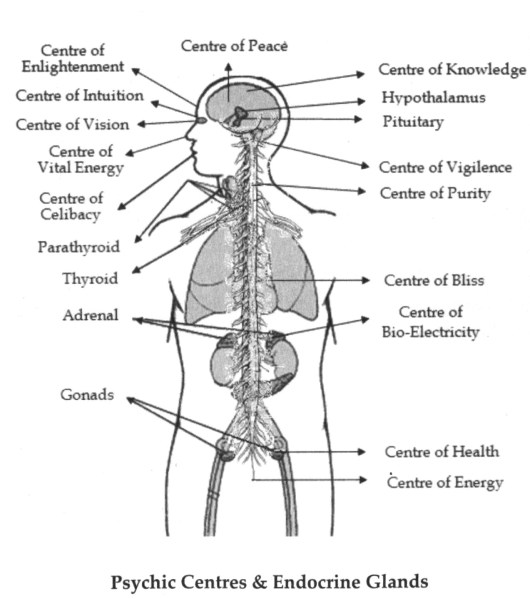
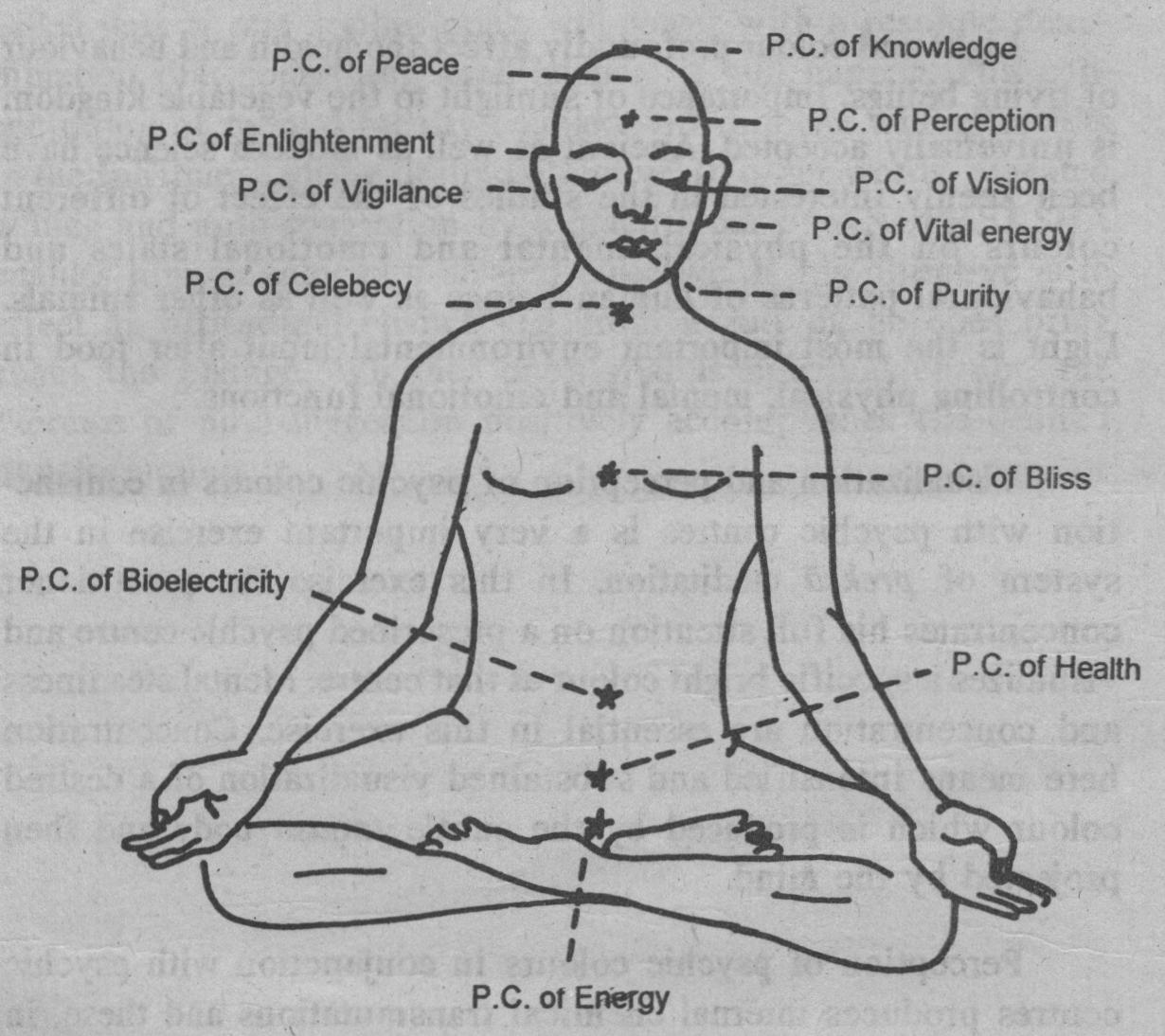
meditation-percPerceptive meditation is a technique of meditation on the psychic centers of human body by which changes can be brought to the emotions,feelings,perception,attitudes, behaviors, and the total thinking process of the man. Perception on the psychic centres  refer to the process of  focussing and meditating on these centres of consciousness with complete absorption of mind and body and getting them connected to the endocrine glands situated on the psychic centres . The chemicals secretions this way  are rectified by turning the secretion from negative to positives. Such Perceptive Meditation energises the conscious, the subconscious and the unconscious thereby benefiting the body and the mind on three different levels :
pc allPSYCHIC CENTRES

Perceptive Meditation on the physical psychic centres  rejuvenates, re- energises and revitalises the immune system of the body and the blood circulation to all vital points of reduces the impact of the negative secretions if any in the system.

Perceptive Meditation on the psychic centres and the endocrinology glands harmonises the efficient functioning of the emotion system of the mind. Such efficient functioning   of the endocrine  and the nervous system removes all negative thoughts and emotions and generate positive perception of the environment, of the self and of the problems in the day to day life. Thus eradicating depression, stress, anxiety, psychosomatic, neurotic and psychotic disorders without the use of medication and drugs.

Psychic_Centres

Perceptive Meditation trains the mind to clean itself of the stress, the anxiety and get rid of the negative influences like depression, the low self esteem, the suicidal tendency and ideation,  of many other serious mental disorders.

COGNITIVE BEHAVIOUR THERAPY

Cognitive-Behavioural-Therapy-Diagram-Mind-Remedies-South-Croydon-1

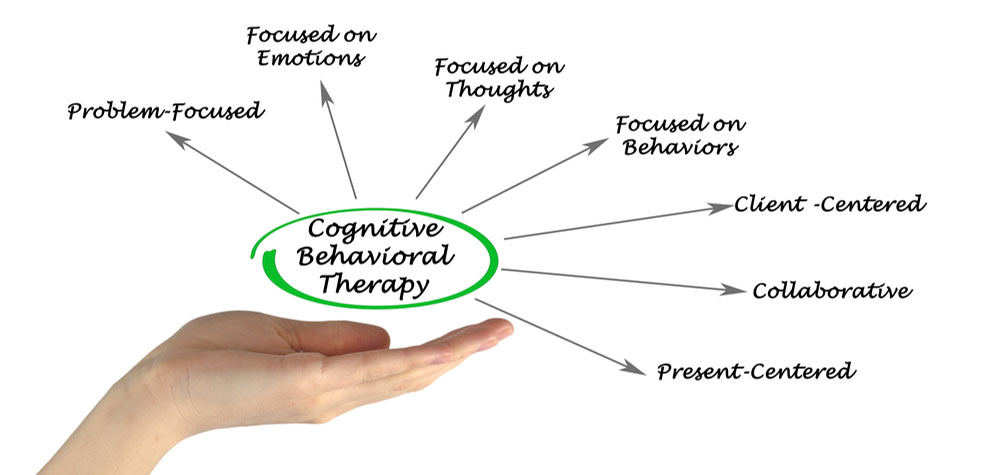
Let us understand what exactly is the Cognitive Behavior? Cognitive behavior refers to the behavior of the man that can be perceptive and understood. As per the Cambridge Dictionary cognitive means, “connected with thinking or conscious mental processes, relating to or involving the processes of thinking and reasoning. This obviously means that in simple language cognition refers to the process of thinking or of reflecting. Cognitive Behavior Therapy then should be looked as a Therapy that help people improve upon or rectify their thinking that occurs when experiencing emotional distress. The distress so felt affects the emotional state of mind and the behavior .During times of emotional upheavals and distress the mind loses touch with the cognition and becomes negative .The emotions so generated then perceive at all situations, people and events in a negative manner,causing distress all around. The thoughts under such negative emotional state of mind too continue to be negative, and so do the feelings and behavioral response to the external world often leading to melancholy, sadness, feeling of being alone, suicide ideation, psychosomatic bodily distress, eating disorders, obsessions, anxiety, extreme stress .

How does perceptive meditation help : Perceptive Meditation at this stage acts as the positive transformation factor on the inner consciousness of the human psychic centres bringing about a total change into the perception, cognition, thinking and emotions . It converts the negative emotions into the positive emotions .Perceptive Meditation controls the flow of negative energy and generate the positive energy . The negative chemicals produced by the endocrinology glands of the body are stopped and positive chemicals begin flowing, giving rise to the positive perception about the self , emotions feelings, thoughts and subsequent behaviour.Perceptive Meditation Therapy is a meditational self-perceptive, endocrinology based physio-psychotherapy to cure disorders related to emotional, physical, mental and psychological illnesses of the individuals. It is a scientifically proven powerful perceptive meditation therapy to root out the psychological, mental, emotional, social and physical disorders. The identification and elimination of the real causes of physical diseases, mental imbalances and emotional distortions through the gentle perceptive meditation on the psychic centres brings out a new awakened individual person with perfect mental, physical, emotional and social balance leading to a better society.

How does CBT Help : CBT helps in exploration of the source/ events/ experiences ,the origins of the negative thoughts and beliefs e.g. childhood, relationships, workplace bullying or a traumatic event that led to negative thinking , beliefs and caused the emotional, cognitive and behavioural distress to the affected individual. The counsellor then through exploring the evidence that disputes them and help to develop more positive outlook towards those events /emotions .The exploration and identification of the causes of distress ultimately with the help of talk therapy and other mind assuaging tools bring out positive acceptance of the self and positive behaviours .

WHAT CAN PERCEPTIVE MEDITATION AND CBT HELP WITH ?

We mentioned above that both CBT and Perceptive Mediation basically help with the formation of the more positive acceptance of self ,and thus curing the affected of depression, anxiety, stress, low self esteem or relationship problems.

There is evidence to show that Perceptive Meditation and CBT when used together under the guidance of our expert has produced spectacular results bringing people back from disorders such as Depression, Anxiety, Stress, Insomnia, Anger, Obsessive Compulsive Disorder (OCD), Post Traumatic Stress Disorder (PTSD), Eating Disorders including anorexia and bulimia, low self-esteem, childhood trauma and personality disorders.

WHAT DOES PERCEPTIVE MEDITATION AND CBT JOINT THERAPY INVOLVE?

Perceptive Meditation and CBT joint therapy involve attending 50-minute sessions 3 times a week.

In these sessions you undertake perceptive meditation on the psychic centres and endocrinology glands curing them of all negative effects and in addition goal focused positive mind building exercise therapy, with written and spoken tasks to get rid of depression,anxiety stress,fears ,negativity and form positive self perception.

All sessions are conducted in collaborative manner without the use of medicines.The subtle behaviour change happen without causing any mental trauma or stress to the client. The new cognitive ability so developed is long lasting empowering and helps the client with new more positive perception about the self, the world, and others, and enhance emotional well-being.

-Ramneek Kapoor – Family Therapist, Psychologist Counselor and Science of Living Expert.

meditation-percRAMNEEK’S SCIENCE OF LIVING AND PREKSHA MEDITATION CENTRE
MOBILE 9179383554,7024441183,7224896739.LAND:07314263087
FLAT 102, DEVKI MANSION,16 BAIKUNTH DHAM, INDORE ,M.P. 452018,INDIA
EMAIL: MANSIK PARAMARSH@GMAIL.COM, RAMNIK123KAPOOR@GMAIL.COM

Read Full Post »

maxresdefaultWhen Deepti (name changed) had called on us the other day , she had wanted an appointment for her husband , who she thought had been suffering from depression for quite long time . I had advised her that she should accompany her husband to the counseling session. After a few sessions with both of them together and separately with each partner ,it emerged that both of them suffered from depression.Yet they have been in a denial mode.I have seen in many cases that partners refuse to believe that what they are suspecting others suffer from could also be happening to them .They would always believe that just because the other person is complaining he or she could be depressed.Deepti had faced similar situation when she had come to me.Explained Deepti,”my husband Sameer {name changed}blames me for the problems in our marriage.He says that we have all the problems in our relationship because I am depressed.He tells everyone in my family and his family that if my wife was not undergoing depression,there would not be any issues in our marriage.But on the contrary I believe it’s always my husband who suffers from depression.He always complains about everything and blames me unnecessarily when things do not workout as per his plans”.

Family therapist during meeting with unhappy, married coupleIt is normal to have little bit difference of opinion in marital life but should each time difference arisen become the cause of a major fight then the husband wife team need to look at their status of their perceptual faculty. It is common to become little dejected after marital argument but to think of the other person being depressed definitely should be a cause of concern for the partners.It is very likely that both partners are perceiving some issues,concerns and a few problems in marriage negatively that has been giving depression to each other.Depression is made out to be a neurotic  disorder  hence people are always afraid of agreeing that they are undergoing such state of emotional upheaval.The usual response to such situation being.”I am o.k. it is the other person who seems to be suffering from depression”.

argu cplSomewhat similar is the story of Seema and Jatin (names changed) both budding doctors still in their process of setting up their household. The problem arose when a fine day Seema threatened to commit suicide on a very small whimsical issue. She had convinced herself that her husband does not pay her as much attention as he is giving to his other female colleagues in the hospital where he works . This came as a very major shock to Jatin. Jatin had nowhere ever thought about his coworkers in this manner. No amount of explanation could convince his wife and she continued to fight with him from time to time on the same subject forcing her husband to lead a solitary life away from the friends and acquaintances.What began as a depression with one of the spouses had pulled the other partner too into the same state of mind ,giving him depression. Jatin explains his situation in the following words,” My wife Seema has been idealising suicide from her college days. Our relationship dates back to seven years now. We had begun  dating in the first year of our college. In the college too she was always throwing tantrums on me.It is quite surprising that she acts in this manner only when I am around and with me only.She would often break up with me on small pretexts and remain incommunicado for days together. She  will come out of her shell on her own. She would then hardly remember that she has not been in touch with me for so many days. Everything becomes very normal for her soon , but it leaves me completely drained out emotionally.I can never discuss about such a behaviour of my wife to any one in the family or friends as she behaves normal in front of others.I do understand that she does it to gain my attention . For me she is my wife .I do give her the required love and affection. My whole life revolves around her . But I fail to understand why would she want me to be exclusively with her  only all the times. This kind of obsessive  behaviour from my wife has started telling on my professional responsibility. I can not be a doctor in such a big hospital where I am working by living in isolation and yet I do not know how to solve the problem.You being a psychologist could possibly understand the situation better and help us”.

A few sessions with the couple revealed that they both in spite of their long dating history had failed to emotionally connect with each other so far. Seema had wanted to make the emotional connection but had not understood how to proceed with it. She had always wanted to make Jatin part of her inner life. Each time she tried she sounded more pathetic and distressed and felt completely remorseful  when she did not get the desired attention and response from Jatin.

arguing coupleJatin understood her well but he too could not connect with Seema.He did not know how to make her feel loved and understood.She just wanted him to love her and care about her. But her such behaviour had put  off Jatin, leaving him cold and at times uninterested in her .Both the partners had been frustrated and didn’t know how to handle such a situation.

It has been observed by us that one partner in a marriage is depressed , the cause would always  be a marital situation  between the two spouses.  The solution to such a situation has to be found within the marriage situation only.There can be no solution by putting the onus to only one of the  members to the marriage, as the reason is not individual but a common factor is responsible for  whatever is happening to the spouses.

psychologist-helping-couple-relationship-difficulties-office-49310915In the event of either of you suffering from depression , both of you should help each other explore how your relationship dynamic could be  causing such a depression. Though you may want the other person to get individual treatment to his or her complaints by way of the intervention of a psychologist, it is in truth be your total marital situation that needs to be looked in a different perspective as different from your own point of view.  In such a situation you would do well to get your self assessed by our   professional family therapist and counselor. We will together then  work out a plan  that works to revive your marital relationship .Always remember that  you both are equal partners to the happiness and bliss of your marriage and hence let us find the way to the resolution of the differences in marriage too together with each partner respecting and trusting the other equally.

-Ramneek Kapoor – Family Therapist, Psychologist Counselor and Science of Living Expert.

family therapyFamily will survive all storms with a little patience and perseverance

Read Full Post »

What is Perceptive Meditation and What is Cognitive Behaviour Therapy (CBT)?

meditation-perc

Perceptive meditation is a technique of meditation on the psychic centers of human body by which changes can be brought to the emotions,feelings,perception,attitudes, behaviors, and the total thinking process of the man. Perception on the psychic centres  refer to the process of  focussing and meditating on these centres of consciousness with complete absorption of mind and body and getting them connected to the endocrine glands situated on the psychic centres . The chemicals secretions this way  are rectified by turning the secretion from negative to positives. Such Perceptive Meditation energises the conscious, the subconscious and the unconscious thereby benefiting the body and the mind on three different levels :

pc all PSYCHIC CENTRES

Perceptive Meditation on the physical psychic centres  rejuvenates, re- energises and revitalises the immune system of the body and the blood circulation to all vital points of reduces the impact of the negative secretions if any in the system.

Perceptive Meditation on the psychic centres and the endocrinology glands harmonises the efficient functioning of the emotion system of the mind. Such efficient functioning   of the endocrine  and the nervous system removes all negative thoughts and emotions and generate positive perception of the environment, of the self and of the problems in the day to day life. Thus eradicating depression, stress, anxiety, psychosomatic, neurotic and psychotic disorders without the use of medication and drugs.

Psychic_Centres

Perceptive Meditation trains the mind to clean itself of the stress, the anxiety and get rid of the negative influences like depression, the low self esteem, the suicidal tendency and ideation,  of many other serious mental disorders.

Cognitive Behaviour Therapy

Cognitive-Behavioural-Therapy-Diagram-Mind-Remedies-South-Croydon-1

Let us understand what exactly is the Cognitive Behavior? Cognitive behavior refers to the behavior of the man that can be perceptive and understood. As per the Cambridge Dictionary cognitive means, “connected with thinking or conscious mental processes, relating to or involving the processes of thinking and reasoning. This obviously means that in simple language cognition refers to the process of thinking or of reflecting. Cognitive Behavior Therapy then should be looked as a Therapy that help people improve upon or rectify their thinking that occurs when experiencing emotional distress. The distress so felt affects the emotional state of mind and the behavior .During times of emotional upheavals and distress the mind loses touch with the cognition and becomes negative .The emotions so generated then perceive at all situations, people and events in a negative manner,causing distress all around. The thoughts under such negative emotional state of mind too continue to be negative, and so do the feelings and behavioral response to the external world often leading to melancholy, sadness, feeling of being alone, suicide ideation, psychosomatic bodily distress, eating disorders, obsessions, anxiety, extreme stress .

How does perceptive meditation help : Perceptive Meditation at this stage acts as the positive transformation factor on the inner consciousness of the human psychic centres bringing about a total change into the perception, cognition, thinking and emotions . It converts the negative emotions into the positive emotions .Perceptive Meditation controls the flow of negative energy and generate the positive energy . The negative chemicals produced by the endocrinology glands of the body are stopped and positive chemicals begin flowing, giving rise to the positive perception about the self , emotions feelings, thoughts and subsequent behaviour.Perceptive Meditation Therapy is a meditational self-perceptive, endocrinology based physio-psychotherapy to cure disorders related to emotional, physical, mental and psychological illnesses of the individuals. It is a scientifically proven powerful perceptive meditation therapy to root out the psychological, mental, emotional, social and physical disorders. The identification and elimination of the real causes of physical diseases, mental imbalances and emotional distortions through the gentle perceptive meditation on the psychic centres brings out a new awakened individual person with perfect mental, physical, emotional and social balance leading to a better society.

How does CBT Help : CBT helps in exploration of the source/ events/ experiences ,the origins of the negative thoughts and beliefs e.g. childhood, relationships, workplace bullying or a traumatic event that led to negative thinking , beliefs and caused the emotional, cognitive and behavioural distress to the affected individual. The counsellor then through exploring the evidence that disputes them and help to develop more positive outlook towards those events /emotions .The exploration and identification of the causes of distress ultimately with the help of talk therapy and other mind assuaging tools bring out positive acceptance of the self and positive behaviours .

What can Perceptive meditation and CBT help with ?

We mentioned above that both CBT and Perceptive Mediation basically help with the formation of the more positive acceptance of self ,and thus curing the affected of depression, anxiety, stress, low self esteem or relationship problems.

There is evidence to show that Perceptive Meditation and CBT when used together under the guidance of our expert has produced spectacular results bringing people back from disorders such as Depression, Anxiety, Stress, Insomnia, Anger, Obsessive Compulsive Disorder (OCD), Post Traumatic Stress Disorder (PTSD), Eating Disorders including anorexia and bulimia, low self-esteem, childhood trauma and personality disorders.

What does Perceptive Meditation and CBT joint therapy involve?

Perceptive Meditation and CBT joint therapy involve attending 50-minute sessions 3 times a week.

In these sessions you undertake perceptive meditation on the psychic centres and endocrinology glands curing them of all negative effects and in addition goal focused positive mind building exercise therapy, with written and spoken tasks to get rid of depression,anxiety stress,fears ,negativity and form positive self perception.

All sessions are conducted in collaborative manner without the use of medicines.The subtle behaviour change happen without causing any mental trauma or stress to the client. The new cognitive ability so developed is long lasting empowering and helps the client with new more positive perception about the self, the world, and others, and enhance emotional well-being.

-Ramneek Kapoor – Family Therapist, Psychologist Counselor and Science of Living Expert.

meditation-perc ALKA MANSIK PRAMARSH FOUNDATION  & RAMNEEK’S SCIENCE OF LIVING AND PREKSHA MEDITATION CENTRE
MOBILE 9179383554,7024441183,7224896739.LAND:07314263087
FLAT 102, DEVKI MANSION,16 BAIKUNTH DHAM, INDORE ,M.P. 452018,INDIA
EMAIL: MANSIK PARAMARSH@GMAIL.COM, RAMNIK123KAPOOR@GMAIL.COM

Read Full Post »

mother seeing child offMrs Sharma sounded  worried when  she handed over the school bag of her daughter to bus attendant, “Please tell the driver not to drive too fast. He fetches  small children, They can fall off their seats “. The bus attendant just nodded her head in affirmation. Not satisfied with just a nod, Mrs Sharma moved to the front of the bus .”Please drive slow and take care of our children” she had told the driver. The driver  too nodded his head. Mrs Sharma waited for the bus to move. She kick started her scooter . She paused for a moment and then turned her scooter towards the direction in which the bus had been going. She followed the bus at a safe distance and eventually having seen the bus safely getting into the school gate, she turned back . Such melodrama has been going on with Mrs Sharma for over a month now.

The matter  came to the notice of the family one day when Mr Sharma had gone to the bus stop to see his daughter off to school. The attendant  told him, “please tell Mrs Sharma not to follow the bus till the school gate.We are equally concerned of the safety of the school kids we fetch to the school .The school driver is a very experienced man and he drives very carefully.He has a very clean service record” .

six years oldJulie is only six years old .She studies in the neighborhood kindergarten school. She had been fine all this while and used to be very eager to go to school every morning .Last week  suddenly out of the blue she complained of stomach ache and refused to go to school. Her mother had taken her to the pediatrician who found nothing wrong with the child . The child had been  referred to the school counselor. A few sessions with the parents, the child and the class teacher  revealed, the  child has been always worried about her mother being alone at home  and this worry always prevailed upon her mind.

Just as the mind of the young child Julie created the drama of her mother being  unsafe at home, the same way worry can play havoc with the mind of the adults too. Worrying excessively can bring into mind series of fears , apprehensions, dark imaginations of the concerns about the safety  of  person and his or her near and dear one’s .

Worry is fine so long as we just reflect constructively and think about the situation or the problem to find out our next course of the action. But when the worry becomes constant fear and apprehension, it turns into  the chronic emotional disturbance  , with the mind being hijacked all the times into apprehended dangers which in reality may never occur. The hijacking of the mind brings with it the chronic anxiety, phobic  thoughts and the loss of reason .The person so affected exhibits obsessive compulsions, generalized anxiety into every situation, panics over trivial matters , fears of  getting cheated, robbed, being abandoned by the near and dear ones and of dying .Some of the affected even begin worrying about the worry that they carry in their mind.

worried womanMrs Narwhal   was so much worried of getting affected  by the germs  or carrying the germs  back home  that she would hang an  extra set of clothes in  her  toilet in advance , which  she wanted   to wear  the moment she would get back home from her trip outside. Every time she had come back to her  house, she would first  get into the bath to wash  her clothes, bathe herself  in order to cleanse herself of all the  germs that she thought she might have brought with her from outside. She would feel completely relieved once having done this ritual .But it is obvious, such a ritual can be  a great pain to other members of her family  as the rule of changing into the fresh clothes after returning from outside and of washing the  clothes that had been worn for going outside immediately on return from outside  played havoc with the peace of the family . Any kind of advise to Mrs Narwhal to stop worrying created further problems as she would  avoid such person who would advise her to not to worry .


Such worries form a part of the depression syndrome  . They bring about with them ,   breathlessness, the faster  heart beats,sweaty perspiration,  choking , suppression of the mind, the feeling of the distress, ,and the  lack of focus , attention and sleep .Such chronic worry  needs to be treated with psychotherapy,  Cognitive therapy , holistic therapy and  even by way of the perceptive meditation to bring about a complete change in the thinking and perceptions of the affected individual.

-Ramneek Kapoor – Family Therapist, Psychologist Counselor and Science of Living Expert.

family therapywsi-imageoptim-family

Read Full Post »

emotional intelligenceWhen we achieve balance of emotions in our day to day life , we get a sense of self  mastery and well being. But instead of managing balance of emotions we tend to get swayed by  the event. We brood over the event and the person that has stirred the emotional upheaval and bring about the imbalanced attitude of negative emotions.

Emotional balance on the other hand would mean giving ourselves the necessary   preference, importance, care , nurturing and intelligence to conduct our life in such a way that it should offset the negative tilt and bring about the positive uplift within our mind and heart .We are designed to live in a healthy combination of emotional balance and wisdom. But we get carried away as we mentioned above.

Emotional balance would not mean controlling emotions . We can not mute our emotion by the use of any remote device , nor can we make them very loud. Life in both cases will become very bland and uninteresting . What if we keep on saying all the time that, ” I am very sad today”, or we just brood over the event and present a sad face. Similarly living in one emotion always is not desirable. Can we always be happy, buoyant and celebratory all the times ? if not then why should we remain sad, anxious , melancholic and stressed all the times. Such downs and ups of the moods and emotions add spice and entertainment to our life.The Downs present us with the challenges and Up would always make us happy. But the Ups too present to us the challenge  for not going overboard.

We do not need to avoid the unpleasant feelings, relations, events or places . On the contrary feel empowered to balance the negative with the positive of life, by looking at and perceiving all aspects of life.  Most of the times we get overpowered by the negative emotion and get stuck with that. Such negatives take over our life in the morning itself and we continue with it through most of the day.

download (2)

Balancing emotions must remain a consistent , constant, factor of our life. We must keep balancing with different moods in the day. All free time available should be utilized for balancing. Think  of the good times that you have had, the good things of life , the good events that you had participated in , to offbeat the bad happenings. Learn to soothe your mood by treating your self nicely, differently and importantly .Give importance to yourself .Have a say in how long you will stay in bad mood. Thereafter shift your focus , hit upon the new entertainment, the new treatment of self. The intensity of the bad emotion and the bad mood will come down.

download

Chronic pain, chronic bad mood , chronic losing yourself into  bad emotions should be broken by intermittent good mood. Bad mood can be balanced by small wins of good mood . Before we get into clinical or manic depression , balancing emotions with small good treats, small wins will prevent the coming of the anxiety, stress, fear, and subsequent depression.

Ramneek kapoor,Clinical Psychologist and family Therapist,Science of living ,Preksha Meditation expert.\

family therapywsi-imageoptim-family


Read Full Post »

Older Posts »